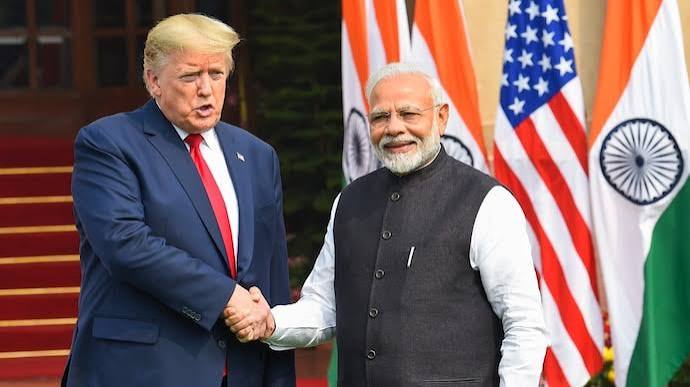

New Delhi convened a strategic dialogue with Washington on 5-6 August, foregrounding themes of security, stability, economic cooperation, and most critically, the vulnerabilities of global supply chains. Parallel Track II diplomacy has drawn strategists into deliberations on the trajectory of bilateral ties. Yet, the India-US relationship has deteriorated alarmingly in recent years. Once celebrated under Prime Minister Narendra Modi, the partnership has faltered and entangled in the labyrinthine pressures of President Donald Trump’s foreign policy.
At the heart of this debate lies strategic autonomy which has become a cardinal principle of India’s grand strategy over the last many years. Defined as sovereign latitude in decision‑making and strategic depth, strategic autonomy has long been positioned as a hallmark of a non‑Western world order that resists binary alignments without disengaging from the United States. New Delhi prefers the term “non‑Western” rather than “anti‑West” or “anti‑US” which underscores its nuanced posture. India’s wager rests on national security and the projection of autonomy through multilateral engagement. By positioning itself as a voice of the Global South, New Delhi has sought to reconcile its external alignments with its internal imperative of sovereignty through an increasingly precarious balancing act in the age of Trump. The recent troubles have, however, overshadowed India’s claim, with its strategic autonomy facing challenges under Trump’s eccentric foreign policy choices from trade to verbal rhetoric.
The Trouble
Foreign policies have often been hostage to global uncertainties. Rising powers like India have been trying to minimise the rupture by diversifying structural constraints through multi-alignment and strategic autonomy. The Trump phenomenon, however, has undermined India’s calculations despite being among the frontrunners in welcoming Trump’s return to the White House. But the period has endured with Trump’s mood and moments defining its chaotic approach towards India. The structures have been trampled by Trump’s idiosyncratic behaviour.
This is literally a new playbook of attack on India’s strategic autonomy under the guise of an ally. It’s often argued that the pursuit of national interest is the fundamental goal of a country’s foreign policy. The critique, however, is compelling: the national interest often became a hostage to the clash of nationalism. The US under Trump doesn’t believe in old books, where allies are significant in maintaining hegemony. His whims and hyper-nationalism have undermined the structures and material sources that sustain them.
Trump is a hyper-nationalist, often using populist narratives like Make America Great Again (MAGA), weaponising tariffs against every country according to his liking, keeping a confrontational attitude towards others, and likes to be the winner of all conversations, making statements and enjoys firing offensive words at leaders and countries, including India, calling it a shithole.
India’s Dilemma: How to Reason with Trump
India-US relations are at their worst under President Trump’s carrot-and-stick policy. The brief catalogue unveils the smokescreen. The argument of Russian Oil: the punishment of extra sanctions despite the US’s own steadfast conviction to buy it during the Biden administration to stabilise old prices. Strategic autonomy is fundamentally about sustaining its sovereignty in decision-making. It is also, however, not disengaged from the power structures of the world order and thus always remains hostage to hegemons. Trump’s economic warfare is an offensive approach, referring to its economy as dead, and threatens India’s position. Despite the crises, India hasn’t signed the trade deal yet, which has frustrated Trump. It did not stop buying Russian Oil despite threats. Despite Indian foreign policy being in crisis in managing Trump’s offence, it has been investing in its strategic autonomy, manoeuvring its actions by signing nine free trade agreements in 2026 alone, covering 24 countries, including landmark deals with the EU and the UK.
India wanted to send a message to the US that it is open to any deal, but can’t be forced by Trump’s unpleasantries. The critique of India’s foreign policy, however, argues that it has lost the moment and is no longer a close ally of the US or aligned with its grand strategy. The worst has been PM Modi’s own personal relations, which did not help, and Trump’s praise of him and belittling of India’s reputation have become collateral damage. The story is not unfounded; rather, it has become a punishment. India’s own ambition for a non-Western world through strategic autonomy and multi-alignment encountered serious limitations in comprehending Trump’s eccentric response. Trump’s fire line against European partners, NATO’s status, and his celebration of authoritarians and chaos as a policy will ultimately set the decline of the US hegemony from the point of no return.
Although the American stake is still high, given its global influence and the significance of its most potent weapon, the US dollar. The challenges, however, have begun to reveal the declining legitimacy of the global hegemon. Trump has become a burden for the allies more than their opponents. The US now sees India as a future rival in its grand strategy, refusing any possibility of a multi-aligned order. On the contrary, India has been a strong advocate of a notable shift, calling it from non-Western to anti-West, but the US strategic goals would be undermined if it allows India’s growth without interruption.
The US doesn’t want another China at the regional and global level. This makes the situation complex for India’s strategic autonomy, which it loudly exhibits. India has preferred to avoid being a hostage to Trump’s mood by not responding to his provocations, despite being hailed in many quarters as a failure of PM Modi and Indian Foreign Policy.
Trump’s Mood: The cost of Strategic autonomy
Strategy is not just a plan of action or execution for the desired outcome, but fundamentally about maintaining sovereignty and national security against any offence. Indian foreign policy is carrying the weight of the strategic dilemma of Trump 2.0: whether to accept what Trump wants or ignore his whims and provocations. India demands mutual sensitivity, trust, and respect from the US, but so far has failed to manage Trump’s chaotic policies, leaving itself unguarded against his misinformed preferences. The crisis has been alarming. Can India afford to sideline US pressure for long? US- India relation often cloud India’s neighbourhood policy, undermining its nationals security.
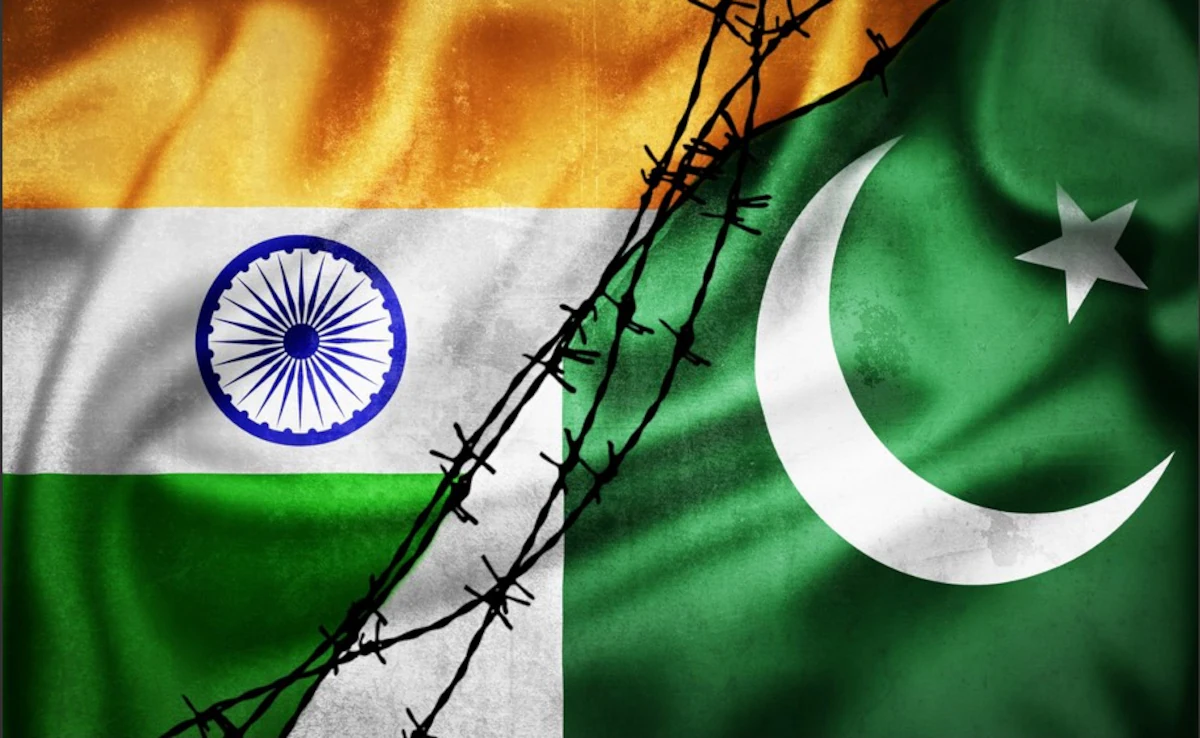
Trump’s embrace of Pakistan and ceasefire claims during India-Pak four days war between India and Pakistan was embarrassing for Indian foreign policy. Further, India has been struggling to manage its energy security, often becoming captive to supply chain uncertainties, a lack of long-term reserve planning, and diversification. This adds to the injury. Further, the US policies make it difficult for India to manage its hostile and undemocratic neighbourhoods. Pakistan is not an exception anymore, the swing nations like Bangladesh, Maldives and Nepal need more than clientelism in their neighbourhood.
The Rupture: Is resetting possible?
The catalogues of failures are still reversible if India sustains the rupture that has come with Trump’s worldview. The argument that India can manage its wrecked relations with the US has divided strategic planners. The evidence suggests that India is marginalised in the US South Asia and Indo-Pacific strategy. It perceives India as more of a competitor to its regional strategy than an ally. Can a reset be possible with the US, despite its offensive strategy of creating chaos first and then dialogue? The problem, however, has been multiple, as no sovereign country has managed to reason with Trump. His attitude across the world, among the allies, undermines international law, threatening to wipe out civilisations and reducing the world to a US-centric one. This has troubled almost all nations, but the intensity of the hard critique of India is unparalleled. Many countries, such as Canada, Italy, and France, are contemplating undoing the rupture but haven’t been targeted for their failures. The recent Iran war reveals the limits of Trump’s policies, its offence and hypocrisy.
The Aftermath of the Iran War
Iran has exposed many ills, and despite having suffered maximum pressure, it has won against the Goliath in the White House. India’s response needs to align with its future strategic goals against Trump’s irrational, hyper-nationalism and coercive strategic behaviour. The bitter lessons have already been learned, and despite the US still being powerful, its hegemony is breathing its last. The crisis is undeniable, but India must master the art of managing Trump’s whims and persist in investing in its own grand strategy for a multi-aligned order. India’s ‘mystical no response’ undermines the nature of strategic autonomy. It will be self-sabotage if India wishes to represent the Global South without finding a measured response.