Fareed Zakaria, in his book, ‘The Post-American World’, argues that we are not entering an era of American decline, but rather one defined by the ‘Rise of the Rest’. His central argument is that the world is transitioning from a period of American unipolar dominance, followed by the Cold War era, to one in which other nations gain significant economic and political influence. Following the breakup of the Soviet Union, the United States became the cardinal architect of the current global order. It did this through Bretton Woods institutions, specifically the World Bank and the International Monetary Fund (IMF), as well as the United Nations Security Council (UNSC), to establish Western strategic priorities.
However, this US-led unipolar order has been increasingly challenged by the rise of China and other major economies such as India, which has pushed the international system towards what many argue is multipolarity. China’s rise is most evident in the economy, where it has become the second-largest global economy, and in technology, where it has strongly challenged American hegemony, as evidenced in the ongoing competition to lead the race in Artificial Intelligence (AI). India, on the other hand, has sought to position itself as the voice of the Global South, for instance, by formally including the African Union in the G20 during its 2024 presidency. At the same time, the push for strategic autonomy by many other states, such as Brazil, Iran, Saudi Arabia, and Türkiye, reflects wider structural changes towards a multipolar balance of power, steadily weakening unipolar dominance.
Expansion of BRICS
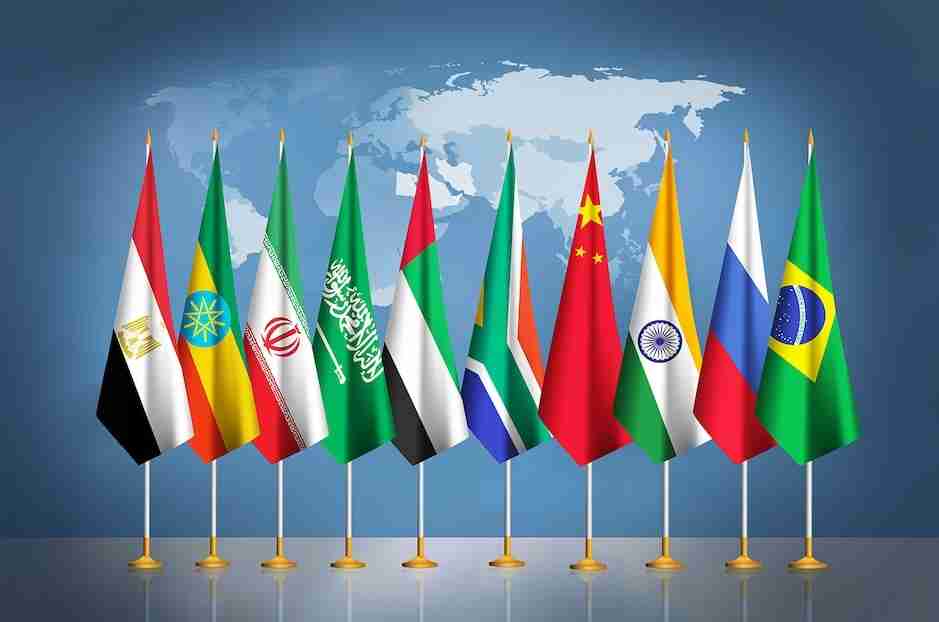
The acronym BRIC was coined by Jim O’ Neil and first used by Goldman Sachs in its Global Economics paper in 2001. Based on econometric analysis, the paper projected that four economies of Brazil, Russia, India, and China would individually and collectively occupy far greater economic space and be among the world’s largest economies over the next 50 years or so. The first summit of the bloc was held in Russia in 2009‚ where it was unanimously decided to expand the group in 2010 with the addition of South Africa, becoming BRICS․ In 2024‚ it was expanded to include Egypt‚ Ethiopia, Iran‚ Saudi Arabia, and the United Arab Emirates (UAE), with Indonesia joining in January 2025, thereby bringing the total number of BRICS members to 11․ The expansion has been seen posing major geopolitical‚ economic and institutional implications as it evolved from a narrow emerging market forum into a broader platform representing much of Global South.
Why BRICS Matter in Contemporary Global Order
The weakening of the US-led international system highlights the gradual diffusion of power amidst the rise of localised economic and political power centres across Asia, Africa, and Latin America. In this changing order, BRICS has emerged as an alternative platform to raise a collective voice, seek strategic autonomy, and exert institutional influence in global politics. BRICS has evolved to represent nearly half of the world’s population and two-thirds of the Global South. Within the ambit of BRICS, the concept of the “Global South” has enjoyed a remarkable revival as a descriptor of postcolonial and developing-country solidarity in world affairs. With Indonesia admitted as a full member in January 2025, the bloc’s share of global GDP has reached around 44 per cent, encompassing 56 per cent of the world’s population. BRICS countries will account for 58 per cent of global GDP growth from 2024 to 2029, more than the G7, according to most forecasters.
The Global Economic Crisis of 2008 exposed the vulnerabilities of Western-led institutions. Countries across Asia, Africa, and Latin America began to question the dominance of institutions such as the IMF, despite the growing economic weight of emerging powers. Their demand for an inclusive and representative global order resonated with the voice of the rest. The establishment of the New Development Bank (NDB) was an attempt to institutionalise this vision. Unlike Bretton Woods institutions, the NDB was projected as a development-oriented financial institution more responsive to the needs of emerging economies. The freezing of foreign reserves and restrictions on Russia’s access to dollar-based financial systems by the US during the war in Ukraine demonstrated how economic interdependence could be weaponised during geopolitical tensions. This has sparked discussions and debates on de-dollarisation. While not a simple process, reducing structural dependency on a single-currency system and promoting settlements in national currencies addresses the larger question of economic sovereignty.
An Opportunity for India
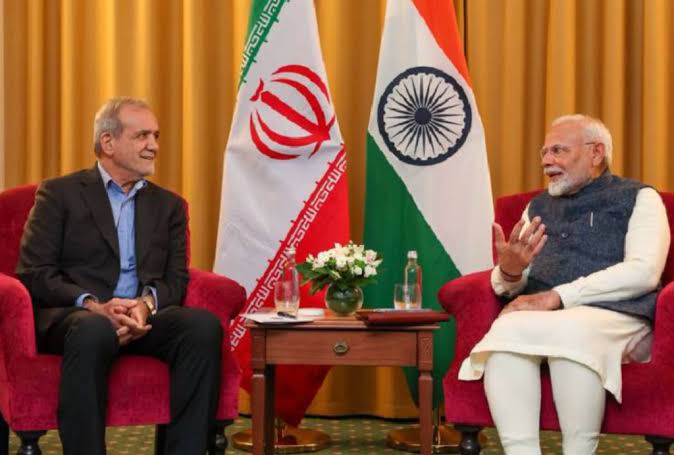
India currently holds the BRICS rotating chairship for 2026, a time when the world is experiencing instability and transition. Disruptions in supply chains and energy insecurity due to US and Israel-imposed war on Iran, and the weaponisation of finance, have collectively weakened trust in the established global order. In this context, India’s BRICS chairmanship is guided by a comprehensive theme: “Building Resilience and Innovation for Cooperation and Sustainability.” As Prime Minister Narendra Modi stated at the 2024 BRICS summit in Kazan, Russia, India’s goal is to redefine the bloc by advancing it with a people-centric approach and the spirit of “Humanity First”, just as New Delhi brought inclusivity to its G20 Presidency and placed the concerns of the Global South at the forefront.
India has consistently been vocal in calling for reform of the UNSC, IMF, and World Bank, which no longer reflect contemporary global realities. This is an opportunity for India to assert a collective voice in reforming global governance. The demand for IMF quota restructuring holds primary significance, followed by permanent membership in the UNSC.
In the ambit of Digital Public Infrastructure, this is an opportunity for India to institutionalise its indigenous technology and innovations. The successful implementation of UPI, DigiLocker, and Aadhaar-based payment systems has been adopted by countries such as Bhutan, the UAE, Nepal, and Sri Lanka, and partially by France. As technological advancement increases alongside technological inequality, India’s call for digital inclusion through BRICS serves as an exemplary people-centric model. It will counter Western corporate-driven systems and provide a decentralised digital infrastructure.
Climate change is not merely an environmental issue but rather an impediment to the development of emerging economies. India should reaffirm the principle of “Common But Differentiated Responsibilities” (CBDR) under the Paris Agreement. The idea that developed countries bear significant historical responsibility, alongside the call for a stronger “Loss and Damage” fund in favour of developing countries, should be strongly advocated. India can propose the creation of a Green BRICS Developmental Framework focused on renewable energy and green hydrogen. The agenda of the International Solar Alliance can also be seamlessly integrated with the BRICS theme of sustainability.
The COVID-19 health crisis was the toughest lesson for the globalised world in the contemporary era. It revealed the fragility and monopolisation of pharmaceutical production. For India, it is a great opportunity to open dialogue on pharmaceuticals and advocate for the diffusion of production, robust healthcare infrastructure, and resilient trade connectivity. Vaccine Maitri, a humanitarian initiative launched by the Indian Government during the pandemic, is a classic example of serving an equitable and affordable healthcare system.
Along with the advancements and opportunities brought by AI, there are ethical concerns that must be addressed, including algorithmic bias, lack of accountability, data privacy, and job displacement. Furthermore, experts warn that global water scarcity could lead to severe geopolitical conflicts. According to Morgan Stanley’s analysis, AI data centres alone could consume around 1 trillion litres of water by 2028. India’s chairmanship should engage in this pressing subject as the world enters an era of global water bankruptcy.
Unlike the European Union or NATO, BRICS lacks a formal institutional framework, operating with no permanent secretariat, no binding legal structure, and no unified enforcement mechanism. India’s chairship could be a watershed moment if it works to institutionalise the bloc’s structure in line with Western-led institutions. This would enable partner countries to convert symbolic declarations into strategic actions.
Lastly, India can make counter-terrorism cooperation a cardinal part of its agenda by framing terrorism as a shared threat to economic growth, regional stability, energy security, and global development. India could call for strengthening collective intelligence mechanisms, regulating financial systems to detect terror funding, and establishing an effective mechanism to counter cyber terrorism. All countries under the BRICS umbrella should build consensus on “Zero Tolerance” toward terrorism.
Challenges Within the Bloc
Despite its growing visibility and rhetoric countering Western establishments, BRICS remains a loosely packed bloc rather than a cohesive geopolitical alliance. It is currently unified more by dissatisfaction with the existing global order than by a concrete agreement on an alternative one. This dichotomy reveals internal contradictions that pose serious questions about its meaningful institutionalisation.
The primary contradiction within BRICS stems from the bilateral relationship between India and China, shaped by strategic distrust and long-standing territorial disputes. The 2020 Galwan Valley clash, followed by standoffs along the Line of Actual Control, China’s close relationship with Pakistan, and its expanding presence in the Indian Ocean, collectively complicate cooperation.
Furthermore, US sanctions on Russia have fundamentally shifted Moscow’s economic, technological, and diplomatic dependence toward Beijing. This unprecedented proximity between Russia and China creates tension for India and Brazil, which view BRICS as a multipolar platform rather than an outright anti-Western bloc. India, in particular, maintains strong ties with the US and European countries alongside its commitments to the BRICS agenda.
A lack of ideological coherence also deters member countries from adopting shared political values. India follows a democratic republic system, China operates under a one-party system, and Russia maintains an authoritarian presidential system. These differing political frameworks naturally shape divergent understandings of sovereignty, governance, and human rights, limiting the possibility that BRICS will evolve into an integrated alliance like NATO.
Finally, while the bloc is considered a coalition of emerging economies, there are highly asymmetrical economic realities. According to a report by the Economic Times, China accounts for roughly 70 per cent of the BRICS’ GDP, while India accounts for around 13 per cent. The newly added members collectively contribute just 11 per cent, with Saudi Arabia holding the highest share at 4 per cent. In its attempt to function as a multipolar bloc, BRICS risks becoming heavily China-centric, as Beijing’s economic weight can create imbalances in decision-making and agenda-setting.
Conclusion
BRICS reflects the ongoing transition from a Western-dominated order toward a more multipolar world. Despite internal contradictions, such as the India-China strategic rivalry, it remains an important platform for the aspirations of the Global South regarding development, financial sovereignty, and institutional reform. As India assumes its presidency, merely treating BRICS as a diplomatic talking shop will lead nowhere. Rather, India must use this platform to shape the emerging multipolar order while simultaneously preserving its strategic autonomy amid myriad crises and volatility. In essence, India’s presidency will test the structural viability and future trajectory of BRICS.