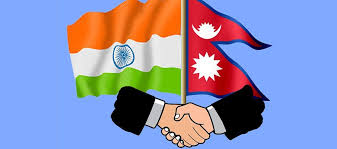

Nepal has moved towards political stability over the past few decades. India, its closest neighbour and largest trade partner, has been a keen observer of events in Nepal. The political events, however, have most certainly surprised India, and it was taken aback by the two major recent developments in Nepal.
Firstly, India was caught off guard by the Gen Z protest, as it was unable to capture the aspirations of Nepal’s younger generation. Today, 40% of the Nepalese population is in the 15-40 age group. This age group wants to create opportunities for themselves. Many harbour dreams of starting their own businesses in the capital city, but to no avail. These expectations and aspirations were missed due to an elite bias in the Indian establishment, which failed to understand Nepal’s changing demographics and, as a result, failed to see the Gen Z rebellion coming.
A hands-off approach towards the Gen Z movement had come to pass as calls of #BackoffIndia and #IndiaOut gathered steam on the streets and on social media. India initially refused to interact with Gen Z, the new actors, in Nepal as they uprooted the government of now-deposed Prime Minister K.P. Oli. India’s approach was a result of anti-Indian sentiment running high among the populace. Nepal generally has anti-Indian sentiments due to decades of India’s political interference in Nepal.
There were also no high-level meetings within India in the aftermath of the Gen Z protests, unlike during the ouster of Prime Minister Sheikh Hasina in Bangladesh, when the government called an all-party meeting on the situation. Even Prime Minister Narendra Modi cursorily mentioned the Gen Z protest in his two statements in September 2025, one on X (formerly Twitter), showing concern about the lives lost, and the other in a speech in Manipur praising the Gen Z of Nepal for cleaning the streets in the aftermath of the protest.
Secondly, in many circles in India, no one saw Balen Shah’s landslide victory coming. Almost everyone believed that Nepal was headed toward a hung assembly, a situation in which no single party would gain a majority. Nepal’s election system heavily contributes to this, combining a first-past-the-post system with proportional representation, making it hard for a single party to gain a majority. India’s failure to capture the waves of social aspirations in Nepal’s changing demography again influenced India’s thinking.
India’s role had been reduced to that of a bystander amidst the Gen Z protest. This is different from the role India has played in the past. India has been the linchpin of democracy in Nepal, be it during the 1951 regime change, when India actively supported democracy. India’s Prime Minister Jawaharlal Nehru had advised the then King Tribhuvan to form a constituent assembly. Similarly, in the 1990s, socialist leaders from India arrived in Kathmandu to show their support for lifting the ban on multiparty democracy. And in the aftermath of the Maoist rebellion, India facilitated the signing of the Comprehensive Peace Process in 2006, which abolished Nepal’s monarchy.
Anti-Indian Sentiments and India’s Policy Recalibration
The hands-off approach towards Nepal is also a result of rising anti-Indian sentiment there. Anti-Indian sentiments arose during the 2015 Madhesi protest, which led to the cessation of fuel and medicine supply from Indian border points. Nepalis see the episode as an “economic blockade” imposed by India, as Nepal was just recovering from an earthquake that had wreaked havoc on lives and the heritage of Nepal. The Indian border point, particularly the Raxaul-Birgunj checkpost, through which two-thirds of Nepal’s trade transits, was completely choked.
Amidst this, India refrained from reaching out to or protecting its connection with the traditional networks of the Nepali Congress and favourable business groups. These traditional networks took a major hit and backlash during the Gen Z protest. The protesters targeted these very networks of India in Nepal, burning their houses and ousting them from the political offices of Nepal.
In fact, after the Gen Z protest, various agencies and interlocutors were no longer meeting the top leaders of any political party. According to several reports, India restrained itself as new actors in Nepal’s politics, including Gen Z and the party it represented, began to gather steam. Delhi had also not been sending officials to Kathmandu after the Gen Z movement, citing the sensitivity of the time and the political situation in Kathmandu.
An observer noted that “India had a very calculated approach in Nepal.” India initially refrained, waited, and then began interacting with the new actors in Nepal as it became clear that Balen Shah would form the government. At the same time, “India respected the youth movement” as the Ministry of External Affairs (MEA) came up with statements showing condolences for the lives lost during the protest. India even recognised and supported the interim government led by Sushila Karki.
India also realised it needs to fast-track its diplomacy to regain ground lost in Nepal. Munu Mahawar, additional secretary (North) of the MEA and the most senior official in India on Nepal, visited Nepal just around the elections to establish trust and present an image of India as a “development partner. “Mahawar is a key man in India’s Ministry of External Affairs handling Nepal affairs in coordination with the Indian Embassy in Kathmandu. According to a report, Mahawar visited Lumbini, inspected the Integrated Check Post (ICP) in Bhairahawa, and attended a cultural event in Lumbini. India is building a Buddha stupa inside Lumbini.
Trade Kept Growing Between India and Nepal
As Nepal transitioned towards elections, trade and investment from India continued unimpeded. India primarily exports petrol, iron & steel, and automobiles, making Nepal the 14th-largest export destination in 2024-25, up from the 28th position in 2014. India is also the largest source of FDI, accounting for 35% of Nepal’s total FDI stock.
Several connectivity projects also moved ahead, including progress in the two integrated checkposts (ICPs) on the India-Nepal border. Several governmental initiatives on connectivity and development partnerships were convened between India and Nepal. The Indian embassy, under the India-Nepal development cooperation, opened community colleges and instituted skill training for entrepreneurs seeking to build start-ups.
India also began sharing technological capabilities, particularly in digital public infrastructure, such as the UPI-Nepal payment integration, operational since 2024, which has already processed over a million transactions in the last year, with peer-to-peer remittances nearing launch. In the startup space, many Nepalese startups participated in an IIT-based program, with nine receiving investment and incubation offers.
Diplomatic Overtures by India
India was initially opposed to the new actors in Nepal, but when it became clear that the Rashtriya Swatantrata Party (RSP) would form the government, India extended its support to the new leadership of Balendra Shah and Rabi Lamichhane.
India’s diplomacy was “calculated,” and its wait-and-watch tactics paid off, as anti-Indian sentiment was placated and the new actors in Nepal’s government did not raise it.
At first, India used diplomatic overtures to woo the new actors in Nepal. India sent election logistics support to Nepal, including a tranche of vehicles to carry ballot boxes. The Indian security forces also collaborated with Nepal’s armed police to keep the borders secure, as they were closed to prevent illicit activities and the entry of spurious actors.
The MEA congratulated Nepal on the successful completion of the 5th March elections. This was followed by PM Narendra Modi’s outreach towards the newly victorious leaders, including Balendra Shah and Rabi Lamichhane. During a telephonic conversation among these leaders, PM Modi said that with joint endeavours, the partnership between the two nations will scale new heights in the years ahead. Both leaders of Nepal acknowledged PM Modi’s outreach.
Retired ambassadors and foreign policy think tanks in India are reigniting debates on the need to refocus India’s diplomacy towards Nepal’s new government. A book volume by former ambassador to Nepal, Ranjit Rae, published recently, has sought to reprioritise the India-Nepal relationship from state-to-state relations to more economic interdependence through regional connectivity initiatives and investment in sectors such as hydropower and local products, including honey and vegetables produced in surplus in this region.
Nepal’s New Political Leadership and the India-Nepal Relationship
Balen’s election to the Singha Durbar has reinvigorated the India-Nepal relationship. When Balen Shah was sworn in as the prime minister of Nepal on 27th March, PM Modi wrote to Balen on X that “your appointment reflects the trust reposed in your leadership by the people of Nepal. I look forward to working closely with you to take India-Nepal friendship and cooperation to even greater heights for the mutual benefit of our two peoples,” reflecting a change in India’s policy.
An observer pointed out that, now that Nepal has a new government without historical baggage, it presents a “blank sheet” for India to “rejuvenate” the India-Nepal relationship. The India-Nepal relationship has the potential to grow with the new actors in place in Nepal.
RSP under Balen can take major initiatives in its public policy. This would also mean that several companies would be interested in investing in Nepal, as political instability has prevented them from doing so. A Nepal-India Chamber of Commerce & Industry (NICCI) report noted that political instability has been “a persistent issue and has in turn impacted the scope of challenges and prospects for actors involved within the business sector in Nepal.”
RSP has repeatedly emphasised that Nepal wants to serve as a “vibrant bridge” and an investment platform for India. Shishir Khanal, the foreign minister of Nepal, noted, “Nepal’s foreign policy has often been seen as a tool used for domestic political gains. We want to focus mostly on economic priorities instead. “To this end, we should expect investments from India in hydropower and medical tourism, and with the new government’s focus on digitalisation, more Indian investments are in the offing (already start-ups, and skill-sharing on the IT front is going under the aegis of the Indian Embassy in Nepal).