Jawaharlal Nehru defined non-alignment in 1946 as a strategy to protect Indian security as the Cold War took shape. It was a strategy, yet it was often mistaken for an ideology, and the distinction matters. An ideology is a set of convictions held regardless of the cost; a strategy is a choice of means to advance interests, adjusted as circumstances change. If non-alignment is treated as an ideology, it becomes a test of purity, and any shift can look like betrayal. As K. Subrahmanyam argued, it works better as a tool. India sought superpower support when under threat, bought arms from multiple suppliers, and declared itself a nuclear power only after the global non-proliferation order had narrowed its options. Independent India’s grand strategy was centred on three pillars: non-alignment, a constitutional system and planned development. Subrahmanyam also held that in this century knowledge would be the weapon of choice. If the world remains dominated by Washington and Beijing, India risks being the third wheel, left to align with democracies, join China or remain neutral.
Happymon Jacob’s book India After Non-Alignment demonstrates that non-alignment, aversion to military alliances and strategic autonomy have all grown out of a desire to be an influential actor in the world. In 1947, non-alignment appeared to be about maintaining sovereignty. Was it actually about ambition? India has always aspired to become a pole. A “pole” is not a superpower or a bloc leader. It is a state with enough capability and normative pull that others must factor it into their calculations, and whose absence from the room changes the outcome.
In this century the terminology has changed, from non-alignment to multi-alignment and strategic autonomy, but the desire to be a pole remains. Nor is the idea new. Kautilya’s Arthashastra describes the state as an aspirant to power (vijigishu) surrounded by a circle of adversaries, neighbours and allies, and sets out six policies: peace, war, neutrality, march, alliance and the double policy (peace with one party, war with another). All are tools, justified only by whether they improve the king’s position. Neutrality is a position taken while building power; it is not an identity. Kautilya also stresses that power comes from a strong economy, an efficient treasury and accurate intelligence, much like Subrahmanyam’s emphasis on long-term defence planning, think tanks and area specialists. Poles are created domestically.
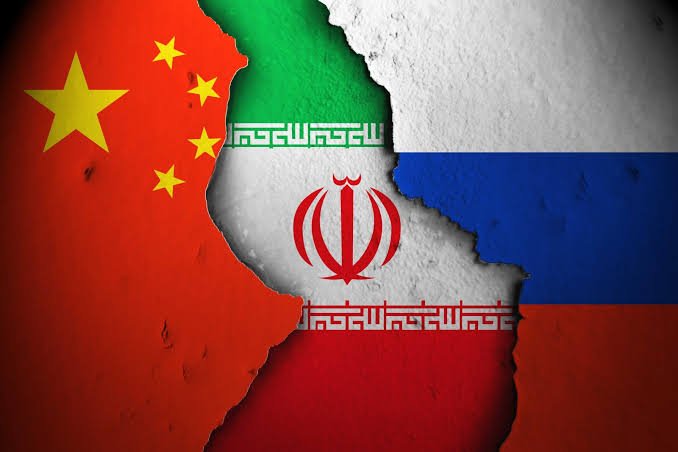
The 2026 war between the United States, Israel and Iran has put this to the test. It began on 28 February with a joint attack on Iran by the United States and Israel. New Delhi took a neutral position but suffered greatly as a result, including the closure of the Strait of Hormuz and LPG shortages. The response set off a debate. Manish Tewari questioned whether strategic autonomy meant staying quiet on regime change and targeted killings, yet he also argued that it was wise to stay neutral because it was not India’s war, and that India has historically not been an influential actor in West Asia. Shashi Tharoor said that neutrality was a responsible approach to statecraft in the Nehruvian tradition. The Hindu, in an editorial titled “West Asia on Fire,” argued that India should have taken a stronger position against the war and worked with other powers to help de-escalate. Suhasini Haidar has noted that India did take a stance against the violence on both sides, including Iranian attacks on the Gulf, where ten million Indians live. Prof. C. Raja Mohan has long argued that strategic autonomy is a realist evolution of non-alignment, a value-neutral approach to navigating great-power politics. Strategic autonomy is limited by reliance on any one patron.
Pakistan acted as a mediator. It organised the April ceasefire between Washington and Tehran, and the talks in Islamabad eased tensions. That is because Pakistan has good relations with Iran, Saudi Arabia, China and the United States. India’s special strategic partnership with Israel, signed in February, made it difficult to play an active role as a mediator. Haidar has also noted that Iran appeared to choose Pakistan as its mediator to exclude Israel. This should not be overblown. The ceasefire did not last, and Pakistan’s success was not secure. Mediation alone does not make a pole, but it shows that strategic autonomy can be practised by others, and that a country without the power to convene is a spectator.
Jacob argues in his book that India wants to become a pole. Kautilya shows that a state also needs the power and flexibility to influence outcomes, and Subrahmanyam would say this comes primarily through knowledge, institutions, and a strong economy. By these measures, India’s showing in 2026 has been mixed. It has diversified its relations and helped build consensus at the BRICS summit in September, helping bridge the gap between Iran and the UAE. But it was exposed on energy, was slow to take a principled stance, and did not sit at the core of the negotiations.
None of this is a reason to abandon strategic autonomy. Instead, it should be turned into power: strategic reserves, a navy to protect sea lanes, stronger relationships throughout the Gulf and trusted diplomats. Kautilya’s double policy is useful here. India can be a partner of the United States, a counterbalance to China and an interlocutor with Tehran, as long as it is clear about its interests and willing to take a principled stance. Non-alignment has given India space to develop. Now the question is what India does with that space. A pole is not declared but recognised when others come to it with their problems.