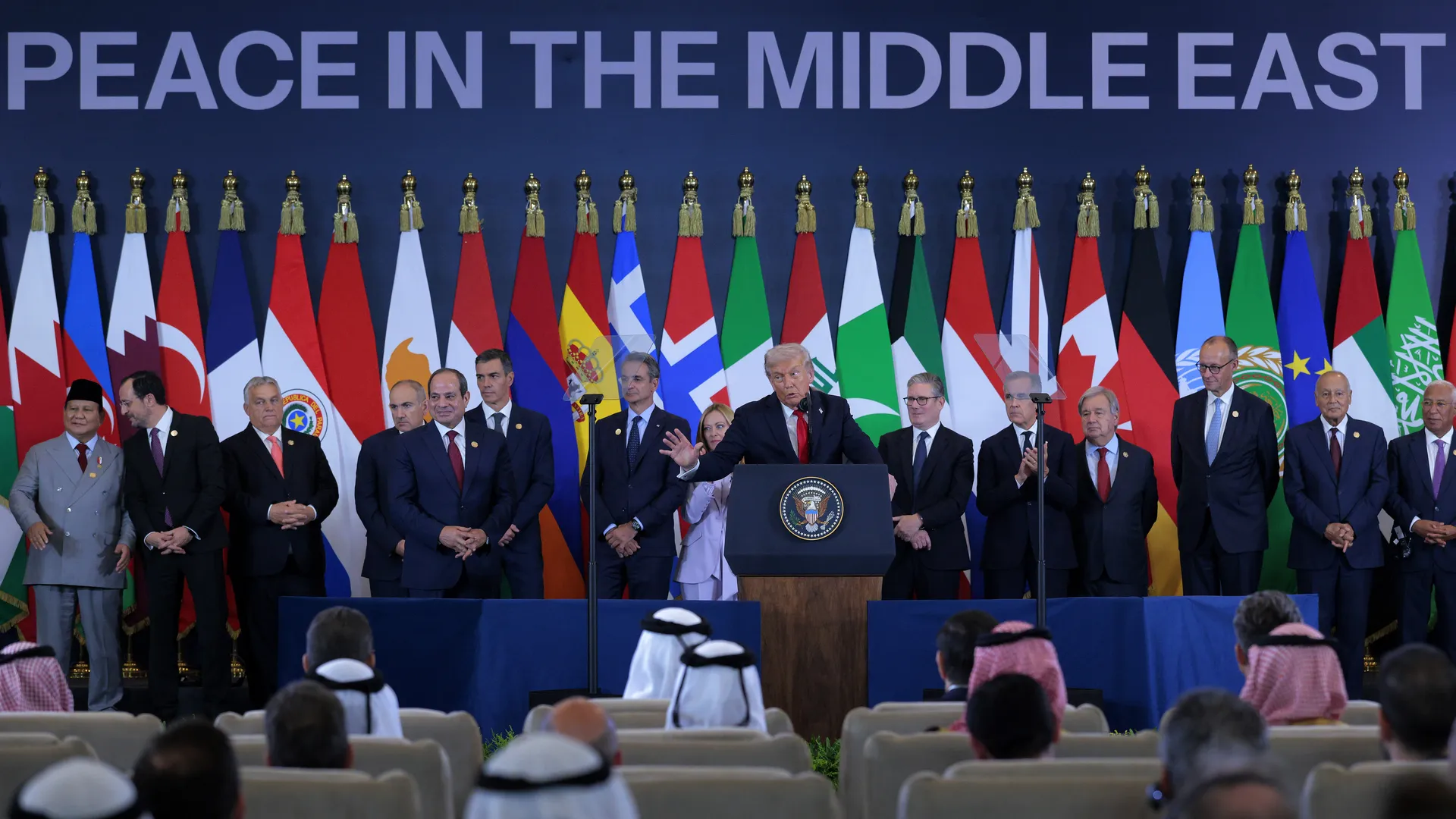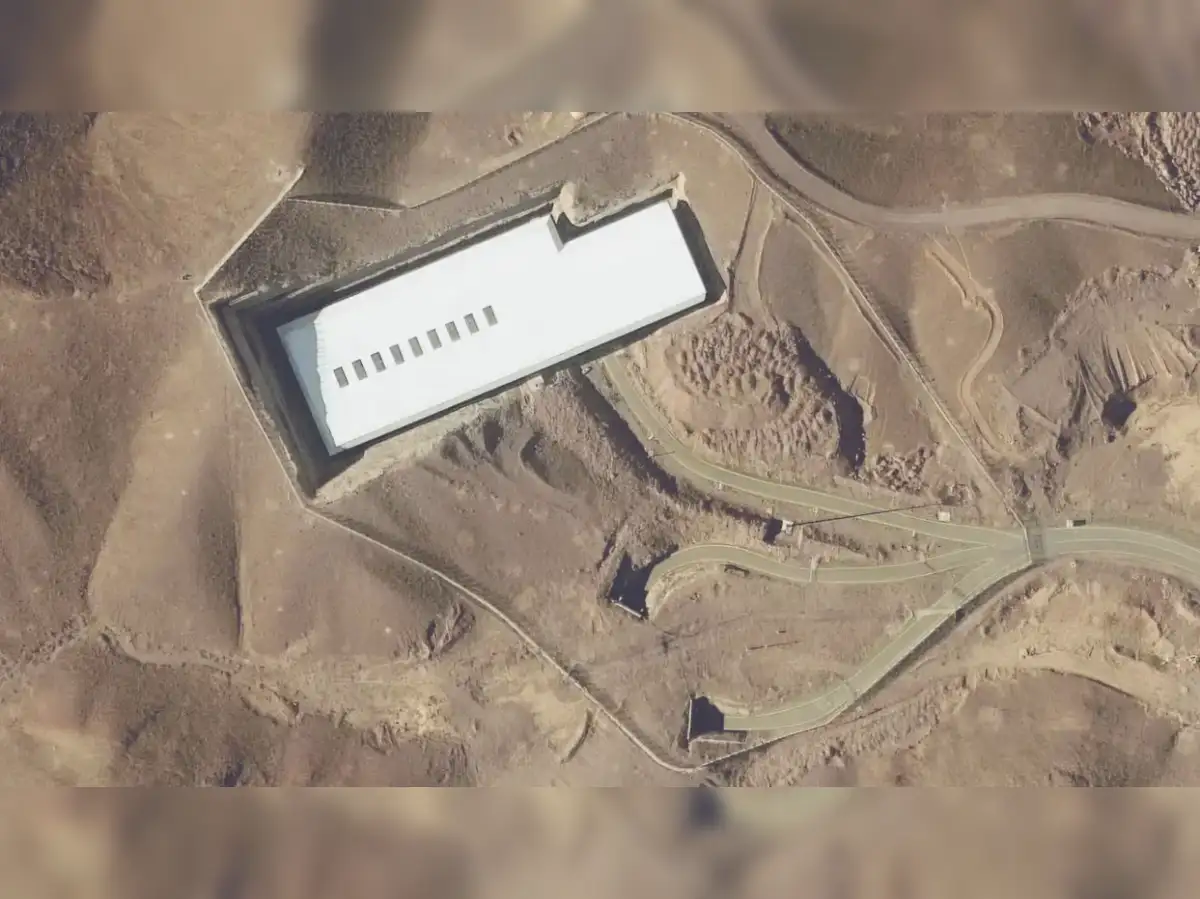
Six months after the unprecedented escalation in early 2026, the Middle East is navigating a radically altered geopolitical landscape in which traditional alliances are being replaced by transactional diplomacy. On 28 February 2026, the United States and Israeli strikes killed Iran’s Supreme Leader Ayatollah Ali Khamenei and much of his senior military command in a single night, opening the most consequential regional war since 2003. Six months on, Iran is led by Khamenei’s son Mojtaba, a naval blockade has throttled its oil exports, Hezbollah is fighting a renewed war in Lebanon, and the Houthis have joined from Yemen. Yet Saudi Arabia, the state with the deepest historical fear of Iranian power, did not simply celebrate Tehran’s humiliation. Struck by Iranian missiles aimed at its oil infrastructure and US forces on its soil, Riyadh responded not by rushing into Washington’s arms alone but by weighing its own retaliation, quietly striking Iran-aligned militias in Iraq, and continuing to hedge between Washington, Beijing and its own ambitions.
That contradiction captures the contemporary Middle East. The “Axis of Resistance”, Iran’s network of Hezbollah, Hamas, the Houthis, and Iraqi militias built around opposition to Israel and the United States, has been battered as never before. But its weakening has not produced the clean bipolar order its architects, or its enemies, once imagined. Instead, it has accelerated a deeper transformation: the replacement of fixed ideological blocs with overlapping, transactional networks of power, in which the same states cooperate on one issue and compete on another, hedge between Washington and Beijing, and treat military capability as one instrument among several. Understanding the region today requires looking past the Axis of Resistance framework, without discarding it altogether.
From Fixed Blocs to Fluid Alignments
For two decades, regional analysis defaulted to a binary: an Iran-led “resistance” camp against a status quo camp anchored by Saudi Arabia, the Gulf states, Egypt and Israel. That framework always oversimplified reality, but recent years have made it harder to sustain. In March 2023, China brokered a rapprochement between Saudi Arabia and Iran, ending seven years of severed ties. The détente was real but shallow: diplomatic engagement persisted even after the 2025 US-Israeli strikes on Iran, though economic normalisation remained largely aspirational. By early 2026, Saudi Arabia was publicly calling Iran a “sister nation”; within months, Iranian attacks on Saudi soil had reportedly persuaded Riyadh to expel Iranian diplomats, with one Saudi analyst telling the Jerusalem Post the Beijing agreement was effectively dead.
That volatility now defines the region: rapid, reversible realignments driven by interest rather than ideology. Qatar hosts a major US airbase while maintaining working relations with Hamas’s leadership and Iran, with which it shares the world’s largest gas field. Türkiye arms Ukraine, sells drones across Africa, keeps troops in Syria and Iraq, and calibrates its Gaza rhetoric for domestic audiences without breaking economic ties to Israel. The UAE normalised relations with Israel in 2020 while trading heavily with Iran. None of these states belongs to a single, permanent camp.
The New Regional Power Brokers
Saudi Arabia’s Vision 2030 shows how economic transformation has become inseparable from foreign policy. Riyadh’s overtures to Iran were never primarily ideological; they were about de-risking Yemen and protecting the investment climate needed to diversify away from oil, a goal that several analysts have tied to the kingdom’s ambition to become a regional logistics hub. The same logic now governs Riyadh’s pursuit of a civil nuclear programme with US backing, pursued alongside its unresolved position on Israel normalisation.
The UAE has gone furthest in decoupling security cooperation from ideology, using the Abraham Accords, sovereign investment and technology ties with both US and Chinese firms to build outsized influence. Qatar’s leverage rests on gas wealth and its rare utility as a mediator acceptable to Washington, Tehran and Hamas alike, a role it played repeatedly in Gaza ceasefire talks. Türkiye pairs hard power bases, drone exports, influence in post-Assad Syria, with a diplomatic voice courting Gulf capital and Islamist-leaning movements alike. Egypt, though economically strained, retains leverage as the gatekeeper of the Rafah crossing. None relies on a military alliance alone; each blends statecraft, capital, and diplomacy in ways that a resistance-versus-status-quo lens cannot capture.
Iran and the Transformation of the Axis of Resistance
Iran’s position defies simple description as either dominant or defeated. Khamenei’s killing, alongside the near-simultaneous deaths of Iran’s defence minister, IRGC commander-in-chief and armed forces chief of staff, triggered an unprecedented succession crisis, resolved only when the Assembly of Experts named Mojtaba Khamenei supreme leader roughly a week later. Iran’s air defences have been degraded, its currency has weakened further, and by September 2026, President Trump was boasting of “almost total control of the Hormuz Strait” and an Iranian economy “totally collapsing,” dismissing near-term prospects for a settlement. Yet Iran has not folded. Tehran retains the capacity to strike Gulf targets as it did on 2 September 2026, launching at least 59 missiles and drones at Jordan, Bahrain, Kuwait and Iraq, and its network has proven more resilient than one campaign could unwind overnight.
Hezbollah, fighting a renewed war in Lebanon since March 2026 that has killed more than 2,000 people and displaced over a million despite an April ceasefire, remains battered but functioning; the Houthis entered the war directly, showing Iran’s partners can activate independently of Tehran’s own fortunes. This is the paradox the framework struggles with: a network can be weaker than it was in decades past, yet still impose real costs on Gulf economies and Israeli territory. Iran’s strategy has shifted from projecting a unified resistance front toward preserving fragments of leverage, missiles, proxies, and Hormuz as bargaining chips rather than instruments of outright victory.
Diplomacy, Economics and Strategic Autonomy
Even amid open war, economic diplomacy has continued to function. OPEC+ continued adjusting production quotas through the conflict, and the Brent oil market near $71 a barrel in mid-2026 reflected relief at intermittent stand-downs rather than collapse. Global markets absorbed the shock by rapidly pricing in shifts in transit routes and relying on OPEC’s deep spare capacity. Furthermore, Beijing’s quiet diplomatic pressure on Tehran to allow passage of its own energy shipments has inadvertently established a baseline of market stability, demonstrating that commercial imperatives can constrain military escalation even when formal treaties fail. Gulf states used Pakistani, Qatari and Egyptian mediation to pursue ceasefire frameworks addressing Hormuz, sanctions relief and Iran’s uranium stockpile, a reminder that even active belligerents rely on diplomatic infrastructure built over years of “normalisation” politics.
Saudi conduct after being struck illustrates strategic autonomy in practice: rather than fully outsourcing its response to Washington, Riyadh reportedly struck Iran-linked militias in Iraq itself while weighing overt participation in the US-Israeli campaign. Saudi normalisation with Israel remains “on the table” according to officials cited in Israeli media in mid-2026, but conditioned on the war’s trajectory and, per Saudi royal sources, potentially on a change of Israeli government. Evidence that Riyadh treats normalisation as a negotiable instrument of leverage rather than an ideological commitment.
What the Emerging Regional Order Means
For US influence, the war has been double-edged: Washington showed decisive reach in killing Iran’s supreme leader and command structure, yet has struggled to convert that dominance into a durable settlement, with Hormuz blockade dynamics and repeated violations pointing to attrition rather than resolution. China’s role has narrowed, with its 2023 Saudi-Iran mediation overshadowed by subsequent events, even as Beijing retains commercial leverage, reportedly one of the few outside powers still granted Gulf shipping access despite an Iranian declaration restricting transit. Russia, distracted by Ukraine, has played a marginal role, suggesting that its influence has always been more rhetorical than structural.
Israel’s position is similarly ambiguous: militarily dominant and emboldened by Iran’s and Hezbollah’s degradation, yet lacking the broadened Abraham Accords participation, Saudi accession above all that would cement a reshaped order, and still managing a fragile Gaza ceasefire that has cost over 700 Palestinian and four Israeli lives since October 2025. The lesson is sobering: even a war this consequential has not resolved the disputes over Palestinian statehood, Iranian nuclear ambitions or Hezbollah’s disarmament; it has only shifted leverage among the same actors.
Conclusion: Policy Takeaway
The Axis of Resistance has not disappeared, and its degradation should not be mistaken for a stable order emerging in its place. Non-state actors retain real coercive capability even after catastrophic losses; pragmatic cooperation between rivals does not equal trust, as the collapse of Saudi-Iranian rapprochement within a year of its warmest rhetoric shows; and multipolarity visible in the simultaneous roles of Washington, Beijing, Islamabad and Doha in 2026’s mediation efforts has multiplied channels for de-escalation without guaranteeing it.
Three implications follow. First, Western strategy should stop treating regional alignments as fixed: Saudi Arabia and the UAE will keep hedging between Washington and Beijing regardless of security guarantees, and policy should manage that hedging rather than demand exclusivity. In practice, this means Washington should abandon ‘all-or-nothing’ ultimatums, such as demanding the complete removal of Chinese technology from Gulf infrastructure as a prerequisite for advanced weapons sales. Instead, Western policymakers must rigorously compartmentalise sensitive military and intelligence sharing, while accepting that Gulf nations will inevitably partner with Beijing on civilian tech, green energy, and trade. Second, durable de-escalation requires addressing what drives proxy activation of Palestinian statehood above all, not assuming that degrading Iran’s command structure alone resolves the grievances sustaining Hezbollah, the Houthis and Hamas. Third, mediation is now genuinely distributed among Qatar, Egypt, Pakistan and even China; crisis management depends on coordinating this wider cast, not assuming Washington can manage outcomes alone. The region beyond the Axis of Resistance is not more stable; it is more crowded, more transactional, and harder to predict.