When Western media and policymakers discuss the conflict in Yemen, they almost universally deploy a single, convenient label, “The Houthis”. By filtering an entire geopolitical movement through the lens of a single northern family surname, Western narratives subtly but intentionally reduce a highly organised political and military entity into a backward, tribal uprising. This linguistic framing, however, is not accidental; it’s a deliberate attempt to strip the movement of its ideological foundation. In reality, the group defines itself as “Ansarallah”, the “Partisans of God” (انصار ﷲ). This title reflects an ideological, political, and socio-religious project that spans across conventional tribal and regional divisions.
The Houthi label originates from Hussein Badreddin al-Houthi (Of the ‘Houth’ Tribe), the charismatic religious leader who spearheaded the group’s early organising before his martyrdom in combat against state forces in September 2004. By replacing the movement’s actual name with a family/tribal surname, Western media outlets and foreign policy establishments reduce a national political and social movement to a regional clan uprising. This feeds into long-standing Orientalist tropes regarding West Asia and North Africa, where complex political transformations are routinely downgraded to primitive tribal squabbles, sectarian rivalries, or ancient blood feuds.
Framing Ansarallah merely as the “Houthis” serves an obvious political function. It strips the movement of its political platform, institutional identity, and socio-economic critique of Western and Gulf interventions. By labelling them as an isolated rebel clan, foreign governments can frame their own military interventions, blockades, and missile strikes as a defence of a legitimate state against regressive, lawless insurgents. Language, in this context, serves as a primary tool of political delegitimisation.
To understand Ansarallah, one must move beyond media caricatures of an “irrational rebel tribe” and trace its historical trajectory. Ansarallah’s origins lie exclusively in al-Shabab al-Mou’min (The Believing Youth), a peaceful revivalist movement founded by Hussein al-Houthi in the 1990s. It was born to defend the profound cultural identity of the Zaydi people of northern Yemen against the systematic marginalisation of President Ali Abdullah Saleh and the proliferation of Saudi-backed Wahhabi institutions in traditional Zaydi areas.
The movement was militarised through foreign interference and state violence. Hussein popularised the anti-imperialist slogan Sarkha, which condemned US hegemony. He opposed Saleh’s controversial alignment with Washington’s “War on Terror” post-2003. The state’s response was savage. From 2004 to 2010, Saleh initiated six scorched-earth military campaigns against Sa’da. As anthropologist Marieke Brandt puts it, this centre-periphery conflict, together with the disproportionate and massive violence of the state that killed Hussein in 2004, resulted in a defensive alliance of the northern tribes and forged Ansarallah into a hardened resistance movement.
The critical turning point came with the Arab Spring in 2011, which led to Saleh’s replacement by his deputy, Abdrabbuh Mansur Hadi. This transitional government was a total failure in the view of scholars, with failed neoliberal policies that enriched elites and ignored extreme rural poverty. What is more, a 2013 division plan threatened to gerrymander Sa’da into an isolated, resource-poor zone. And the breaking point came in July 2014, when, under immense IMF pressure, Abdrabbuh Mansur Hadi suddenly slashed vital fuel subsidies. Overnight, prices for the working class skyrocketed. Feeding off the anger across the country, Ansarallah built a large populist coalition demanding real economic sovereignty. When they marched into Sana’a in September 2014, it was not a lone militia coup, but a popular revolution against an economically violent, Western-backed state.
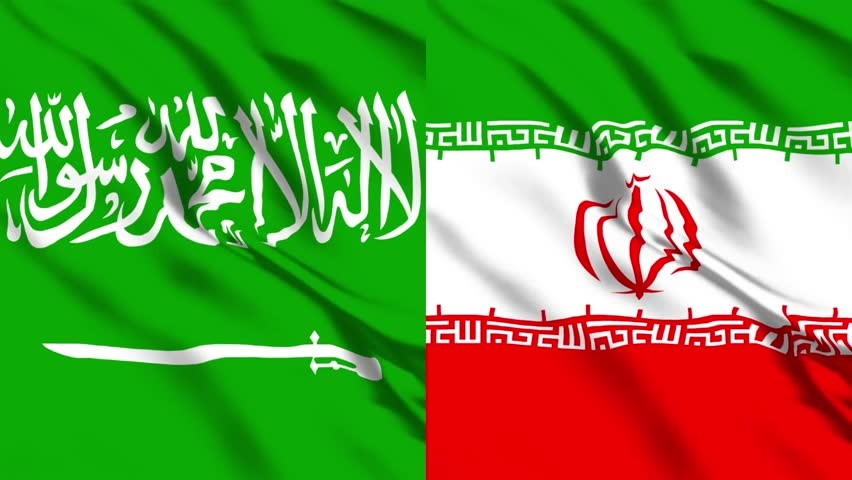
In Western foreign policy discourse, “Iranian-backed” almost automatically precedes the name of Ansarallah. The mainstream media often portrays the group as a passive proxy, acting on a direct order from Tehran in a regional battle against Saudi Arabia and the United States. This “proxy” label is not just historically wrong, but politically reductive and dangerous. It internationalises an organic, domestic conflict, converting a civil war rooted in local grievances into a front line of a global chess match for geostrategic advantage.
While Ansarallah is ideologically aligned to Iran in the broader “Axis of Resistance,” with a shared worldview that is fiercely anti-imperialist and anti-Zionist, to consider the movement an Iranian puppet fundamentally misses the domestic political dynamics in Yemen. First, there is a break in chronological and material order. In the first decade of fighting (2004–2014), Ansarallah fought with homegrown arsenals bought on domestic arms markets or captured from depots of the Yemeni army. Iranian engagement was minimal and mostly rhetorical.
Second, according to historical empirical records, Ansarallah has a high degree of strategic autonomy. The final litmus test came in September 2014. The Iranian officials explicitly warned Ansarallah not to take the capital, Sana’a, when they were at the gates. However, the group largely overlooked Tehran’s warnings and acted on its assessment of domestic political opportunities. A genuine proxy will not make its most significant, highest-risk strategic decision in direct opposition to its patron.
Furthermore, the “proxy” designation has a specific propagandistic role. As researcher Farea Al-Muslimi puts it, this narrative offered essential diplomatic cover for the disastrous Saudi-led military campaign that started in March 2015. By portraying Ansarallah as an Iranian tentacle, Riyadh and its Western allies could justify their aerial bombardments and naval blockades as necessary containment, erasing the agency of millions of Yemenis. There is tragic irony here, Al-Muslimi notes. The Saudi blockade in 2015 actually created the same dependency it purported to fight, leaving Ansarallah with no alternative military supplier but Tehran.
As such, the “Iranian proxy war” narrative functions as a deliberate smokescreen created by Western powers to mask their true objective: maintaining control over Yemen’s strategic geography, specifically the Bab el-Mandeb strait, and its unexploited natural resources. Ansarallah’s fight through a macro-level anti-imperialist lens is not for an Iranian hegemony but a real struggle for national sovereignty against modern imperialism and a project to partition and privatise Yemen’s wealth.
Western news outlets routinely refer to the Saudi-sponsored Presidential Leadership Council (PLC) as the “Internationally recognized government“, while dismissing Ansarallah as “Rebels holding territory.” This linguistic distinction relies on foreign diplomatic status rather than administrative reality on the ground.
Political maps often obscure the human geography of Yemen. While the coalition and its local allies hold nominal control over large territory in eastern provinces such as Hadramout and Mahra, these areas are primarily vast, low-density deserts. At the same time, Ansarallah controls the northern and western highlands, including Sana’a, the vital port city of Hodeidah, and dense urban centres. This territory houses between 70% and 80% of Yemen’s population of over 34 million. In terms of demographics and cultural history, Ansarallah governs the actual core of the Yemeni state.
Beyond population density, Ansarallah operates a centralised and functioning state apparatus. Despite years of intense aerial bombardment, foreign blockades, and a split Central Bank, Ansarallah has maintained administrative control. They manage ministries, collect taxation, run police forces, administer judicial courts, and enforce public security across their territories. Their economic management, while operating under extreme siege conditions, has maintained the currency’s relative stability in Sana’a, where the Yemeni Rial trades at around 530 YER per US dollar.
In contrast, the internationally recognised government in Aden remains profoundly fractured. Formed in Riyadh in April 2022 to replace former President Mansur Hadi, the eight-member PLC consists of rival faction leaders with conflicting goals. It includes Southern Transitional Council (STC) separatists who reject Yemeni unity, Salafi militia leaders, and loyalists to former President Saleh. These factions frequently clash militarily in Aden, Shabwa, and Hadramout. In areas nominally under the PLC, basic services have collapsed, security is fragmented among rival warlords, and the local currency has repeatedly plummeted past 1,800 YER per dollar.
Within Yemen, Ansarallah is not an insurgent group waiting in the margins; it is the functioning authority that actually manages the state.
For over a decade, Western diplomatic strategies toward Yemen have failed because they are grounded in political fiction. By viewing Ansarallah through tribal caricatures, proxy formulas, and outdated UN Security Council resolutions, foreign diplomats have demanded that the primary governing authority in Sana’a lay down its arms and surrender unconditionally to a divided, foreign-backed council that lacks popular legitimacy.
Direct negotiations between Saudi Arabia and Ansarallah in recent years show us that even regional powers recognise who holds actual authority. If international actors genuinely seek regional stability and an end to Yemen’s long crisis, they must align their rhetoric with reality. Ansarallah is an Independent, Revolutionary Movement that successfully leveraged domestic grievances to build a functional state across Yemen’s population centres. Moving past the propaganda of “Houthis” and “Iranian puppets” is not a political favour to Sana’a. It is the necessary starting point for any realistic diplomacy and the Way to Peace.