The second war against Iran imposed by the United States and Israel in less than a year is a critical juncture in the Islamic Republic’s contemporary history. The conflict inflicted significant human, economic, and infrastructural losses on the country. But the most consequential effects extended beyond the battlefield, exposing and amplifying pre-existing political, social, and economic vulnerabilities that had accumulated over more than a decade of stagnation, sanctions, and declining public trust. At the same time, the war produced an unexpected surge of national solidarity by bringing diverse social groups together around a renewed sense of collective identity and a homeland. This article examines the broader implications of the conflict for Iran’s political and social landscape. It situates the war within the context of Iran’s prolonged economic crisis and growing state–society divide, before analysing the conflict’s impact on governance, legitimacy, public trust, social cohesion, inequality, mental health, and education. It is argued that the post-war period presents both significant risks and a rare opportunity for Iranian leaders to address longstanding structural challenges and redefine relations between the state and society.
The Road to the 39-Day War
The past decade (2011-2020 has been described as a “lost decade” for the Iranian economy in terms of economic growth opportunities. According to World Bank data, per capita gross domestic product (GDP) growth has declined at an average annual rate of 6 per cent between 2011 and 2020. In addition, secondary sanctions have had a devastating impact on the country’s GDP growth and the outcomes of its welfare policies.
The lack of economic growth during the aforementioned period has also been accompanied by inflation and a decrease in household purchasing power. By the end of the 2010s, 40 per cent of Iranians were in a situation where they were exposed to poverty with a probability of more than 20 per cent in the near future. While this was a 10 per cent increase from 2011, if household consumption had grown at a steady pace over 2014-17, the poverty rate would have fallen by 2.7 per cent. But households in the bottom 40 per cent of the consumption distribution have also benefited little from the few economic growth spurts in the 2011-2020 decade. A focus on consumption patterns shows that the poorest households suffered the most during recessions and benefited the least during periods of economic growth. Households in the bottom income percentile have experienced an average annual decline in real consumption of about 2 per cent. At the same time, this rate was 1 per cent for the richest households.
The intensification of economic crises, the rise in public dissatisfaction with the way the country was managed, and macro policies ultimately led to profound political and social consequences, including a weakening of the government’s legitimacy and a deepening of the state-society gap. It was in such circumstances that Iran witnessed widespread recurrent protests and political instability over the last many years, especially since 2021, but were subsequently and successfully contained by the state through what many rights bodies described as high-handed coercive measures.
But then, in late 2025, Iran witnessed unprecedented protests, starting from the Grand Bazaar of Tehran, driven by public anger over the worsening economic crisis. The immediate trigger for the protests was the steep devaluation of the Iranian Rial, which led to an exponential rise in inflation. Initially led by Tehran’s bazaars and shopkeepers, the protests did not take long to spread from the city’s business centre to engulf major parts of the country, expanding quickly beyond economic demands to encompass political reforms. Yet, it did not stop at the political reform alone and instead saw sections of the protestors demanding an outright regime change, with incidents of slogans like “Death to the dictator” being chanted reported by the media. The government, though initially receptive to the economic grievances and even announcing some piecemeal measures to alleviate the situation, quickly went on to label the protests as foreign-backed –an allegation aided by US President Donald Trump and Israeli Prime Minister Benjamin Netanyahu extending an olive branch to protesters. The subsequent crackdown saw thousands of people being killed. While the state alleged that a section of protestors were armed and targeted state security forces and civilians alike, killing 3117 people, mostly security officials, the rights bodies, such as the US-based HRANA, put the figure at a very high, somewhere above seven thousand, predominantly protesters.
Regardless of how the security forces handle the protests, the Israeli-American war against Iran began, leading to 39 days of military conflict between these actors, which exacerbated the socio-political consequences resulting from the unstable economic situation and internal discontent.
War and immediate impacts
When the US and Israeli started military strikes on Iran on February 28, 2026, it quickly sparked a wide-reaching regional conflict. Iran did not just retaliate against the Israeli targets but also against a range of US military-affiliated targets such as regional bases across several countries in the Persian Gulf. Iran also successfully closed the Strait of Hormuz, the critical maritime route through which ships one-fifth of global crude and equally significant global LNG supplies. While announcing joint US-Israeli military strikes on Iran, President Donald Trump stated that Washington’s goal was to “eliminate imminent threats from the Iranian regime.” US officials had articulated several specific military objectives, including halting Iran’s nuclear program, rolling back its ballistic missile program, and neutralising the direct threat posed by Iranian-backed armed networks.
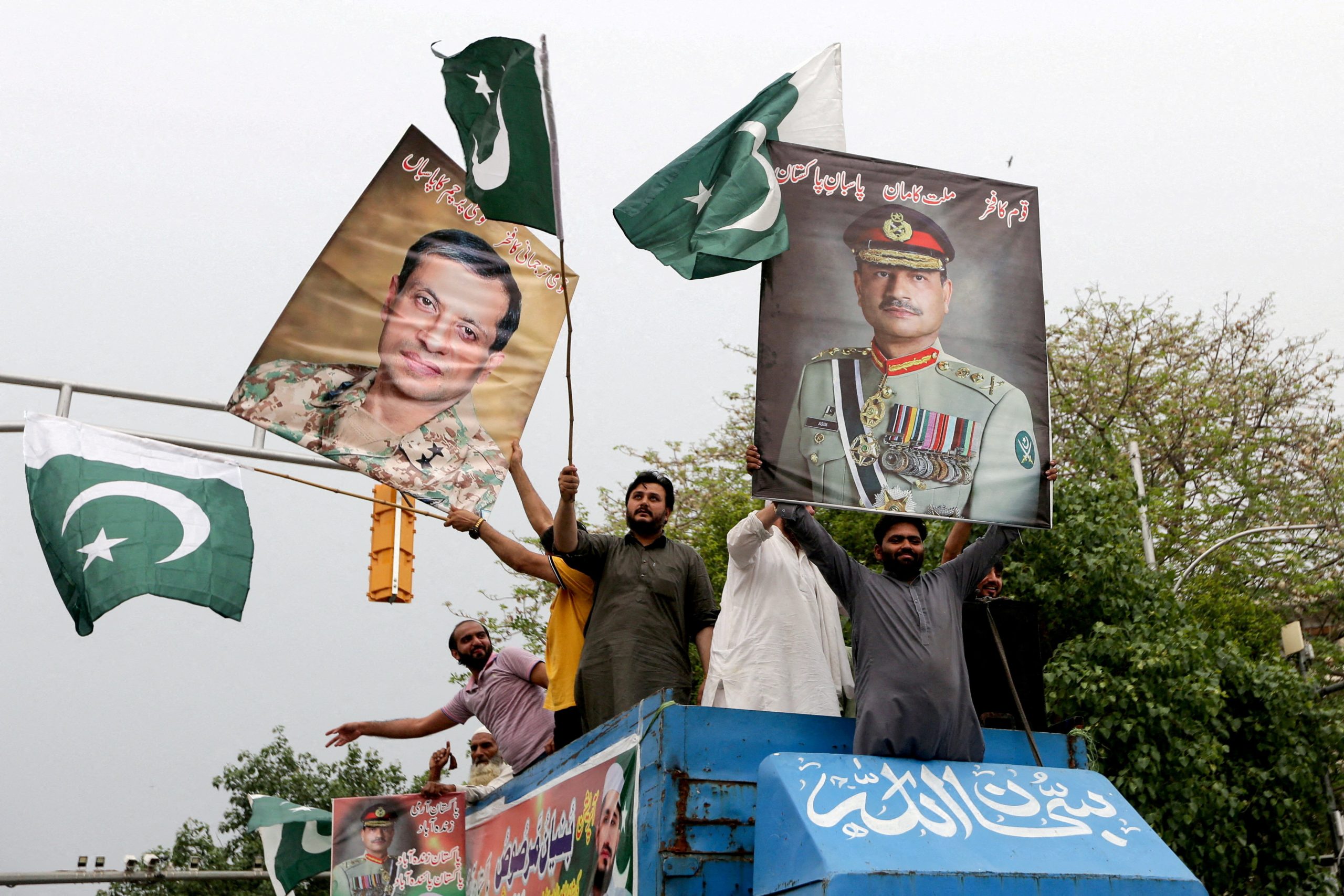
Between February 28 and April 9, when Pakistan brokered the initial ceasefire, the Human Rights Activists in Iran (HRA) revealed that the US and Israeli military strikes killed at least 1701 civilians, including 254 children. In the first 25 days of the war, HRA found that over 37 per cent of the attacks were concentrated in Tehran’s urban areas, including damage to 60 hospitals and medical centres, 44 schools, and 129 residential buildings. The government estimates indicated that more than 16,000 homes were damaged. In addition, nearly 543 attacks targeted “dual-use” infrastructure, including energy and transport systems essential to civilian life. Overall, according to government estimates, the war has caused nearly $300 billion in damages, meaning that in just 39 days, the financial toll equals that of 26 years of oil sanctions against Iran.
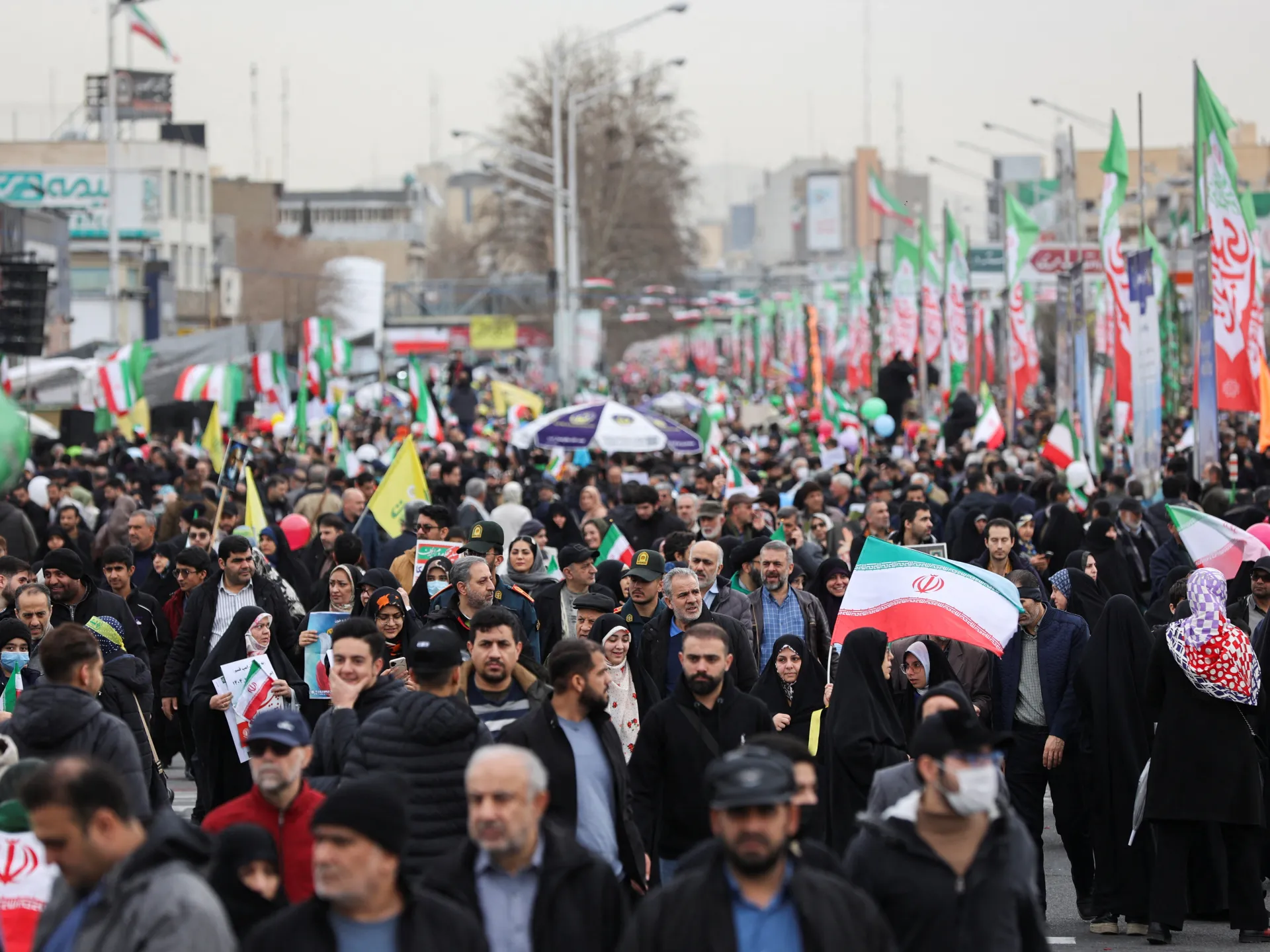
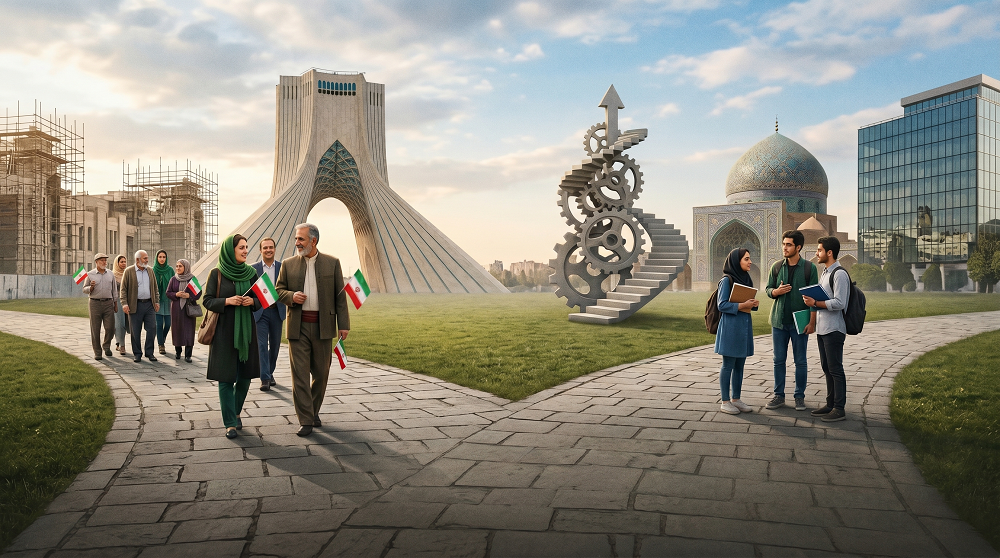
The war has also allowed the government to leverage national solidarity and bring together diverse, even opposing, groups and classes around the necessity of protecting the homeland, which may be considered an important achievement given the situation a few weeks before the war due to protests. As such, it has created a new situation: in the transition period between the ceasefire and a lasting diplomatic agreement, the Iranian leadership now has an opportunity to take advantage of the positive achievements of this war, compensate for the negative points and deep historical economic and civil wounds, and bridge the gap between themselves and the nation.
Beyond national and international consequences, the war affects all aspects of daily life in Iran. It affects their daily lives, from basic needs and employment to family ties and social cohesion. However, the greatest danger war poses is that it changes the state of political governance and social divides.
Political Consequences of War
Governments serve people and the interests of the state and are responsible for making decisions to secure them. Violating the principle of impartiality also equals a greater gap between what the people want and what the government pursues. This problem has reached its acute point today: people feel that the government – or institutions within the government – are seeking to advance their own interests, not the interests of the people.
One of the most significant ramifications of this governance deficit has been the erosion of institutional trust. As confidence in governing structures diminishes, the prospects for cooperative engagement between state and society correspondingly decline. Development, in this sense, is contingent upon reciprocal cooperation, wherein governmental initiatives and citizen participation converge to produce sustainable outcomes. A second consequence of this gap is widespread demotivation. Even when the state perceives itself as advancing the public interest, if citizens interpret its actions as misaligned with their aspirations, a sense of disillusionment ensues. This demotivation manifests across multiple domains: from bureaucratic underperformance and diminished workplace accountability to societal neglect of collective responsibilities such as environmental stewardship and water conservation.
Conversely, escalating dissatisfaction and civic disengagement engender a cumulative social malaise: collective depression intensifies, destructive tendencies proliferate, and despair manifests in heightened emigration pressures and accelerated capital flight. Under such conditions, the costs of mobilising participation and attracting investment rise substantially, while atomised individualism, which is understood in its narrowly self‑interested form, becomes more pronounced. At the structural level, the erosion of governmental legitimacy reflects a fundamental disjuncture between official priorities and societal expectations. As legitimacy deteriorates, regimes increasingly depend upon a constricted circle of supporters, necessitating the allocation of rents to sustain their loyalty. Yet the broader distribution of such rents is widely perceived as systemic corruption, thereby reinforcing and deepening this regressive cycle of mistrust, withdrawal, and institutional fragility.
The central signifier in a legitimacy crisis is the concept of authority, but this signifier itself encompasses two other signifieds: the source of authority and the agent of authority. If no understanding is reached between the people and the ruling power—or between the nation and the state—regarding these two issues, a legitimacy crisis will emerge. A legitimacy crisis can occur in two stages: the notional and the practical.
Drawing on a political sociology approach and in dialogue with the literature on legitimacy crisis, the rentier state, revolution, and political reform, eight recurring patterns are identified in Iran’s contemporary political history: the revolutionisation of politics and the blockage of reform pathways; the reduction of governance and the crisis of expertise; the normalisation of violence and the devaluation of human life; the crisis of historical learning and the reproduction of institutional errors; the disregard for social pluralism and the crisis of representation; the dominance of exclusionary politics over integrative politics; the chronic rupture between political power and real society; and the normalisation of the state of exception. These patterns are analysed in light of the theoretical literature on legitimacy crisis, the rentier state, and the state–society divide.
According to classical definitions of the state institution, its inherent functions are the establishment of order and security, the guarantee of property rights, the provision of welfare, and the delivery of public services. Failure to properly address any one of these areas can be regarded as an instance of its inefficiency.
Social Consequences
War revealed the wounds of Iranian society far more clearly and unambiguously. Even in the months before the war, Iran was a wounded society. In recent months, Iranians have been faced with bearing multiple wounds. The consequences of these wounds were a kind of national despair: intense distrust, an absence of national solidarity, and the violence and cruelty of language, visible across social media, the press, and public speeches. It is clear that there is a strong correlation between social unrest and structural inequalities in Iranian society, which have become even more pronounced in recent years.
One of the persistent challenges facing Iranian society is class inequality, a divide that has been further deepened by the war and lies at the root of many of the country’s current social problems. Following the intensification of inflation, recession, unemployment, population growth, and the decline in the real income of wage earners, poverty and inequality have deepened across society. This has given rise to a proliferation of informal and precarious employment, rising crime and delinquency, a negative impact on public health, and a declining motivation to pursue higher education among low-income individuals. The spread of poverty and income inequality generates discontent among vulnerable segments of society and can erode public support for the government. Since the survival of any political system depends on the general satisfaction of its people, the widening of poverty and income inequality poses a serious threat to the political system’s long-term survival. Moreover, the persistence of economic inequalities has threatened the mental health of society. In this regard, vulnerable groups and low-income groups inevitably bear the greatest psychological pressure.
The mental health of society was another arena that did not escape the negative consequences of the war. Approximately 3.2 million people were reportedly displaced according to United Nations figures, resulting in widespread psychological distress. In fact, in contexts where young people may face violence, displacement, family separation and chronic uncertainty, mental pressures multiply. Eventually, social exclusion, trauma and inequality had significant potential to become incubators for mental health issues. The psychological and social pressures described are exacerbated when they coincide with institutional inefficiencies. The education system is a clear example of this situation, a fundamental system that was severely damaged during the war.
During the 39-day war, 1,507 educational facilities across the country sustained damage, with the estimated cost of repairs put at approximately $74 million. The attack on Shajara Tayeba school in Minab was one of the most devastating strikes on educational facilities in the country, a horrific and virtually unprecedented war crime. Furthermore, due to the ongoing conflict and security concerns, schools and universities shifted to remote learning. This new situation posed serious threats to students, including reduced effective learning time in virtual education, methodological limitations of remote learning, a decline in educational interactions, restricted access to technological tools for a significant portion of students, diminished assessment credibility, and heightened psychological pressures stemming from the war. Considering all the points mentioned, the effects of war go beyond material damage and can widely expose the social fabric to fundamental changes.
Nevertheless, shared experiences and critical moments can create the conditions for reviving a sense of belonging and solidarity. Sometimes an external threat or a collective event activates a sense of shared identity and brings people together around a single concept — one that may find expression as “homeland,” “territory,” or “collective identity.” At such turning points, a faded sense of trust comes back to life, and families, along with educational, religious, and social institutions, stand together. This convergence demonstrates that social trust, though weakened, also has the capacity for renewal.
Conclusion
Beyond the extensive economic dislocation and security vulnerabilities it engendered, the 39-day war waged by the United States and Israel against Iran produced deeper sociopolitical reverberations. Among its most salient outcomes was the consolidation of national cohesion, in which disparate social classes, political constituencies, critics, and even opponents of the prevailing system coalesced around the unifying notion of the homeland. This emergent solidarity constituted a critical achievement of the conflict, creating the enabling conditions for a transition from ceasefire arrangements toward the negotiation of a durable diplomatic settlement. These circumstances create a significant opportunity for Iran’s young leader to leverage the valuable achievements of this war to address accumulated social and political fractures in Iranian society. Consequently, to bridge the gap between the political system and the nation in the post-war transition period.