If settler colonialism is a structure rather than an event, then its most vivid manifestations occur not on the battlefield but in land registers, zoning maps, courtrooms, and cadastral surveys. It is here in those somewhat mundane bureaucratic procedures of governance that colonial power is normalised, routinised and rendered seemingly legitimate. The violent episodes of conquest are just part of settler dominance; the deeper process of elimination takes place in law, space and the silent rewriting of everyday life.
French Algeria and Zionist Palestine both provide clear examples of how settler colonial regimes entrench themselves by transforming land into property, people into categories and indigenous existence into a legal problem. Here, the land is confiscated and reappropriated, sovereignty is both declared and exercised through administration and the eradication and invisiblisation of indigenous life is conducted through legal fiction. This makes it necessary to understand these processes, particularly in the case of Palestine where international discourse has often fixated on episodic violence while ignoring the legal and spatial architectures that make such violence both possible and predictable.
Land as the First Battlefield
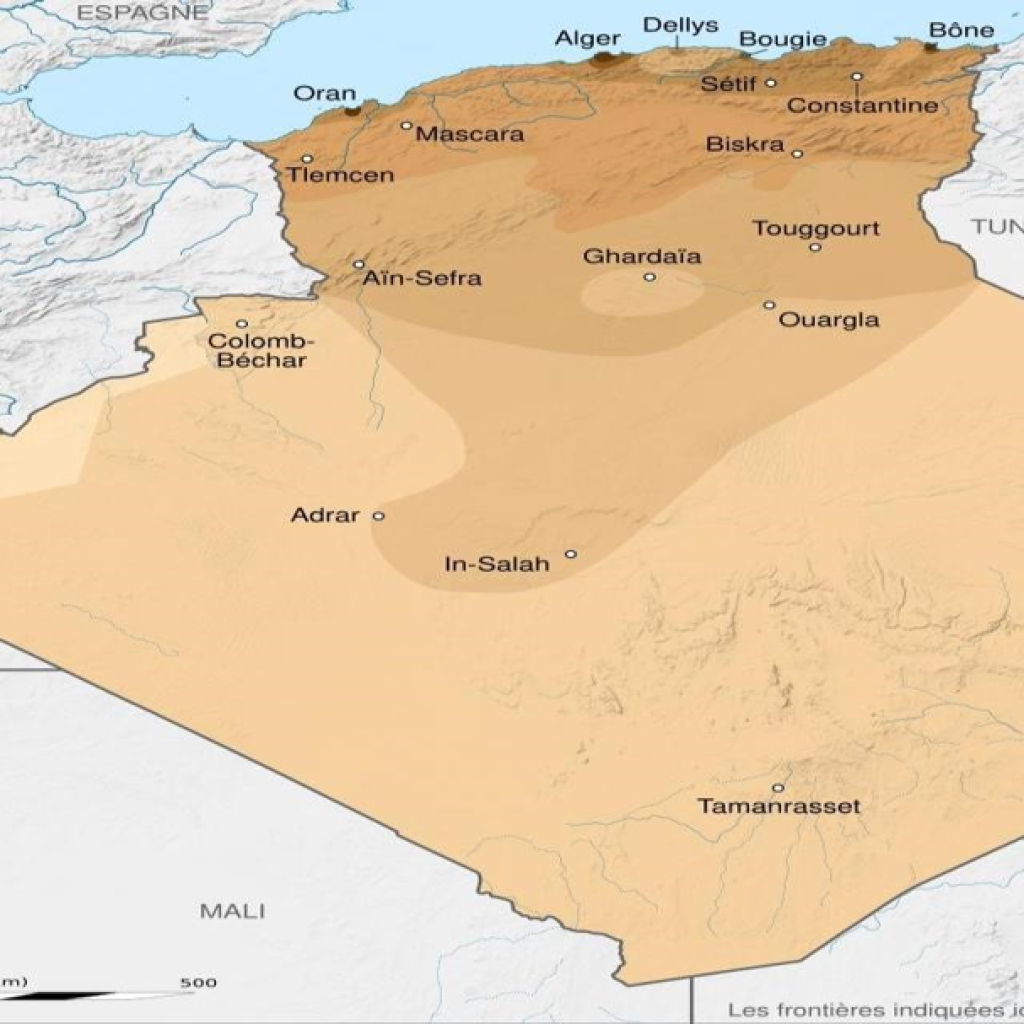
Settler colonialism begins and repeatedly returns to the land. In Algeria, the French conquest was accompanied by systematic land expropriation that broke indigenous modes of communal land ownership. Since Algeria’s traditional landholding structures were deeply embedded in the social and religious life of the people, they were seen as a fundamental barrier to settler permanence, and therefore their dismantlement was deemed a prerequisite for sustaining colonial control.
The French colonial administration deployed legal instruments to declare vast tracts of Algerian land as “vacant,” “unused,” or “unproductive” before transferring them to European settlers. By the early 20th century, French settlers owned nearly two-thirds of Algeria’s fertile land, leaving indigenous Algerians confined to arid peripheries or reducing them to agricultural labourers on land that was theirs. This was not any opportunistic exploitation, but rather demographic engineering with land ownership as the key to political destiny. The logic was clear: settler permanence could only exist if it controlled the material bases of life, viz., agriculture, water, housing, and urban space. As such, Algerians were not only dispossessed but structurally excluded from the future that was to be built on their soil.
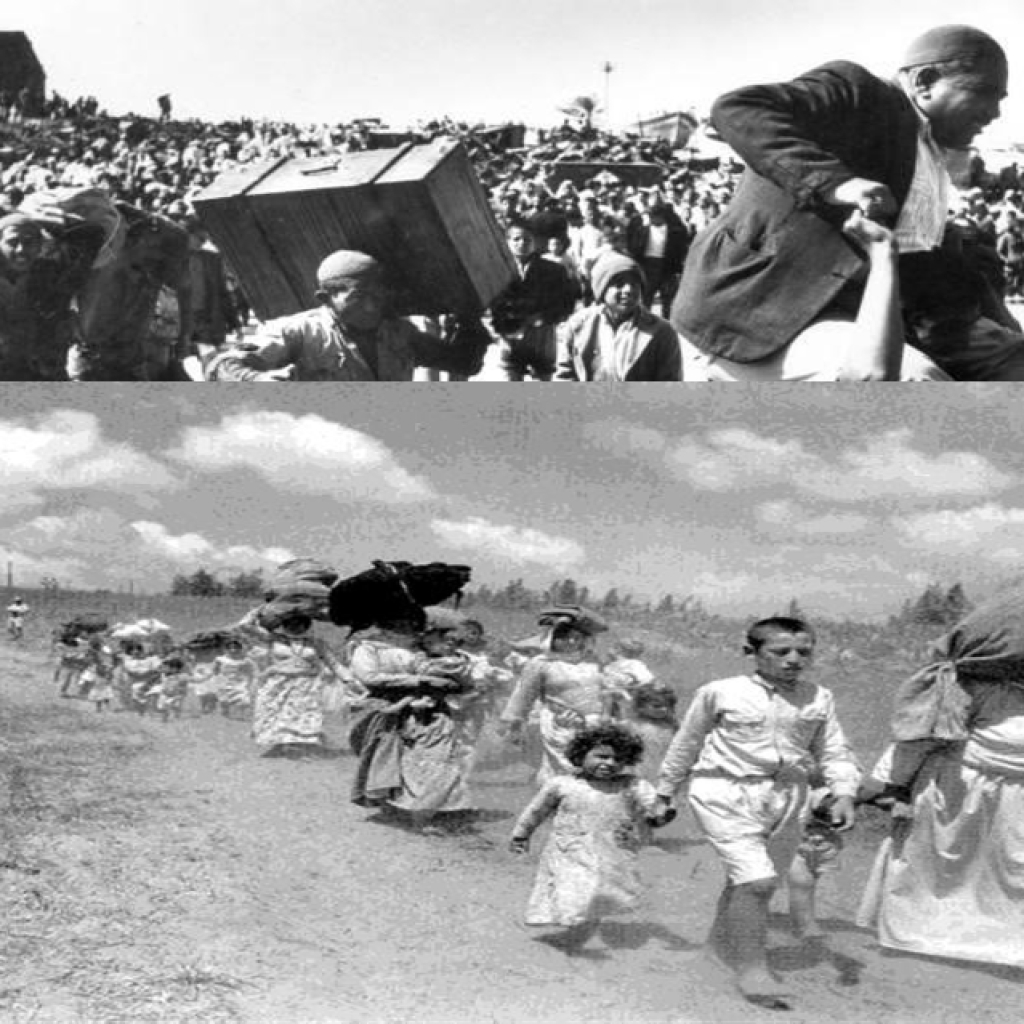
In the case of Palestine, land has had an even more central role because Jewish Zionism presented itself explicitly as a project of territorial redemption. From the first Zionist land purchases under Ottoman rule and British colonial mandate to mass confiscations after the 1948 Nakba, land ownership has been the foundation on which the Israeli settlement project is built. What distinguishes the Palestinian case is the continuity of this process to this day as the land seizures did not end in either 1948 or 1967; rather, it continues to be the central dynamic of Zionist settler rule.
The ongoing Israeli settlement expansion in the Occupied West Bank, the confiscation of land under military orders, and the designation of Palestinian land as “state land” or “closed military areas” eerily mirror earlier colonial practices elsewhere. As such, like in French colonised Algeria, Palestine has been subjected to a regime which systematically snatches the land from Indigenous inhabitants through legal and administrative machinations to entrench its settler colonial control.
Law as a Technology of Domination
Settler colonialism does not primarily rule through chaos. It relies on the established order of the law to institutionalise raw violence into ‘legitimate’ authority. In Algeria, the French colonial state perfected the use of law to achieve legitimate authority through the Code de l’Indignat, which imposed and institutionalised racial hierarchical divisions between settlers and colonised subjects and effectively criminalised Indigenous Algerians under a separate, inferior legal system.
Under this code, Algerians could be punished without trial, collective punishments could be imposed, and all civil rights were denied to them, whereas French settlers enjoyed full citizenship and legal protection. This dual legal structure, which served to criminalise Indigenous Algerians in ways that the law itself seemed to naturalise inequality. It taught settlers and subjects alike that domination was lawful, rational and permanent.
Israel’s legal system performs a strikingly similar function in Palestine, though with much greater sophistication and global silence if not acceptance. Land confiscation is rarely presented land grab through naked force; rather, it is framed as a duly adopted legal process sanctioned by law. For example, the Absentee Property Law of 1950 enables the Israeli government to seize the land belonging to Palestinians displaced in the 1948 Nakba by redefining the refugees as ‘absentees’ and designating their land as “state land. This is true even in the cases where Palestinians have been displaced within the same territory.
In the West Bank, this reality manifests through the dual legal system under which Palestinians and settlers living in the same territory are subject to military and civilian law, respectively. This dual system, where one population is ruled by military orders and another by civilian executive, has effectively created a system of apartheid without even requiring explicit racial language. Legal inequality is rendered procedural rather than ideological.
As such, law, in this sense, does not simply regulate Palestinian life; it fragments it by transforming Palestinian life into citizens, residents, subjects, and refugees. Each status has different privileges and vulnerabilities and together they contribute to the incapacitation of Palestinian collective agency while preserving the appearance of legality.
Renaming and the Politics of Space
Control over land is not just material but also symbolic and linguistic. Settler colonialism relies on erasing the Indigenous presence, not just physically but also linguistically and culturally, in order to solidify the colonial present. Renaming practices are central to this project of dismantlement of native way of life.
In Algeria, the colonial enterprise renamed cities, streets and regions after French persons and symbols to reflect French history and identity, whereas names rooted in Arabic or Berber cultures were erased from maps or relegated to folklore. This was not any cosmetic exercise as naming and renaming involve more than a mere claim to ownership; it asserts a right to belonging in a place. By inscribing the French language onto Algerian geography, the colonial state asserted that Algeria was no longer merely occupied but French, thus silencing the very fact of the colonial intervention.
Israel has employed even a more systematic rewriting of toponyms, where hundreds of Palestinian villages were depopulated and destroyed during the 1948 Nakba, then replaced with Israeli communities, parks, and forests that bore Hebrew names. The existing Arabic place names were either erased from maps, rewritten, or incorporated into a new landscape. As Israeli historian Meron Benvenisti noted, renaming was essential to creating a new national memory unburdened by indigenous presence. The spatial rewriting extends beyond maps. Olive groves uprooted to make way for settlements, agricultural landscapes transformed to suit settler economies, and urban planning policies that restrict Palestinian construction all function as acts of domination. Space itself becomes ideological.
This practice of linguistic substitution is tied to spatial practices and forms of control beyond maps. Palestinian fields and olive groves that were uprooted and replaced with settlements, and urban planning policies forbidding Palestinian constructions or demolishing existing ones across the occupied territory, were central to creating an Israel on the Palestinian land and functioned as acts of spatial domination. Space itself becomes ideological.
The goal has not only to seize land but to shape the land itself to make the presence of indigenous communities appear anomalously “illegal” and out of place in their own land. When Palestinians are presented as trespassers, illegal residents or demographic threats, the settler project and its narrative complete its inversion of reality.
Fragmenting as a Strategy
One of the most important weapons used in settler colonialism is fragmentation. French colonialism in Algeria encouraged divisions within the indigenous Arab and Berber populations. They cultivated an intermediary class of elites to exploit ethnic, regional, and religious diversity in order to weaken social cohesion and national solidarity and entrench their settler rule.
In Palestine, the practice of fragmentation has reached new extremes. The Palestinian people are now fragmented across Gaza, the West Bank, East Jerusalem, Israel, refugee camps, and the diaspora. Each segment of the divided peoples is governed by different legal regimes, political constraints and survival strategies. While Gaza remains besieged and destroyed beyond measure, particularly through over two years of genocidal violence inflicted by Israel since October 2023, the West Bank is effectively cantonised, and East Jerusalem has been annexed even as it is yet to be incorporated into Israel. Likewise, Palestinian Arab citizens of Israel, though technically a part of the Israeli polity, remain structurally marginalised.
This fragmentation is systematic and deliberate, and prevents the emergence of a unified Palestinian political opposition which may be capable of challenging Israeli settler sovereignty. Also, it helps shape international perception about the Palestinian people and their anti-colonial struggle against the Israeli state, who appear as different groups facing distinct humanitarian crises rather than as a single people confronting a coherent system of domination.
In this context, the continued fixation with the Green Line exemplifies this problem. The discourse that treats 1967 as the beginning of the Israeli occupation of Palestine and 1948 as a settled matter of history tacitly endorses and legitimises the violence used by the architects of the Israeli state while condemning subsequent abuses. This temporal fragmentation obscures the continuity of Israel’s settler colonialism and reframes its structural domination as a series of negotiable disputes.
Bureaucratic Violence and Everyday Control
It is not the use of force or raw acts of violence that allow settler colonialism to reproduce itself. Its true power lies in bureaucratic violence – the incremental erosion of indigenous life through systems of permits, checkpoints, the denial of residency and planning permissions – which function towards regulating the movement, familial life and economic survival of locals.
In Algeria, the pass system, mass displacements and extensive surveillance were integral to maintaining French settler colonial control. None of these made headlines but they nevertheless ordered the everyday lives of Algerians. Similarly, in Palestine, the denial of building permits in the Occupied territories, the revocation of residency permits in East Jerusalem, and restricted access to farm land and water establish and perpetuate ‘precarity’ as a condition of existence.
This form of violence is particularly insidious because it appears administrative rather than political. Suffering becomes normalised, framed as an unfortunate consequence rather than a deliberate policy. Settler colonialism thus embeds itself in the routines of governance, making resistance appear disruptive and domination appear orderly.
This bureaucratic violence is insidious, as it appears administrative and depoliticised. The suffering of locals is normalised and reframed as an unfortunate consequence of routine bureaucratic practice rather than a deliberate policy. As such, settler domination embeds itself in the routines of governance, making resistance appear disruptive and domination as a normal, routine function of governing.
Gaza and the Limits of Legalism
The two years of genocidal war on Gaza, which continues at a smaller scale despite a so-called ceasefire in place, represents the limit of settler legalism. When bureaucratic control over an indigenous population fails to neutralise the resistance, it is invariably met with escalating violence.
The Palestinian territory of Gaza, isolated and besieged for decades, represents the extreme end of settler spatial governance, which is managed through the process of exclusion rather than incorporation. Its complete enclosure as a functioning space is predicated on the ongoing destruction of infrastructure, restriction of movement, food, medicine and other essential supplies, and on a pervasive use of lethal force during the last two and a half years that has killed over seventy thousand people, predominantly children and women. It is not an aberration but an outcome of a colonial system that views indigenous life as expendable and hence intends to render it uninhabitable for Palestinians.
This trajectory echoes earlier colonial histories. During the French domination of Algeria, when legal and administrative domination failed to suppress resistance, its settler colonial machinery resorted to mass violence with torture, collective punishment, and scorched-earth tactics justified as security measures. Yet they ultimately exposed the moral bankruptcy of the colonial project.
Conclusion: A Question of Architecture
In settler states, land, law and space cannot be understood as neutral tools of control; here they are weaponised. French Algeria and Zionist Palestine each reveal how settler domination is perpetuated through just brute force but also institutionalised through legal rationality and spatial engineered.
In such a context, understanding the Palestinian case through this lens complicates discourse around ‘peace’ processes and conflict management, as it is not possible to negotiate away the structure of elimination designed to perpetuate colonial control. Just as Algeria required dismantling of a settler sovereignty, Palestine also needs more than territorial compromise or adjustments; it would require dismantling the very architecture of settler colonial domination which has normalised occupation and elimination of indigenous life.
While settler colonialism survives on the narrative that its existence is inevitable, history suggests that domination cannot prevail forever. Algeria reminds us that even the most oppressive and entrenched regimes of domination could be forced into retreat. In case of Palestine, though still trapped within an architecture of colonial elimination, the everyday resistances of people continue to expose the fragility beneath the settler permanence of Israeli colonial enterprise.
*****
This is the second part of Middle East Outlook’s three-part series that examines how land, law, and space are weaponised to normalise domination, as was the case in French Algeria, as is now in Zionist controlled Palestine. Moving beyond battlefield violence, the article exposes the often obscure architectures of settler colonialism like legal regimes, spatial fragmentation, and bureaucratic control that render indigenous life disposable, dispossessable and illegible for resistance. By tracing these parallels, the article challenges conflict-based narratives and reframes Palestine as part of a global history of colonial permanence rather than an isolated dispute. The views expressed reflect the author’s scholarly interpretation and are intended to contribute to critical debate on colonialism, decolonisation, and contemporary geopolitics in the Middle East and beyond. The first part of this series can be accessed here.