
Liberal internationalists have long argued that the costs of war are so high that leaders will eventually stop choosing it. The record is less reassuring. Leaders often go to war on flawed assumptions and miscalculation rather than careful cost-benefit analysis. The war on terror illustrates the point. The United States entered it with ambitious aims, including ending terrorism and building democratic states across West Asia, without weighing their true cost, and after 25 years it has achieved few of them. The Costs of War Project at Brown University puts the bill at about $8 trillion, including projected veterans’ care, and the death toll at 4.5 to 4.7 million, of whom about 940,000 were killed directly. Some point to the absence of another large-scale attack on US soil as proof of success. Yet the Taliban are back in power in Afghanistan, and terrorism still threatens the United States. Whatever the war achieved, many scholars judge that it did not justify the cost. Saudi Arabia now offers a smaller but similar illustration: a decision taken on assumptions that were not tested against the likely response.
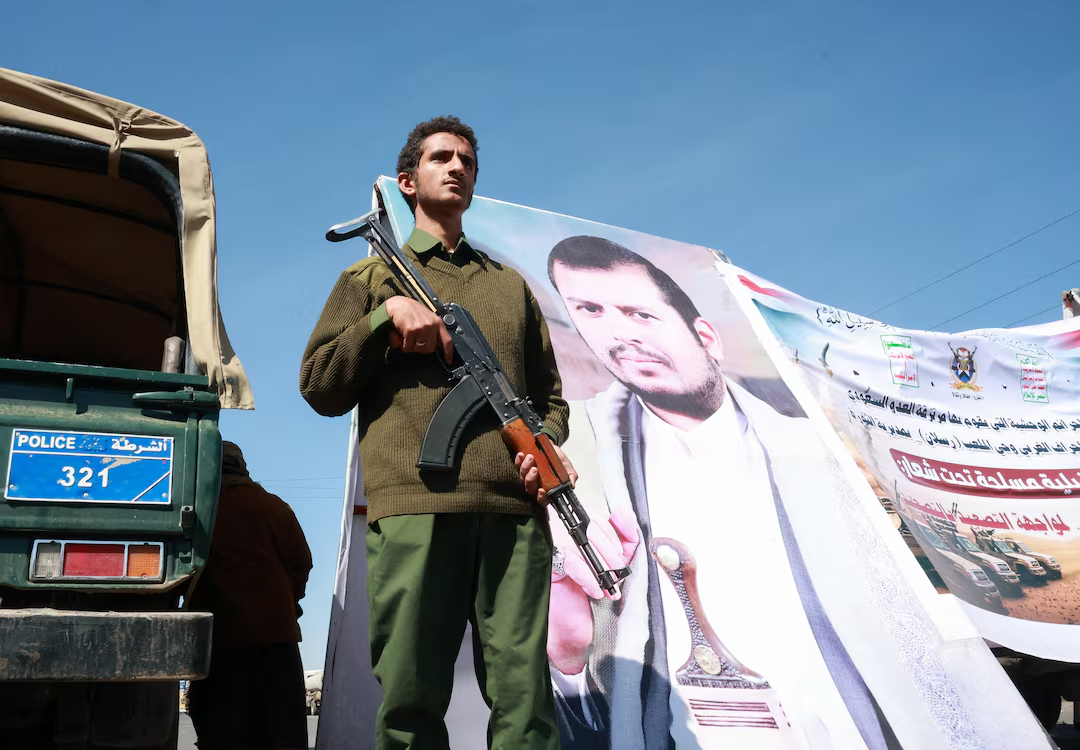
On 13 July, forces of Yemen’s Saudi-backed government struck the runway at Sana’a airport to stop an Iranian Mahan Air plane from landing without clearance. The aircraft was carrying a Houthi delegation home from the funeral of Iran’s late Supreme Leader, Ayatollah Ali Khamenei, and it landed at Hodeidah instead. The government said the flight violated Yemeni airspace, over which it claims authority, and that it had offered to fly the delegation home on a Yemenia aircraft. Yemeni forces claimed the strike, but the Houthis blamed Riyadh and stressed the period of de-escalation had ended. Given Riyadh’s backing of the government, this article treats it as politically responsible. A week later, they declared a maritime embargo on Saudi Arabia. Since then, Saudi Arabia has absorbed repeated missile and drone strikes.
The Houthis’ strength is not in doubt. They have held large parts of Yemen while fighting the United States, Israel and Saudi Arabia, and they have their own production facilities for missiles and drones. No other member of Iran’s so-called Axis of Resistance controls such a strategically placed coastline. Riyadh should know this better than most: its seven-year campaign against the Houthis ended in 2022 in a UN-brokered truce rather than victory. The decision to open a new front has therefore puzzled many analysts, particularly because Saudi oil exports now depend heavily on Bab al-Mandeb, a chokepoint the Houthis have shown they can threaten.
Riyadh may have judged that its defence ties would deter the Houthis or absorb their retaliation. Pakistan and Saudi Arabia signed a Strategic Mutual Defence Agreement in September 2025, and Turkey joined through the Makkah pact, signed on 7 August 2026, less than four weeks after the airport strike. The assumption was then tested. In early September, after a Houthi missile barrage, Pakistan’s defence minister said an attack on the kingdom could set the pact in motion. The three states agreed to activate it only on 5 October, announcing the rapid deployment of Pakistani and Turkish forces. Pakistan’s defence minister later said both countries had a presence in the theatre, but that only Saudi troops were fighting. Turkey’s parliament must still approve the pact, and its text became public only on 21 October. Riyadh was therefore banking on a commitment whose terms outsiders could not examine and whose first real test came late and produced a limited response. A mutual-defence clause on paper does not settle whether partners will fight a third party’s proxy at their own cost.
The pact also reveals Riyadh’s security anxiety, driven by a US seen as unreliable, an assertive Israel and a weakened Iran. The wider record is cautionary. Berkemeier and Fuhrmann’s 2018 study in Research & Politics found that states honoured their alliance commitments in war 66% of the time before 1945 but only 22% of the time between 1945 and 2003. The same question applies here: would Pakistan or Turkey risk confrontation with their neighbour Iran for Saudi Arabia, when their own security is at stake?
A second possible assumption is that Iran, weakened and absorbed by its war with the United States, could not help the Houthis, which made this a safe moment to degrade them. This also looks mistaken. The Houthis have always been more autonomous from Tehran than other Iranian partners, and they hold long-range missiles that can reach Saudi territory directly. Saudi forces have not yet shown that they can defeat them. Pakistan’s defence minister has said that Saudi forces recovered “some areas” in recent fighting, but that falls well short of decisive gains against a group that has outlasted a seven-year campaign.
A third explanation is that Riyadh saw the Mahan Air flight as visible proof of open Iran–Houthi cooperation and feared it would set a precedent. But that cooperation never depended on one flight. Media reports highlight that Mahan Air flights have carried Revolutionary Guards officers and drone parts to the Houthis, which suggests the link Riyadh feared was already established. The two sides have long shared intelligence, weapons and ideology, and the Houthi attacks that followed the strike suggest it bought little security. Even if stopping a precedent were worth some cost, given the vulnerabilities the Houthis know well, their response should have been foreseeable.
The Houthis do not need sophisticated weapons or Iranian backing to raise the cost of confronting them. Since the Strait of Hormuz was disrupted, Saudi Arabia has diverted more than 70 per cent of its crude exports via the East–West pipeline to Yanbu on the Red Sea, making the route a single point of failure for the kingdom’s revenue. Kpler data show that Yanbu shipments averaged about 3.8 million barrels per day from March to July, then fell to 1.5 million barrels per day in August after Houthi attacks resumed. Riyadh has since pushed more crude north through the Suez route and the SUMED pipeline to the Mediterranean. Total Saudi crude exports fell to 3.2 million barrels per day in August, their lowest level in 13 years, according to Al-Monitor, which also reports Houthi gains near Bab al-Mandeb. In September, the Houthis also attacked the East–West pipeline itself. Limited means have imposed outsized costs.
The costs extend beyond oil. Houthi strikes on Saudi territory and energy infrastructure threaten Crown Prince Mohammed bin Salman’s Vision 2030, a strategy built on economic diversification and foreign investment. Saudi crude production fell by 1.9 million barrels per day in August to 6.238 million barrels per day, according to figures the kingdom reported to OPEC. A kingdom under missile threat from its own neighbourhood is a harder sell to investors.
The airport strike, the bilateral pact with Pakistan and the trilateral Makkah pact point to the same conclusion: Saudi Arabia is showing weak strategic planning in its foreign policy. Before anything else, Riyadh needs to diagnose the distinct problems posed by Tehran, Israel, Yemen and Washington, and to address each strategically rather than reactively. That means weighing the cost of escalation before acting, clarifying what each partner will actually do, and rebuilding the de-escalation channel that held for four years after the 2022 truce.