
The post-Cold War dream of a friction-free, hyper-globalised world governed by multilateral consensus seems to have encountered a systemic rupture. The international system has transitioned into the “Great fragmentation” through a structural shift in the post-1945 rules-based order. It is leading to a gradual decay of institutional legitimacy rather than a sudden collapse driven by the erosion of normative coherence and a return to unconstrained great-power contestation, in which might dictates the limits of law. This systemic decay is visible across multiple regions with long-running conflicts from Sudan to Ukraine continuing to strain global resources. Yet the world has seen youth-led movements confronting both liberal democracies and authoritarian states, provoking harsh crackdowns that leave nation-states increasingly unstable. As institutions such as the United Nations struggle to respond effectively, the international system appears to be shifting toward a more decentralised, multiplex order, rendering global power fragmented, and diplomacy managed through temporary, ad hoc coalitions rather than lasting institutional frameworks.
Strategic Simultaneity and Regional Conflict
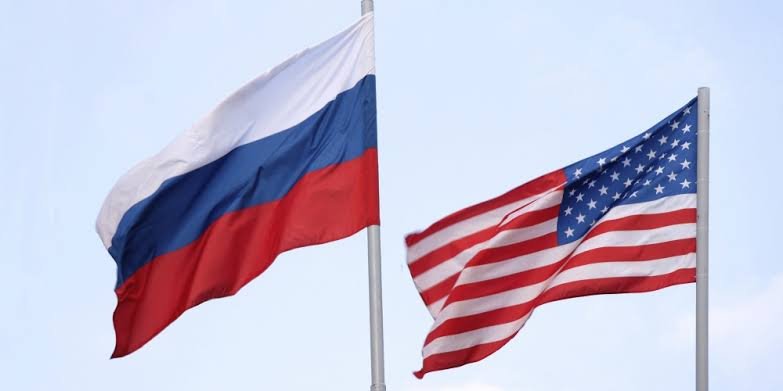
The defining security challenge of our time is “strategic simultaneity”. In an era of great power rivalry, strategic simultaneity refers to a dominant state’s challenge of managing and deterring multiple high-stakes conflicts across theatres. The contemporary context primarily describes the dilemma faced by the US, which has been competing with Russia in Eastern Europe and with China in the Indo-Pacific.
This scenario compels a great power to divert its military, diplomatic and economic resources across multiple fronts, substantially elevating the risks of strategic over-extension and introducing considerable complexity into its deterrence architecture. Confronted with intense, concurrent conflicts across three geographically distinct theatres – Europe, the Middle East, and the Indo-Pacific – major powers now operate under conditions of acute resource strain. Given the finite character of the resources and the mounting risk of escalation to broader war, the kinetic conflicts of 2025 and 2026 have converted this latent structural pressure into a critical strategic vulnerability.
The Ukraine Theatre:
The Russia-Ukraine war, which escalated into a full-scale military confrontation in February 2022, reflects a broader resurgence of great-power rivalry reminiscent of the Cold War. Though fought within Ukrainian territory, it is closely bound up with the broader geopolitical rivalry between Russia and the West. For Moscow, its special military operations in Ukraine are an attempt to safeguard its sphere of influence and to thwart NATO’s eastward expansion and the Western effort to change the post-Cold War European security architecture. The US-led West views the invasion as a direct assault on the rules-based order and has responded by imposing heavy economic sanctions on Russia and supplying large amounts of sophisticated weaponry to Ukraine. The confrontation has struck at the core of the international order by deepening the ideological and strategic divide between the West and Russia and China, effectively marking the return of the era of great-power rivalry.
The Middle-East Conflagration: The Iran War
The 2026 US-Israel war against Iran constitutes a critical flashpoint where regional military conflict intersects with the broader structural dynamics of great-power competition, serving as a catalyst that tests the limits of American hegemony vis-à-vis the manoeuvring of China and Russia. The joint US-Israel military operation against Iran, launched in February 2026, aimed at destroying Iran’s nuclear and strategic capabilities, can be seen as an attempt to consolidate Washington’s global geopolitical standing and compel Beijing and Moscow to recalibrate their strategic priorities in other threats of confrontation, including Taiwan and Ukraine, respectively.
The diversion of American military resources to the Middle East risks precipitating the very strategic overextension the USA had sought to mitigate, potentially eroding its deterrence strategy in the Indo-Pacific and providing China with a window of opportunity to advance its interests. The conflict hence represents a transitional regional system in which middle powers increasingly assert their agency in navigating the competing logics of American military supremacy and Chinese geo-economic influence.
The Trans-Atlantic Rift
The Western alliance is currently fracturing under the weight of severe transatlantic disputes, unexpected military shifts and a proposal to replace NATO with an autonomous security framework. Simultaneously, great power competition is expanding into previously non-militarised and highly vulnerable domains, including the Arctic, space and the critical undersea cables that transmit most global data. This global instability is further exacerbated by major powers- most notably the USA- increasingly abandoning collective international institutions in favour of aggressive, unilateral actions such as withdrawing from the WHO and conducting direct military interventions to secure their strategic interests.
The Axis of Upheaval: The Emergence of CRINK & Middle Powers
In response to Western pressure, an informal geopolitical alliance known as the CRINK (China, Russia, Iran, and North Korea) has emerged to challenge US global leadership. Economically anchored by China, this asymmetric coalition coordinates across the diplomatic, financial, and military spheres. Their alignment has been highlighted by unified political displays, such as China’s 2025 Victory Day parade, and reinforced by a network of formal, long-term bilateral agreements.
These include the 2025 defence pacts among Russia, Iran and North Korea, as well as Belarus’s growing integration into the network through shared military technology and economic ties. Despite growing coordination, the bloc remains a transactional partnership rather than a formal, NATO-style alliance, limited by historical grievances and mutual suspicion. This tactical caution is evident during military crises- such as the recent conflicts involving Iran- where China and Russia avoided direct military intervention, opting instead for indirect support like intelligence sharing and defensive hardware transfers. Furthermore, US concerns about the bloc are often inflated; the coalition accounts for only one-fifth of global GDP, and members such as China still prioritise pragmatic bilateral relations with Washington when convenient.
Ultimately, the bloc’s threat is complex, especially as aggressive US countermeasures have occasionally backfired, inadvertently accelerating China’s technological rise by driving top-tier STEM talent away from Washington to Beijing. In the emerging “multiplex order”, rising middle powers are maintaining their strategic autonomy through multi-alignment rather than joining rigid great-power blocs. In the Indo-Pacific, this approach is driving the “G-minus-two” strategy, a flexible network of multilateral partnerships among nations like Japan, India, Indonesia, and South Korea that bypasses both US and Chinese dominance. By pooling their distinct regional strengths- such as Australia’s raw materials, India’s manufacturing scale, and Japan and South Korea’s defence technologies- these nations are building alternative economic and security architectures to counter Chinese assertiveness without committing to formal military alliances.
Geo-Economic Fragmentation: Tariff Wars, Supply chains and Financial Plumbing
The resurgence of great power rivalry has turned global economic policy into a primary arena of conflict, severely straining the rules-based trading order. In 2025, the USA abandoned core WTO principles by imposing sweeping tariffs that, while generating massive revenue, placed a heavy burden on the US consumers and slowed domestic growth. Concurrently, China restricted exports of critical minerals and rare earths, disrupting Western industries and prompting regional blocs such as the European Union to pursue defensive, independent trade agreements. The data compiled in the 2026 Global Peace Index reveals the quantitative dimensions of this decline. The average level of global peacefulness deteriorated by 0.7 per cent over the past year, marking the twelfth consecutive year of systemic deteriorated. There are now more active state-based conflicts than at any point since the end of the Second World War. This trend is driven by two main factors: the internationalisation of intrastate conflicts, which have surged by 175 per cent since 2010, and the complete breakdown of the historical mechanisms used to end wars. In the 1970s, approximately 23 per cent of state-based conflicts ended in a formal peace agreement; by the 2010s, that figure had plummeted to a mere 4 per cent. The systemic economic impact of this violence is staggering, reaching $21.8 trillion in purchasing power parity terms, or 10.5 per cent of global GDP.
To counter this global fragmentation and paralysis of the WTO, the middle powers have increasingly relied upon alternative frameworks, such as the 58-member Multi-party Interim Appeal Arbitration Arrangement (MPIA), to preserve the rules-based trade order. Simultaneously, the expanded BRICS-10 coalition is accelerating global de-dollarisation efforts to bypass Western sanctions, manage exchange-rate risks, and build an alternative financial infrastructure. Led by the New Development Bank, these nations successfully settled approximately 90 per cent of their 2025 bilateral trade in local currencies, supported by innovations such as “BRICS Pay” and blockchain-based settlement tools. Despite this rapid infrastructure development, the bloc faces significant integration challenges due to currency convertibility limits and differing national regulations. Furthermore, this increasingly bifurcated global economic system places immense strain on fragile, emerging economies, leaving them highly vulnerable to the rising costs of financial and trade fragmentation.
Conclusion
The dissolution of the post-Cold War dream has given way to a deeply decentralised and kinetic global arena. The systemic decay tracked in the 2026 Global Peace Index is not merely a statistical anomaly, but the symptom of a world buckling under “strategic simultaneity”. With the transatlantic alliance fracturing and the CRINK coalition mounting an asymmetric challenge to US leadership, the global order has bifurcated across military, technological and financial domains. This era of upheaval is, however, not defined solely by great-power contestation, as proactive hedging by middle powers, such as alternative trade arbitration and the “G-minus two” strategy in the Indo-Pacific, demonstrates that the future is neither American nor Chinese. Instead, the international system has definitively transitioned into a multiplex order, where enduring institutional frameworks have been replaced by the transactional, the ad hoc, and the strategically autonomous.