
In a previous article for the Middle East Outlook, “Engineering Fear: The New Middle East Truce”, I had argued that ceasefires in the Middle East are no longer mere temporary pauses in hostilities but have evolved into sophisticated mechanisms for conflict management and deterrence – a concept I had described as “Engineering of Fear.” While that analysis concluded that the deterrence was no longer bilateral, but an interconnected web of interests and anxieties, arguing that “fragile stability” is the most likely scenario for the region’s future. However, the subsequent developments in the American-Israeli standoff with Iran have revealed that this “engineering” has gone beyond the closed doors of negotiation rooms or military strategy commands. Rather, it has descended onto the streets: from grocery markets to car-repairing shops to agricultural fields to the very kitchens of people.
While major powers are preoccupied with redrawing maps of influence in the Strait of Hormuz and the Gulf, smaller states like Jordan are paying a daily price no less devastating than the cost of missiles and drones. In light of these developments, this article attempts to expand the “Engineering of Fear” framework to encompass three interconnected levels of contestations, viz., global (great-power competition for influence), regional (Gulf and beyond), and the popular (the societies bearing the cost). The war is no longer merely a struggle over energy and influence; it has become a “geopolitical earthquake” that has reshaped everything: from the price of car spare parts in Irbid to the future of the Gulf alliance, to the global balance of power between America and China.
The Strait of Hormuz – “Partial Opening” as a New Deterrence Strategy
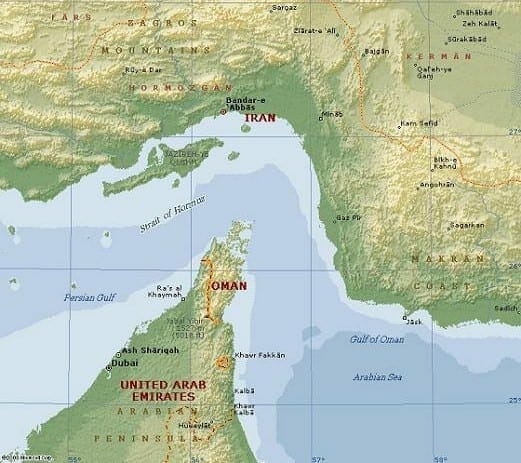
What is happening in the Strait of Hormuz today is not merely a continuation of the war; it is a microcosm of this new phase of conflict. It is a war not decided but managed. The US cannot fully open the Strait, both militarily and politically, but it cannot allow Iran to cement its preeminence over this critical maritime chokepoint either. It was this paradox that led it to adopt a strategy of “partial opening” of the Hormuz, escorting a limited number of ships under intense military protection to prove that Iran does not exercise absolute control. On May 4, 2026, the US launched “Project Freedom,” with its military claiming to have destroyed seven Iranian navy boats that attempted to attack. Iran said none of its boats was hit, but rather that America attacked two civilian boats, killing five civilians. While the two sides provided contradictory narratives of the events, the status quo in the Strait did not change – not fully opened or completely closed either.
Yet, within just 48 hours of launching “Project Freedom,” President Donald Trump suspended operation, citing “significant progress toward a comprehensive agreement with Iran.” This was not hesitation but pure negotiating tactics with the US president addressing the Iranian leadership by threatening once again: “I have the capability to open the Strait by force, but I prefer a deal. Come to the table, or I will use this capability.” Tehran did not hold back either and responded by expanding its “control map” of the Hormuz Strait to include the UAE’s coasts off Fujairah and Khor Fakkan. By targeting the port of Fujairah, the only alternative port for exporting oil without passing through Hormuz, Iran demonstrated its leverage over regional developments: “We can close all Gulf energy outlets, not just the strait.”
The result was a “controlled escalation” and “war below the threshold of all-out war,” where everyone has been testing each other’s capabilities, sending messages, and trying to improve their negotiating position, but without crossing the red line that would yet trigger a full-blown explosion. This is precisely “Fragile Stability,” which is a state of “neither war nor peace” in which everyone lives on the edge of the abyss, yet no one falls, because everyone knows that falling means destruction for all.
The Gulf – From “Strategic Alliance” to “Open Competition”
But the deepest repercussions of the war have appeared at the very heart of the Gulf. As Iran targeted the UAE with more than 2,662 missiles and drones (more than any other country, even Israel) during the war, Abu Dhabi announced its withdrawal from OPEC and OPEC+, a move analysts described as a “strategic rupture” within the Saudi-led oil management system. The UAE did not just withdraw from an oil organisation; it exited from an entire energy management model led by the Saudi-Emirati “golden duo” for decades. But the reasons are deep and not new.
In Yemen, Saudi Arabia supports the legitimate government and the country’s unity, while the UAE supports the Southern Transitional Council (STC), which advocates for the independence of South Yemen. In Sudan, Riyadh backs the national army led by General Abdel Fattah al-Burhan, while Abu Dhabi has sponsored the paramilitary Rapid Support Forces (RSF) of General Mohamed Hamdan Dagalo. In the economic arena, the kingdom’s “Vision 2030” directly challenges the Emirati economic model as the global financial and logistics hub. Moreover, under the Abraham Accords, the UAE has normalised its relations and security cooperation with Israel, including acquiring air defence systems and interceptors, while Saudi Arabia maintains a critical distance from normalising relations with Tel Aviv despite nudging from the United States.
The US-Israeli war on Iran did not create these disputes; it brought them to the surface and made them intractable. The UAE perceives that it did not receive sufficient security guarantees from either the US or support from the kingdom in framing a unified approach to deal with Iran, while it paid the heaviest price of devastating Iranian attacks, which directly impacts its very economic model. Accordingly, it appears it has decided to “bet on itself” by fully normalising relations with Israel, forging a strategic partnership with China in renewable energy and technology, and pursuing complete independence in its oil decisions.
Iran, for its part, is the biggest beneficiary. It watches the disintegration of the Gulf alliance with satisfaction and exploits it to enhance its influence in Yemen (through the Houthis) and in the region generally. The more fragmented the Gulf becomes, the more Tehran can deal with each country individually and impose its terms on each.
Jordan – A Miniature Model of “Engineering Fear” at the Small State Level
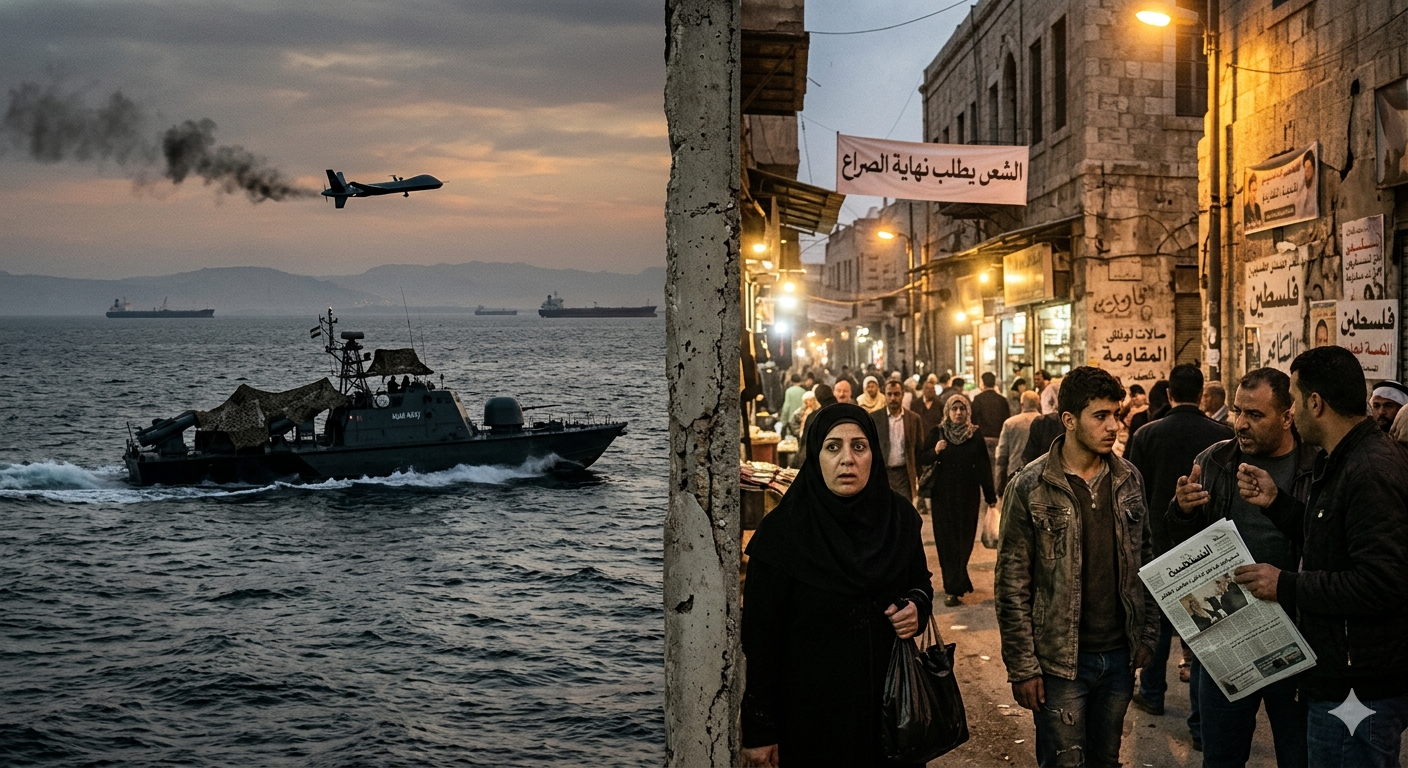
The most painful aspect of the US-Israeli war against Iran is what happens on the ground, away from oil deals and major alliances. Despite not being a party to the war and having declared its neutrality from the outset, Jordan has paid a heavy price for simply being “on the way.” The Hashemite Kingdom was targeted by over 300 missiles and drones, which originated from Iran, with its military declaring that these warheads were not “transiting” towards Israel but “targeted vital institutions” on its territory. Of these missiles, 39 made a direct impact on Jordanian territory, causing injuries and material damage. While Amman insisted that its air defences intercepted the Iranian missiles to protect its sovereignty, Tehran accused it of “siding with America.”
In terms of the war’s economic impact, Hormuz’s closure disrupted global supply chains, leading to skyrocketing prices for basic goods. The Jordanian government has been forced to take unprecedented austerity measures, including banning official delegations from travelling, prohibiting the use of air conditioning in ministries, and suspending official hospitality. The country’s tourism inflows have reduced, so have investments, while inflation eats into people’s basic savings.
When Jordan’s situation is analysed within the framework of “Engineering Fear”, the question that emerges is: what comes after the war? Far from siding with any party, Jordan realises that any decisive outcome to this conflict, whether the capitulation of the Iranian government or its prevailing, will carry profound implications for both the monarchy and the region. If the US-Israel prevail over the Iranian government, which leads to a regime change in Tehran, Jordan fears a wave of chaos and security turmoil on its eastern borders, the disintegration of state institutions in Tehran, meaning armed militias and Iranian proxies spinning out of control, and a new wave of refugees that could sweep the region. Amman already hosts millions of refugees; any new influx would burden its already strained economy. It means that the “fear” would transform from “deterrence fear” to “fear of chaos.”
On the other hand, should the Islamic Republic of Iran prevail over the American-Israeli combine, Tehran will emerge more emboldened and powerful, thereby raising the risks of internal destabilisation within regional countries, including Jordan. As it has done during the currently paused war, a victorious Iran, as many in Amman fear, could target the country as part of “punishing Western allies” or as a message to those who cooperate with America. In such a scenario, the “fear of entrapment” multiplies: will Jordan be dragged into a wider regional war? Can it withstand increasing economic and security pressures from a stronger, more aggressive neighbour?
Herein lies the paradox of Jordanian “Engineering Fear.” It does not want an absolute victory for either party and would rather be comfortable with everyone remaining in a state of “Fragile Stability”: neither victors nor vanquished, and neither all-out war nor lasting peace. Because any major shift in the regional balance of power would come at the expense of the small state at the heart of the storm.
It is within this context that the Jordanian position on the unfolding events can be understood. As its Foreign Minister Ayman Safadi expressed: “Jordan will not be a battleground in any regional conflict, nor a launchpad for any military action against Iran.” At the same time, Amman defends its sovereignty when missiles violate its airspace, which is neither perceived as a “bias” towards America nor enmity towards Iran. Rather, it is a miniature model of “Engineering Fear” at the small-state level, trying to stay afloat in a sea of turmoil by using all its diplomatic and military tools to manage fear without eliminating it. It does not have the luxury of choosing the winner, nor the power to impose its terms, yet it can manage its fear of both scenarios, hoping that “Fragile Stability” remains the least bad option.
China and Russia – The Biggest Beneficiaries of “Managed Chaos”
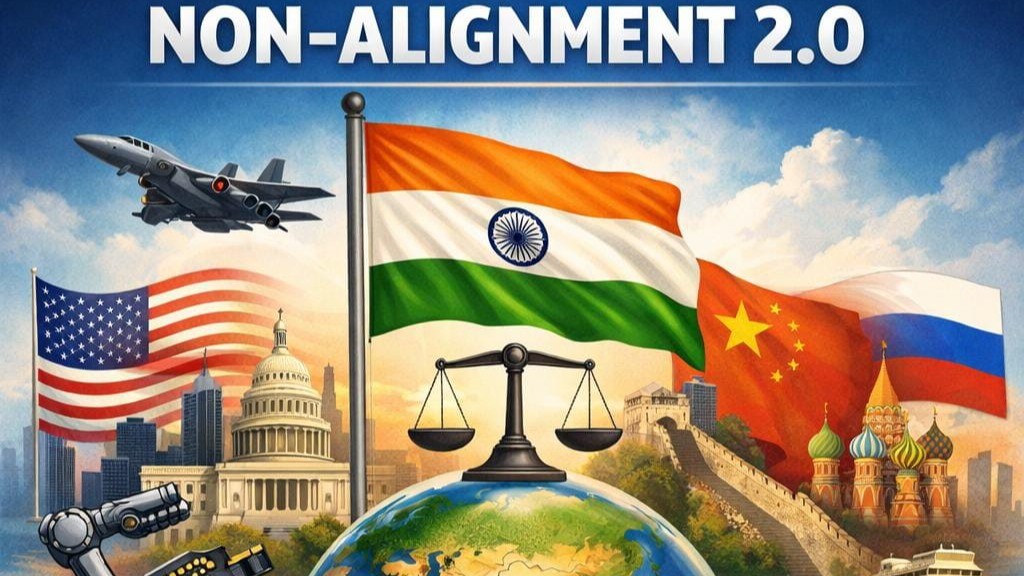
Amid this chaos, two major players emerge who benefit without paying a noticeable price: China and Russia. China follows the strategy of “never interrupt your enemy when he is making a mistake.” The war on Iran, from Beijing’s perspective, is an American “strategic error.” It drains Washington militarily and economically, distorts its international reputation, and pushes regional (and global) states to search for alternatives. Here, China presents its alternative offering.
Beijing controls 91 per cent of rare-earth refining and 94 per cent of permanent magnet production. These minerals are the heart of future military and civilian industries. It also possesses a strategic oil reserve of 1.3 billion barrels, imports oil from Russia and Iran through evasion mechanisms (“Tea Kettles”), and exports renewable energy (solar panels, batteries) to the world. And while America bombs Iran, China hosts the Iranian Foreign Minister, mediates between Saudi Arabia and Iran, and presents itself as the “voice of reason and stability.”
Russia adopts a different approach: “Managed Chaos.” Moscow does not want the war to end, because its continuation proves its thesis: that the unipolar world order has ended, and that no regional settlement can pass without its approval. It uses a mix of military presence (in Africa and Asia), strategic partnerships (with Iran), and exploiting vacuums left by America, to create “deterrence through complexity.” The more players increase, and their interests intertwine, the more impossible and costly military resolution becomes for everyone, making Moscow a “non-excludable” player.
“Fragile Stability” – The Most Likely Scenario
In light of all these dynamics, the contours of the most likely scenario for the Middle East’s future can be outlined within the “Fragile Stability” concept. In the Strait of Hormuz, partial and managed opening with continued low-cost skirmishes (boats, drones, mines) – no all-out war, no lasting peace. In the Gulf, disintegration of the Saudi-Emirati alliance, open competition for influence, and a redefinition of the “circle of trust.” For smaller states in terms of regional influence, such as Jordan, Iraq, and Lebanon, it signifies continued economic and security pressure, rising prices, erosion of the middle class, and increasing social fragility. As for the major powers, America is preoccupied with Iran and drained, while China and Russia exploit the vacuum and reshape the global order to their advantage.
But what emerges from this analysis is that “Fragile Stability” is no longer a theoretical concept describing relations between states; rather, it has become a reality for ordinary people, as the rising cost of basic essentials is part of the new “Engineering Fear.” It is an “engineering” planned not only by strategists but also by wholesale merchants hoarding goods, governments imposing austerity measures, speculators driving up prices, and everyone exploiting the state of uncertainty for quick profit.
As the Middle East is no longer just a battlefield, becoming a “laboratory” for a new engineering of fear, stretching from the Strait of Hormuz to the streets of Amman and far beyond across all parts of the world, the biggest question remains open: Can this region endure more “Fragile Stability”? Or will fear itself, once it exceeds a certain threshold, transform into the spark of explosion that everyone is trying to avoid?