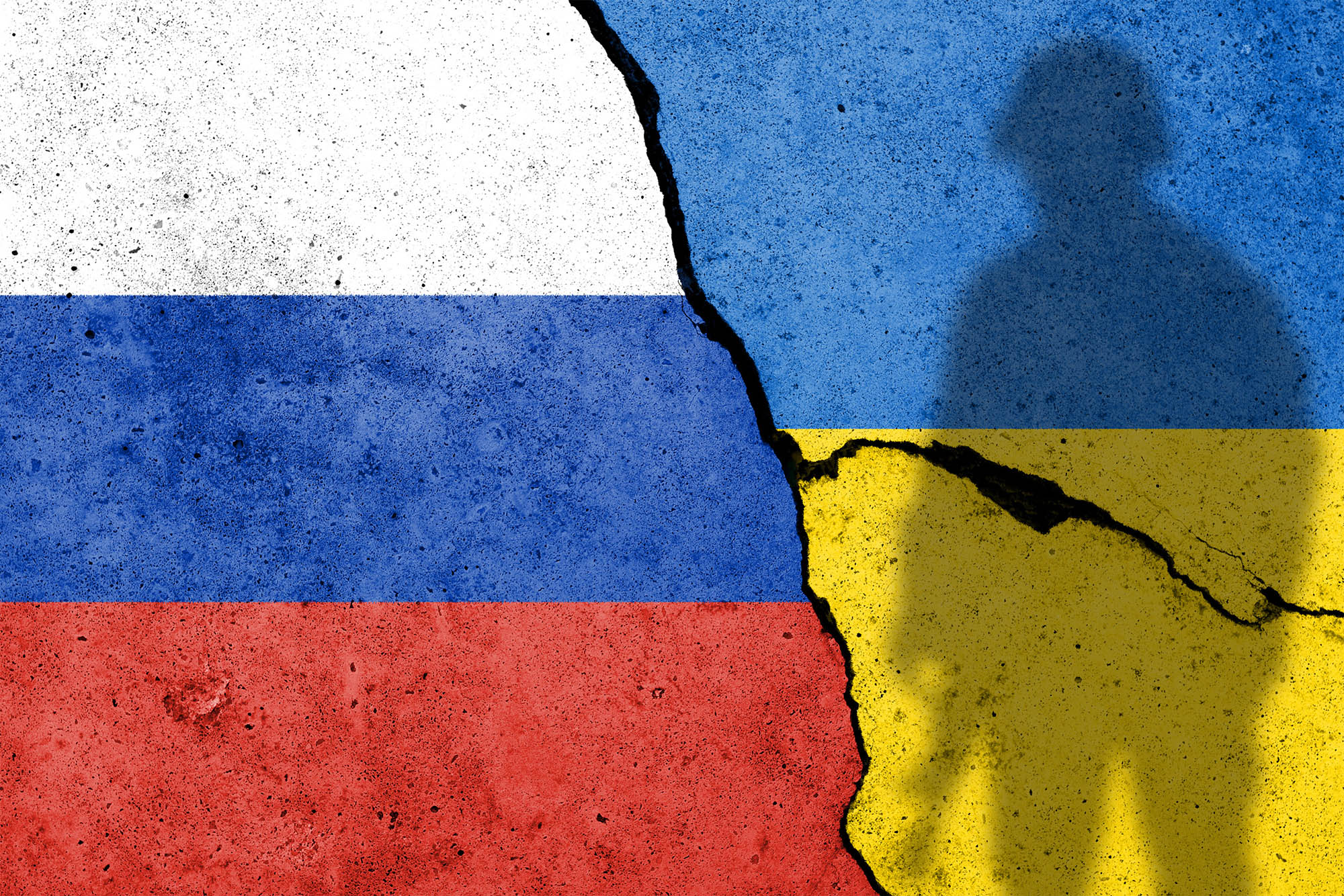
When Russia invaded Ukraine in late February of 2022, it was seen as one of the biggest geopolitical shocks to the existing international order in the post-Cold War era. Conventional analyses frequently characterise the conflict as a sudden aberration or a consequence of localised security dynamics, but historical and structural frameworks suggest it is the logical outcome of a long-standing confrontation over the European security architecture. Russia’s actions directly challenged the international norms, including the UN Charter, which prohibit the forcible annexation of foreign territory. The conflict has served as a powerful systemic catalyst, accelerating the transition from a post-Cold War era defined by American strategic primacy and economic integration into a fragmented, polycentric international order.
The rupture was preceded by a series of revisionist demands from Moscow in December 2021, when Russia presented an ultimatum to the USA and NATO demanding a halt to the eastward expansion and the withdrawal of military engagement from Ukraine. This direct challenge to state sovereignty has exposed the structural limitations of the post-Cold War collective security architecture, highlighting a transition back to a realist self-help security environment.
Institutional Paralysis and the Rise of Minilateralism
The war in Ukraine has underscored a profound obsolescence and paralysis of the post-Second World War multilateral institutions, most notably the United Nations. The UN Security Council is structurally deadlocked by the absolute veto power of its permanent members, rendering it ineffective when the interests of major powers collide. Similarly, while the UN General Assembly has passed symbolic resolutions condemning the invasion, global diplomatic alignments remain stubbornly static. Nations representing over half of the world’s population have consistently refused to support these Western-backed measures, exposing a massive global divergence in how international norms are interpreted.
This diplomatic stagnation highlights a broader ideological rift, as much of the global south rejects the Western “rules-based order” as a mechanism designed to maintain American primacy. Dismissing the Western narrative of a binary struggle between democracy and autocracy, emerging middle powers view the conflict through a realist geopolitical lens. Consequently, these nations are increasingly turning to “minilateralism”- flexible, interest-driven coalitions like the expanded BRICS and the Shanghai Cooperation Organisation (SCO)- to bypass paralysed traditional institutions and secure their strategic autonomy in an era of great power competition.
The Geosecurity Realignment and Polar Securitisation
The Ukraine conflict has fundamentally reshaped Northern Europe’s security landscape, prompting Finland and Sweden to abandon decades of military non-alignment and join NATO. Driven by the need to preserve their national identity and security against external threats, their accession significantly strengthens the alliance. Sweden provides NATO with critical land transit routes and a sophisticated domestic defence industry, while Finland contributes a robust conventional mobilisation capacity and doubles the alliance’s direct land border with Russia.
Despite NATO’s expanded regional dominance, the Baltic Sea and surrounding areas remain highly contested. Russia maintains a vital strategic foothold through Kaliningrad and key ports, increasing the threat of hybrid warfare, grey-zone operations and underwater infrastructure sabotage. This geopolitical friction extends globally to the polar regions, where Russia employs a militarised “double-dual” strategy in the Arctic and a highly securitised posture in Antarctica. Through these asymmetrical tactics, Moscow seeks to project global power, challenge Western maritime access and compensate for its mounting conventional military vulnerabilities.
The Geoeconomic Great Fragmentation and Sino-Russian Asymmetry
The war in Ukraine has accelerated “The Great Fragmentation”, a profound geoeconomic decoupling driven by Western sanctions, dividing the global economy into distinct geopolitical blocs. This systemic split is fundamentally altering international capital flows and foreign direct investment, concentrating them within politically aligned nations- particularly in strategic sectors like advanced technology and clean energy. If this trade and technological divide is fully realised, it is projected to reduce global economic output by 10%.
A central element of this shift is Russia’s accelerated “pivot to the east”. Rather than achieving a balanced diversification, this strategy has created an asymmetrical dependency on China for energy exports, industrial goods, and financial clearing, severely compromising Moscow’s intended strategic autonomy. Simultaneously, this global fragmentation is eroding the dominance of traditional great powers and elevating several rising middle powers with economies larger than Russia’s.
Transactional Imperialism and Strategic Hedging in the Global South
As Russia’s diplomatic and economic ties with the West have severed, the African continent has emerged as a critical arena for Moscow’s efforts to counter isolation, secure alternative resource streams and challenge Western influence. A “dual-track” playbook characterises Russia’s post-2022 strategy in Africa. In more stable Southern African states, Russia leverages enduring political capital rooted in Soviet-era support for liberation movements (the ANC in South Africa, the MPLA in Angola, and SWAPO in Namibia), exploiting anti-colonial sentiments to secure neutrality or abstentions at the United Nations. Conversely, in fragile or politically unstable regions like the Sahel, Russia employs a transactional, highly opportunistic model.
In these fragile environments, Russia offers a tailored “regime survival package” to military juntas and autocratic elites anxious about their own political survival. Unlike Western powers, whose assistance is contingent upon democratic reforms and institutional capacity building, Russia delivers unconditioned security protection, weapons transfers and sophisticated disinformation campaigns designed to bolster local regimes. In exchange for these services, Russian state entities, such as the Africa Corps, receive lucrative concessions on natural resources, including gold, diamonds, oil, and uranium.
This geopolitical competition is replicated in the Western Hemisphere, where Russia utilises security cooperation in Latin America and the Caribbean as a counter strategy to challenge US dominance. By expanding military diplomacy, training flag officers in Russian academies and leveraging ties with anti-US regimes, including Venezuela, Cuba, and Nicaragua, Moscow seeks to establish an asymmetric foothold in the American backyard. This transactional approach highlights how Russia exploits local instability and governance gaps to maintain its standing as a global power.
Conclusion
In assessing the systemic shockwaves of the 2022 invasion, the future of global geopolitics is best understood by Hedley Bull’s concept of an orderly international society. Bull posited that sovereign states, despite existing in an anarchic environment, form a functional society by binding themselves to common rules, institutions and mutual recognition of territorial integrity to maintain global order. Russia’s actions represent a violent, deliberate rupture of this societal contract. By repudiating the UN charter’s core prohibition on territorial annexation and exploiting its veto to paralyse traditional institutions, Moscow has shattered the shared normative framework that sustained post-war stability.
Going forward, Russia’s place in this altered system is defined by a stark duality. The conflict has undeniably accelerated the state’s long-term conventional degradation- evidenced by profound depletion of assets, fortification of NATO along its borders, and its relegation to an asymmetrical, dependent economic partner to China. However, this conventional decline does not neutralise Moscow’s disruptive capacity. By pivoting aggressively to its asymmetric capabilities- including hybrid warfare in the Baltics, militarised posturing in the polar regions and transactional regime survival packages across Africa and Latin America- Russia ensures its enduring status as a persistent, volatile threat capable of exploiting governance gaps globally.