
In the digital age, power no longer operates primarily through suppression but rather through saturation. It means that truth is no longer hidden but drowned, and information is not blocked but flooded. In this new paradigm, exposure itself becomes a form of concealment. The exposure of the Epstein files data is one of the most striking examples of this phenomenon. The amount of information released, the endless cycles of revelations, and the emotional intensity of the scandal have produced not clarity, but paralysis. And while past horrors transfix the world, present critical geopolitical transformations are unfolding quietly in the background.
The Epstein Case
The Epstein case was reopened in 2018 after investigative journalist Julie K. Brown published a series of reports under “Perversion of Justice” in November 2018 for the Miami Herald. During Donald Trump’s 2024 presidential campaign, his supporters sought to obtain the “Epstein files” to uncover evidence against his political rivals from the Democrat bloc in particular. Trump overwhelmingly ran his campaign based on the Epstein case and the America First premise, vowing no more wars. However, after his victory, the Justice Department stated that Epstein never had a client list, implying there were no files to be made public. Trump also referred to the case as “boring” and “a Democratic hoax.” The investigation later revealed the close relationship between Trump and Epstein.
In November 2025, the US Congress passed the Epstein Files Transparency Act, requiring the disclosure of the files within 30 days. What was provided was not transparency, but inundation. On December 30, over 30,000 heavily redacted documents were released. Within weeks, over 3 million pages, more than 100,000 photographs, and thousands of videos flooded the public domain, and more are to be released soon. The result was not clarity, but cognitive collapse. No individual, journalist, or institution can meaningfully process millions of documents arriving in continuous waves. Each attempt at analysis is immediately overwhelmed by new disclosures. This leads to “analysis paralysis,” where the individual is unable to make any judgment or decision amid the overwhelming information provided.
On the other hand, the public becomes subjected to the ‘infoxication’ or informational intoxication feeling, where the overwhelming information provided leads to confusion rather than clarity of understanding. Gradually, cognitive overload replaces analysis. Emotional exhaustion replaces moral clarity. Outrage substitutes for accountability. Most crucially, public attention shifts from what is happening now to what happened decades ago.
However, this is not an argument against justice. The crimes linked to Jeffrey Epstein and his network do call for accountability, but the modality and timing of such revelations do raise some important questions about the degree to which the public is being sidetracked and what is not being seen in the shadow of the scandal. This is not a theoretical concern: its consequences are real and geopolitical, and nowhere is this attention displacement more visible than in Venezuela.
Burying the Venezuela Crisis Beneath Epstein Trends
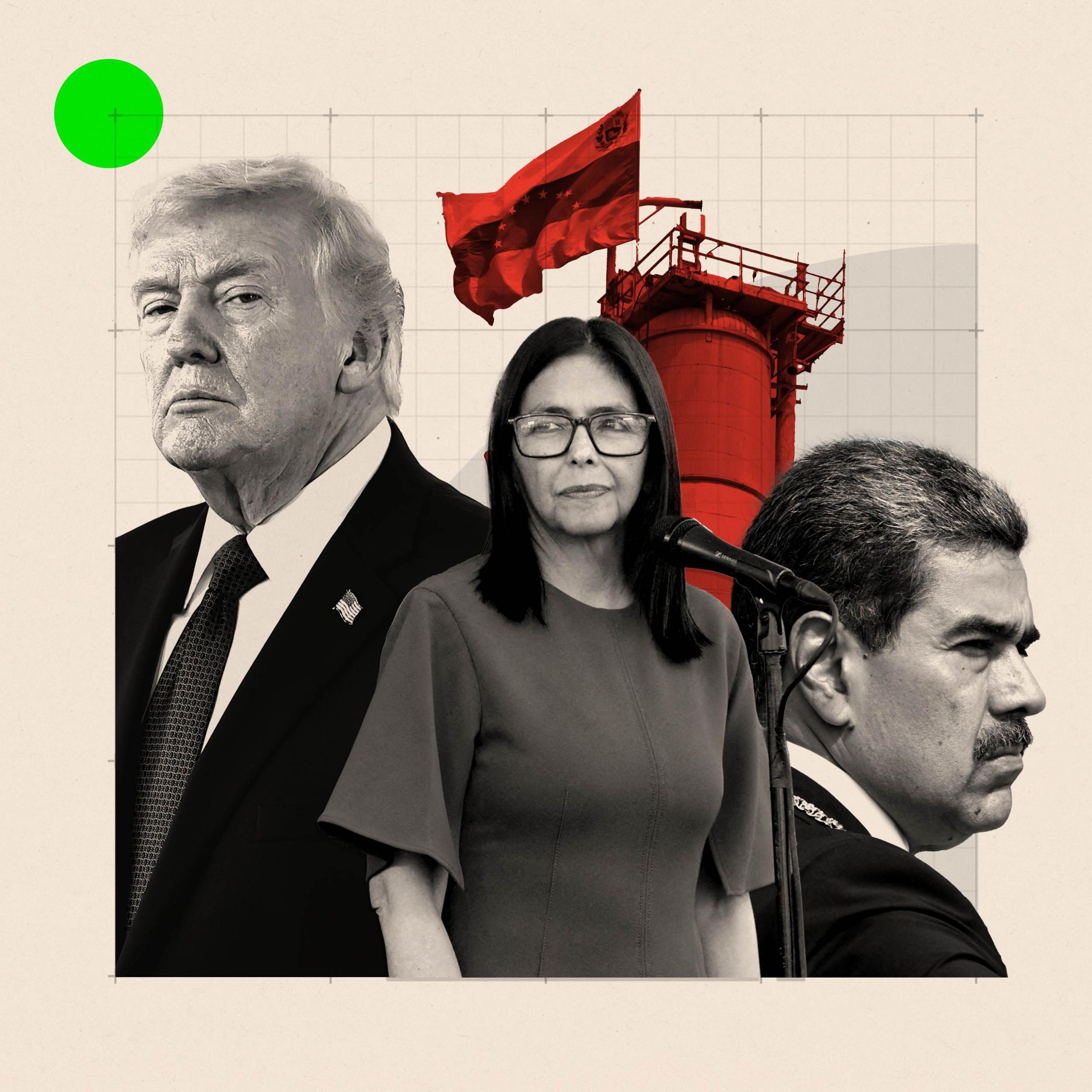
In November 2025, at the height of the Epstein scandal, President Trump’s pressure campaign against Venezuelan President Nicolás Maduro took a dramatic turn. It was made public that the US president made a direct call to Caracas, asking President Maduro to immediately step down and proposing a transition plan that would remove the elected government and leave the military in charge. On January 3, 2026, US forces launched a swift military campaign abducting Maduro and his wife in the dead of night, an act which was justified publicly as a mission to “restore democracy.” After Maduro’s ousting, Trum has managed political restructuring dubbed as partial reforms with Vice President Delcy Rodríguez taking over as president while military’s control remains intact.
And so, the questions arise: Why is the USA interested in restoring democracy in Venezuela? What are the geopolitical reasons behind the banner of democracy?
The answer is Oil, Petrodollar and China.
The world runs on oil, and Venezuela is the world’s largest holder of proven oil reserves at 303 billion barrels, five times the United States’ reserves. While the official discourse on the role of the United States in Venezuela centres on the restoration of democracy, the reality is that democracy is a facade for the real dynamics of Oil, the Petrodollar, and the containment of China.
The strategic goal of US policy is to force the reintegration of these reserves into the Western energy market. Statements from high-ranking US officials show a striking level of candour regarding this objective; for instance, Trump advisor Stephen Miller characterised Venezuela’s nationalised oil industry as “theft,” explicitly claiming that the country’s oil resources “belonged to the United States.”
This rhetoric signals a shift from viewing Venezuela as a sovereign trade partner to viewing it as a seized asset. By delegitimising the state’s right to its own resources, the US sets the stage for a “re-privatisation” that benefits private U.S. oil companies, who were encouraged to gear up for re-entry long before the regime change was finalised.
Restoring Venezuelan production to Western control offers the US several advantages. It allows OPEC+ to be undermined. Venezuela, aligned with the US, could become a significant “swing producer,” thereby challenging the pricing dominance currently enjoyed by the Russia-Saudi alliance. Furthermore, it provides a means to weaponise price. By flooding the market with Venezuelan heavy crude, the US could drive down global prices, severely impacting the fiscal budgets of rival petro-states such as Russia and Iran.
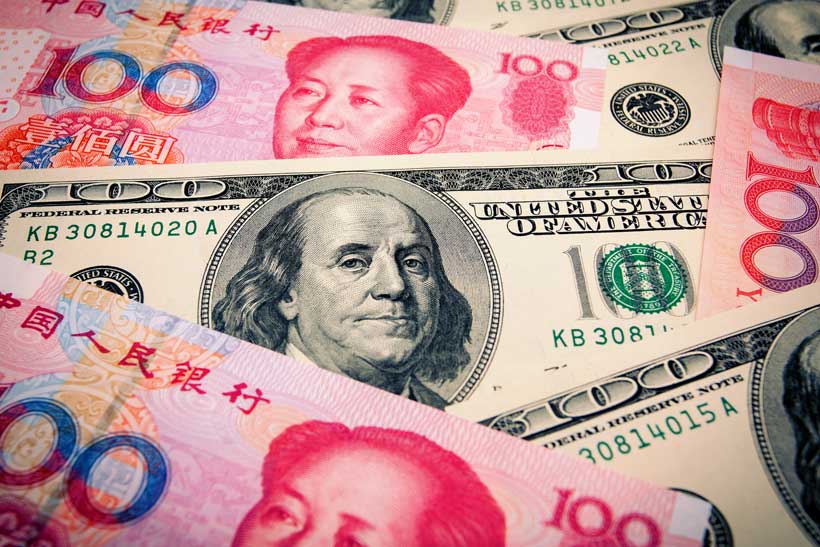
If oil is the prize, the Petrodollar is the system that protects it. The US dollar’s status as the global reserve currency is anchored by the requirement that energy be traded in greenbacks. Before the intervention, Venezuela posed a “structural threat” by actively seeking to bypass this system. Venezuela’s cooperation with BRICS and the New Development Bank (NDB), which aims to conduct 30% of its financing in local currencies by 2026, represented a dangerous “proof of concept” for de-dollarisation. By selling oil in Renminbi (RMB) and Euros, Caracas was helping build an alternative financial architecture, including the Cross-Border Interbank Payment System (CIPS).
To protect the dollar-denominated trade, the US utilised “energy as a regional coercion instrument.” This included seizing Venezuelan oil, disguised as countering drug trafficking and sabotaging oil shipments to Cuba and escalating military actions throughout the Caribbean.
These actions demonstrate that the defence of the Petrodollar is not just a policy of sanctions but a strategy of enforcement. By physically intercepting shipments and sabotaging infrastructure, the US ensures that no nation attempts to trade energy outside of U.S.-approved channels.
The US military’s “restoration of democracy” instead serves to restore petrodollar dominance. It sends a sharp signal to the Indo-Pacific and the Global South that any attempt to decouple energy from the dollar-clearing system will be met with direct military intervention and total economic warfare.
Finally, the intervention is a decisive move in the Great Power Competition with China. Venezuela has been China’s main strategic bridgehead in the Western Hemisphere over the last two decades. In 2023, this alliance was upgraded to an “All-Weather Strategic Partnership,” implying that China is there to stay, 1,000 miles away from the US.
The depth of the strategic partnership is also evidenced by the financial and military ties between the two nations. In the financial sphere, China has gained substantial leverage as Venezuela’s largest creditor, with over $10 billion in unpaid loans repaid to China through “oil-for-debt” exchanges, the oil priced in Chinese Renminbi rather than the US dollar. The financial partnership has also extended into the military sphere, with Venezuela becoming China’s main client for military hardware in Latin America and hosting two Chinese-built satellite tracking facilities, giving China a high-tech foothold in the Western Hemisphere.
For the United States, this is an egregious violation of the Monroe Doctrine. By forcing a regime change, the US effectively “evicts” Chinese strategic infrastructure and disrupts the energy-and-sanctions alliance that Beijing, Moscow, and Tehran have been meticulously constructing. The destabilisation of the Caracas-Beijing link forces China back into U.S.-monitored energy circuits and reinforces American naval and regional dominance.
In this context, the “banner of democracy” functions as a strategic mask. Under the disguise of narcotics control and democratic salvation, the US is implementing a sophisticated restructuring of the world order. By seizing the oil, defending the dollar, and purging China’s influence, the US is not just replacing a government in Venezuela; it is shoring up the structural pillars of its hegemony for the mid-21st century.
Conclusion
In conclusion, the Epstein files are more than a crime expose. They expose a political truth: that transparency itself can be a mechanism of concealment when overused. While the world is transfixed by scandal, the shape of global power is being remapped in the background through oil deposits, money flows, corridors of military might, and the frozen landscapes of the Arctic. The real risk is not what we are seeing but what we are no longer seeing. In the age of information warfare, the biggest threat to democracy is no longer censorship. It is a distraction.
The Venezuelan state was disassembled by force, energy flows were restructured, the dominance of the dollar was defended, and the geopolitics of Latin America were militarised. Epstein revelations, shock, and the endless cycle of scandal dominated the public discourse. The extreme disproportion of this situation highlights the paradox of our current world order: in a world in which structural change is transforming everything, awareness is monopolised by spectacle, ensuring that the most significant moves in geopolitics are accomplished with minimal observation. The more exposure, the deeper concealment. Scandal becomes spectacle. Outrage becomes distraction. Justice becomes entertainment. Meanwhile, structural transformations like monetary realignment, energy reconfiguration, military expansion, and territorial competition proceed with minimal scrutiny.