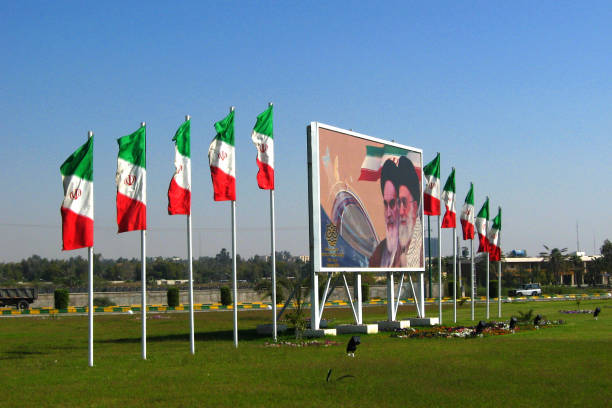
Iran has endured unprecedented crises in recent years, such as the 12-day war with Israel (and the United States), economic deterioration under continued international economic sanctions, and angry streets against the largely repressive rule of the Shia clerical regime. It is a country which, for decades, has been accustomed to operating against overwhelming odds, carries within it a layered memory of revolution, reminding people that the revolution was not merely about wresting freedom from Western domination but also, when the moment arrives, reclaiming dignity and rights from domestic authoritarianism cloaked in the garb of theocracy.
Iran continues to function amid profound contradictions with its deep cultural reservoir standing in sharp tension with political spiritualism as its clerical elite claims ownership of a nation perpetually as the vanguard of “Islamic” Revolution and as patrons of the so-called “axis of resistance.” It is the land of Rumi, Omar Khayyam, Hafez, and Firdausi, as it is of Khomeini and Khamenei, and of extraordinary cinematic minds like Kiarostami, Panahi, Farhadi, and Majidi. Yet today, the cultural brilliance of this land confronts power centres entrenched under clerical authority. These very centres are now being exposed to a new age of revolutionary ferment emerging organically from Iran’s streets and provinces.
From the Grand Bazaar of Tehran on December 28, protests have been witnessed across nearly a hundred Iranian cities and towns, including Mashhad, Bushehr, Shiraz, Isfahan, and Sistan, in the last two weeks, signalling a nationwide rupture rather than isolated disturbances. While the precise trajectory of these protests remains uncertain, the force of the public sphere has brought the ghost of Jina Mahsa Amini, the young Iranian-Kurdish woman punished by the regime’s draconian moral police. The streets are simmering with anger, fear, and defiance, increasingly calling for an end to the Khamenei-led power structure that remains the true epicentre of authority in Iran.
The moral capital that Iran once accrued through its unwavering support for Palestine — long projected as the ethical face of resistance against Zionism and American imperialism — no longer functions as a force multiplier at home. This narrative has lost resonance among a new generation of Iranians who see the regime’s external posturing as disconnected from their own lived oppression. This rupture is remarkable, though historically unsurprising. Iranian society has often been a beacon of intellectual and civilisational vitality within the Middle East, even as it remains trapped within a form of political medievalism sustained by petro-dollars and coercive control. Iran has always been different, and its new revolutionaries refuse to live under ideological boots. They are rising against regimes of belief that have systematically undermined their dignity and prospects.
The Khamenei regime appears to have lost much of its popular legitimacy and has failed to recognise the limits of ideological supply. Economic realities matter. Employment matters. Civil society matters. Above all, people need to breathe in a country that has been under sanction since 1979 and led by an equally illiberal religious class at home. Iranians today are navigating a path of double-edged swords. Ironically, while a domestic crisis may embolden American hardliners who have long dreamt of a direct intervention in Iran, even they cannot indefinitely sustain the sacred aura the regime claims in the name of Islam.
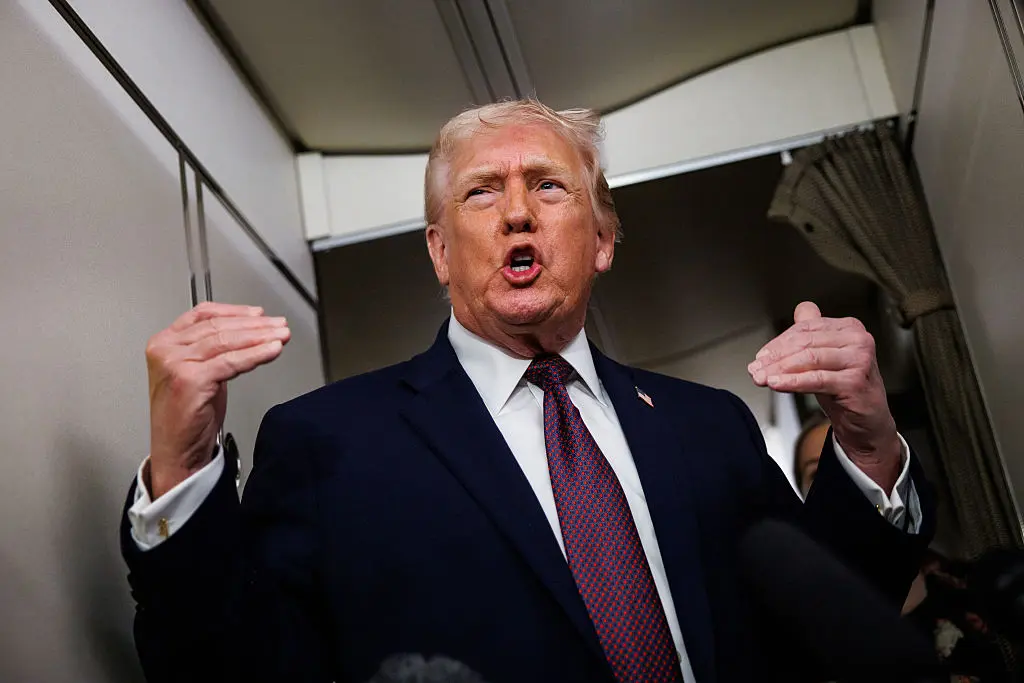
The dilemma is shared by both the Ayatollah regime and the Iranian people. The emerging dynamics are making the government choose between responding with brute force and attempting to contain unrest through partial concessions, such as financial relief. Their dilemma holds major currency as the Trump regime is waiting to bring its own madness. President Masoud Pezeshkian offered concessions, while Supreme Leader Ayatollah Ali Khamenei, revered by the Shi‘a world as Rahbar, the spiritual guide, acknowledged the existence of genuine grievances but insisted on distinguishing between protesters and “rioters,” the latter warranting severe punishment. However, habitual references to foreign enemies will not indefinitely ensure regime survival.
The Iranian regime is now facing multi-front pressure, including the emergence of sectarian tensions in the eastern Sistan/Baluchistan province. And its fallout of the current volatility can be neither predicted by the regime nor the people as to whether Iran will go down the Syrian way or survive once again through repression and popular fatigue. The American dilemma can’t be brushed aside either, as it might force the weakening of this regime as leverage on killing its nuclear program.
The central challenge is to demystify the protests themselves: their character, scale, intensity, and long-term implications for Iran, its ruling structure, and the broader international system.
Why the Protest, and Why Now?
In recent years, Iran’s troubles have extended far beyond confrontation with Israel and the United States. Its unending structural crises, such as high inflation (42 per cent in December alone), chronic water shortages, severe air pollution and systematic repression against civil society members, have eroded social resilience. The imprisonment of political dissenters such as Narges Mohammadi, only the second Iranian woman to win the Nobel Peace Prize after Shirin Ebadi, underscores the regime’s hostility toward peaceful dissent. Mohammadi’s prolonged incarceration in particular has become emblematic of Iran’s shrinking civic space. And as signified by ongoing demonstrations, the regime increasingly relies on war rhetoric against Israel and the United States as a survival strategy, attempting to externalise domestic discontent.
Yet Iran’s geopolitical isolation complicates this approach. A renewed Trump presidency could dramatically raise the costs of any miscalculation. Recent developments in Venezuela, where the US abducted President Nicolas Maduro, coupled with China’s and Russia’s limited responsiveness, have also unsettled Tehran’s strategic calculations. For Iran, Turkiye is forever unreliable as it can offer a basket of rhetoric and nothing beyond. Similarly, Arab countries might not share the same intention, but they won’t mind the fall of the Khomeini-era established political order. Time is no longer on Tehran’s side, and ideological bandwagoning offers diminishing returns.
The Fear: Is this the end of the seed of 1979?
These protests are not routine as reflected by their scale and intensity, which is being matched only by the regime’s increasingly erratic and forceful response: Internet shutdowns, mass arrests, and the language of emergency signal deep institutional anxiety. Despite Ali Khamenei’s acknowledgement of legitimate grievances and offers of governance reforms by President Masoud Pezeshkian, the direction of the unfolding events remains unknown and uncertain. Its ramifications are certain: either a new chapter will be written in the country’s revolutionary history, or the movement will be crushed under overwhelming pressure.
For the Khamenei-led Shia clerical regime, the re-emergence of sectarian fault lines is further complicating matters. It’s like chicken has come home to roost with a Sunni front consolidating in eastern Iran, particularly in Baluchistan. The Mobarizoun Popular Front (MPF), formerly linked to Jaish al-Adl, has declared support for anti-regime protests while advancing a Salafi-jihadist agenda aimed at redrawing Iran’s political map. The Iranian south-eastern side is a troubled zone, and it will have a serious impact if the protests within Tehran receive muted/unmuted support, inviting many foreign players to intervene.
The Impact: What Next?
The Iranian Revolution was not only an anti-colonial and anti-imperialist movement, but it also significantly altered the course of the broader Muslim world. Its revolutionary export altered regional dynamics and globalised sectarianism, with lasting consequences, particularly across the Arab world. Ayatollah Khomeini’s populist framing of the “oppressed” as a revolutionary force inspired movements far beyond Iran’s borders.
Today, the very seeds of that revolution appear to be producing a new, ironic harvest, one directed inward, raising questions about the very legitimacy of the Islamic Republic itself. The question that has found currency in the current atmosphere of protests, counterprotests and government repression is whether this moment will redefine Iran’s political identity or simply usher in a darker phase of repression remains uncertain. However, what is clear is that something extraordinary is unfolding, and whether it will be transformative or destructive for the country is a question that only time can answer.