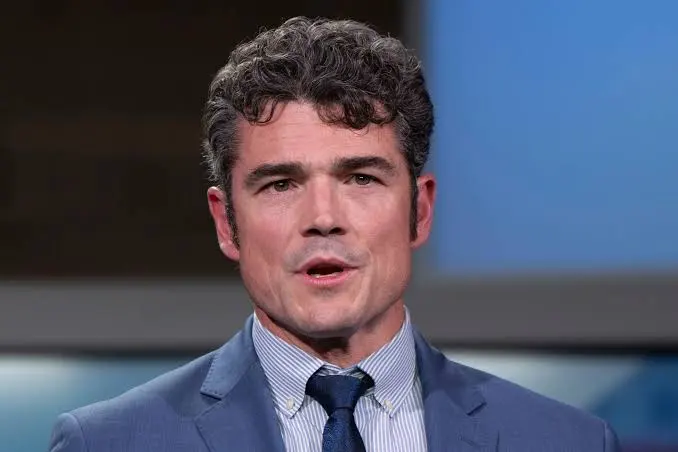
On March 17, US National Counterterrorism Director Joe Kent resigned, citing concerns over Israel’s growing sway over the United States war on Iran. In his resignation letter, he wrote that Iran does not pose an immediate threat to the US and that Israel and its powerful American lobby have drawn the US into the war. It is crucial to remember that he has been an ardent supporter of US President Donald Trump for years and a veteran of the US Army. Other Trump loyalists, such as former Fox TV host Tucker Carlson, Megyn Kelly, and Charlie Kirk (assassinated last year), have raised their voices against the US being too subservient to Israeli interests. Moreover, Vice President J.D. Vance hasn’t said much about the war with Iran. Trump previously said Vance has been “less enthusiastic about going” and that he and Vance have philosophical differences over the war. On the eve of the strikes, Vance told The Washington Post there was “no chance” that the US would become involved in a drawn-out war as it did in Iraq.
It is noteworthy that they have one thing in common: they are all part of Trump’s core Make America Great Again (MAGA), reflecting its right-wing, fundamentalist “America First” orientation, and have been prominent voices within Donald Trump’s political ecosystem. The growing criticism of Trump on the Iran war from the inner circle, particularly the MAGA cheerleaders, over the perceived influence of Israel, reveals the structural problems the US’s war on Iran faces. For years, Trump has campaigned on the promise to end America’s endless foreign wars and stop the US from getting involved in other countries’ problems, which have cost US taxpayers billions of dollars and hundreds of lives. The promises made by the Trump campaign struck a chord with many Americans.
However, the Iran war has fundamentally undermined that promise. A larger narrative, suggesting that the US has become embroiled in yet another aimless war with no clear end goal. The inconsistent and evolving justifications offered by the Trump administration for the war—ranging from regime change to nuclear dismantlement and limiting Iran’s proxy influence—have only reinforced this narrative further. The war in its first 12 days is estimated to have cost US taxpayers $16.5 billion, and at least 13 American soldiers have died in the region, making the Trump MAGA base uneasy. There have also been around 1,500 deaths in Iran, 1000 in Lebanon, and 17 in Israel, along with multiple deaths in the other West Asian countries.
Until March 17, criticism was confined to rhetoric alone, but Joe Kent’s resignation has added a new dimension to the war’s criticism. Now the war risks more dissent and potential resignation within the Trump administration, which could, in turn, intensify anti-war sentiment and protests across the United States. Furthermore, Kent’s resignation has highlighted the growing criticism of influential Israel groups or lobbies, including the American Israel Public Affairs Committee (AIPAC) and Christians United for Israel (CUFI), which actively advocate for preserving the unique relationship between the US and Israel.
This special relationship entails Israel’s generous military and diplomatic support, regardless of what it does. Contrary to popular belief in some antisemitic circles, this lobby does not drive all American policies. It is important to note that the Israel lobby, like other lobbying groups of other countries, only attempts to influence decisions. Since lobbying is a legal and institutionalised part of the US political system, governments and interest groups from around the world engage with US lawmakers to advance their interests. The sheer power of the US in global politics makes it an attractive target for such influence efforts.
According to John Mearsheimer and Stephen Walt in their book The Israel Lobby and US Foreign Policy, the Israel lobby is the most powerful of all these lobbying groups. The recent rise in criticism of the Israel lobby stems from the fact that a war with Iran does not look good from a cost-benefit standpoint for the United States. Though the United States has had a tense relationship with Iran since the establishment of the Islamic Republic of Iran, and both have confronted each other on the issue of Iran’s nuclear program for decades, scholars believe Iran poses no threat to the US mainland because it lacks the capability to target the US mainland. Furthermore, over the last few years, Iran has not attacked US military bases in the region unless there has been a major US attack on Iran or its core interests, which has happened rarely.
Iran does not represent a threat to the United States or its interests, so why has the United States initiated a war that carries significant material, reputational, and credibility costs for the US? Additionally, it exposes American war machinery, strategy, and weaponry to adversaries who are monitoring it and, in some cases, sharing details with Iran, resulting in precise Iranian missile and drone attacks. Needless to say, this war has enraged American regional allies, who have strongly opposed it because it risks tarnishing their national image as islands of stability and investment for economic growth. If anything, their doubts about the US’s credibility as a reliable partner and defence ally have grown, which is likely to push them to diversify their defence partnerships, particularly with China.
Moreover, there appears to be little logical explanation for Trump’s diplomatic and material support for Israel’s brutal wars in Gaza, Lebanon, and Syria, which have rendered Israel a global pariah and significantly damaged the US’s global reputation. Furthermore, the current US support for Israel contrasts with the “Trump First” strategy and with historical precedent, which suggests that US presidents, at times, have resisted Israeli demands and pushed Israel to change its course—for example, during Israel’s 1982 invasion of Lebanon, the Reagan administration pressed for ceasefires and limits on Israeli operations, and during the First Gulf War, Israel did not respond to Iraqi missile attacks under US pressure.
The question, therefore, is why would the United States engage in an aimless war? Rising US researchers point to the unending Israel lobby’s influence on US foreign policy even under Donald Trump. The lobby has, for decades, demonised Iran, thwarted attempts to lift sanctions, and opposed the normalisation of relations, to weaken or destroy Iran. Under Trump, these efforts appear to be bearing fruit. However, the fundamental problem remains: the US’s foreign policy cannot afford to be dictated by another country’s interests for long. If the war continues, leading to further casualties of American troops, the American public may take to the streets, pushing the administration to change course. The resignation of Joe Kent might be that moment.