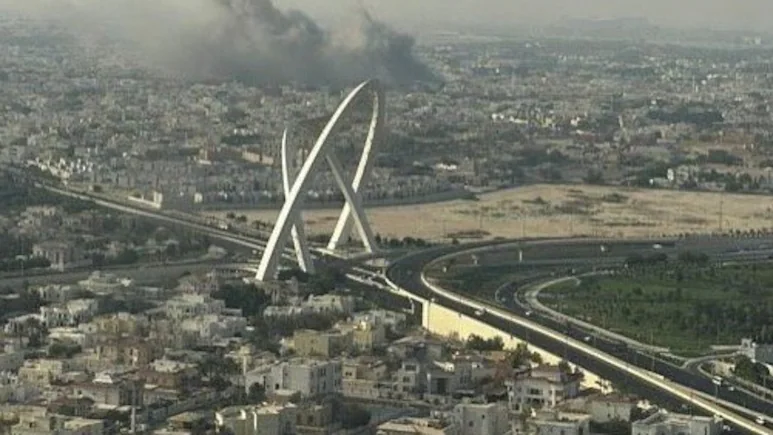
On 28 February 2026, Israel and the United States launched yet another joint campaign of large-scale air strikes against Iran over its nuclear programme by claiming that Tehran was two weeks away from obtaining a nuclear weapon. The joint military strikes targeted Iranian government and military installations across the country, including the capital Tehran, Isfahan, Karaj, Kermanshah, Qum and Tabriz. But the most geopolitically significant attacks were conducted in Tehran by targeting the government compounds housing the office of the Supreme Leader and the Iranian Revolutionary Guard Corps (IRGC), with both the U.S. President Donald Trump and Israeli Prime Minister Benjamin Netanyahu claiming to have killed Supreme Leader Ayatollah Ali Khamenei, alongside senior government and military officials and his immediate family members, which was acknowledged by the Iranian government a day after on 1 March 2026. Khamenei’s killing came as a shock across, drawing state condemnations as well as popular grief and protests across many countries, including Pakistan, which has a sizeable Shia population.
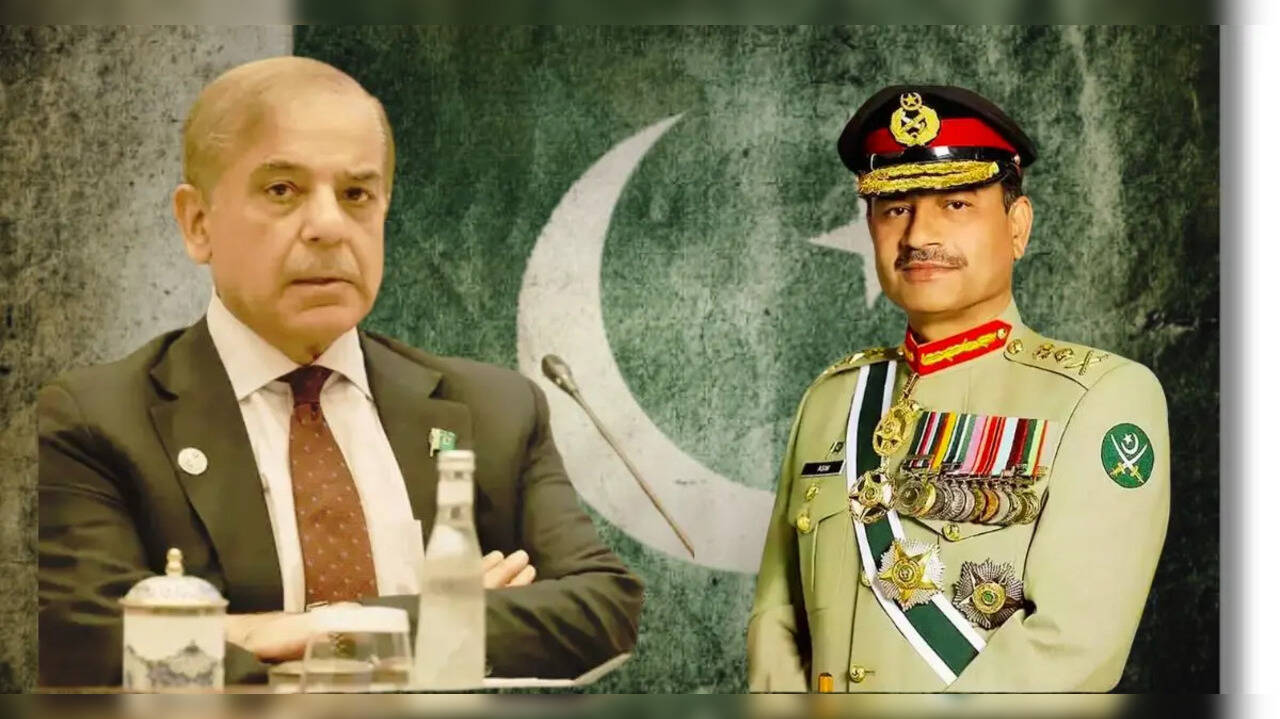
Pakistan officially condemned the US-Israeli war on Iran, with its Foreign Minister and Deputy Prime Minister Ishaq Dar talking to his Iranian counterpart Abbas Aragchi, describing it as an “unwarranted” and illegal action against international law. He called for an immediate halt to the conflict through the restoration of negotiations and diplomacy, whereas Prime Minister Shehbaz Sharif extended his condolences over Khamenei’s killing even as he refrained from naming either the United States or Israel directly.
Pakistan witnessed cross-country violent protests with people attempting to storm the U.S. consulate in Karachi. Nearly two dozen people (20-35) were killed, and hundreds were injured across the country in the police firing, including allegedly by U.S. Marine Security Guards outside its Karachi consulate. The protestors also targeted the United Nations Military Observer Group in India and Pakistan (UNMOGIP) facilities in the Shia majority Pakistan-administered Gilgit Baltistan at Skardu. The intensity of the protests forced the U.S. to withdraw its non-emergency staff, as well as the accompanying families of its diplomatic corps, from its Lahore and Karachi consulates.
The mass protests in Pakistan demonstrated deep religious, historical, and economic ties with Iran. Pakistan has second largest Shia population after Iran, comprising 10–15 per cent (around 20 million) of the country’s total population of over 240 million. For the Shias in Pakistan, as in Iran and worldwide, Ayatollah Ali Khamenei was not merely a political authority of the world’s largest Shia state but a spiritual authority whose guidance shaped the religious lives of millions. In Shia theology, adherents of this school are required to follow a Marja‘ al-Taqlid (source of emulation), a high-ranking Mujtahid (jurist) authorised to issue fatawa (religious rulings) based on their own comprehensive research of Islamic law. Beyond religious and cultural ties, the two countries are geographically contigous sharing a 909-kilometre border, and have engaged in sustained trade over the decades. Despite U.S. sanctions on Iran, economic ties between Islamabad and Tehran continue to expand, with annual trade currently around $3 billion and both sides pledging to raise it to $10 billion in the next few years.
This geographical contiguity and religious and cultural affinity meant that Khamenei’s killing was felt deeply by the people, not only Shia for whom he held religious significance, but also among Sunnis espousing anti-Israel sentiments due to decades of anti-Palestinian violence to which the Iranian leader maintained a consistent pro-Palestinian position, matching rhetoric with actions through armed support to groups like Hamas and Palestinian Islamic Jihad.
The nature of non-sectarian anti-Israel and anti-American protests in Pakistan was evidenced by the large-scale protests by Jamiat-e-Islami (JeI) Pakistan, inarguably the most prominent Islamist organisation of the country, which strongly condemned the U.S and Israel’s war against Iran while calling for countrywide protests. It forced Pakistan’s Prime Minister Shebaz Sharif to meet the JeI leadership and brief them on Islamabad’s diplomatic efforts while urging them not to hold any protests. This unrest highlights a clear Pakistani public opinion which is strongly against the attack of Israel and U.S but on the other hand, Pakistan’s Government adopted a diplomatic tone while criticising the attacks on Iran.
Pakistan has been forced to tread a tightrope, given its deep ties with the United States and the Gulf Cooperation Council (GCC) states, as well as its strategic defence agreement with Saudi Arabia. Accordingly, FM Dar also maintained communication with GCC states and Turkey to coordinate a diplomatic response, describing Islamabad’s approach as an extensive back-channel initiative aimed at preventing further escalation.
Pakistan’s reaction to Khamenei’s death was neither monolithic nor simple. On the streets, grief and fury drove some of the most serious attacks on U.S. diplomatic facilities in the country’s history, leaving at least 25 dead and hundreds injured. In the corridors of power, Islamabad worked around the clock to avoid taking sides in a conflict that threatened to destabilise its economy, its western border, and its ties with the Gulf. The gap between the two responses, the raw outrage of millions of Shia Pakistanis and the measured caution of a government navigating complex alliances, encapsulates one of the defining tensions in Pakistan’s foreign policy: a country whose people and government often see the world through very different eyes.