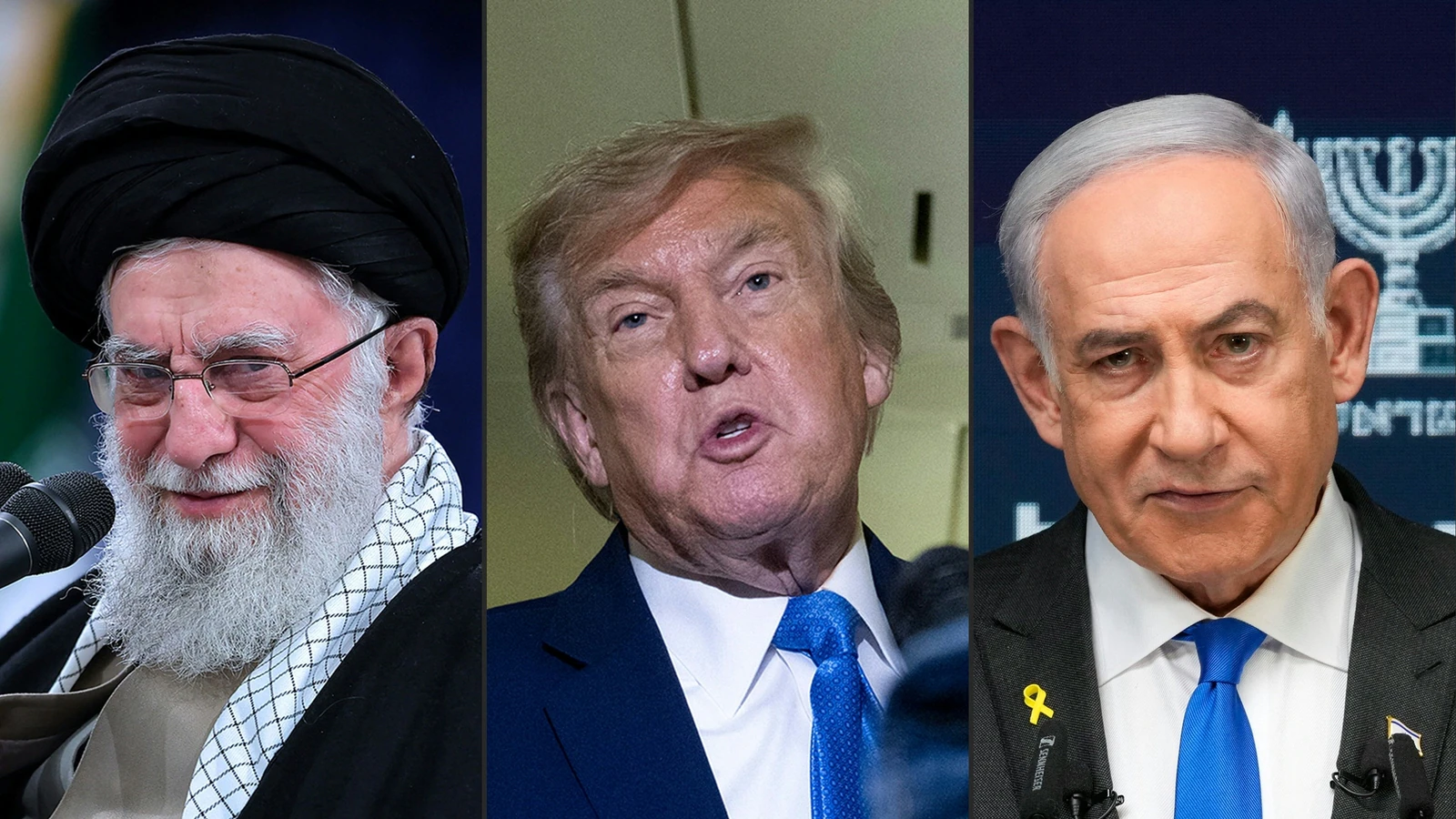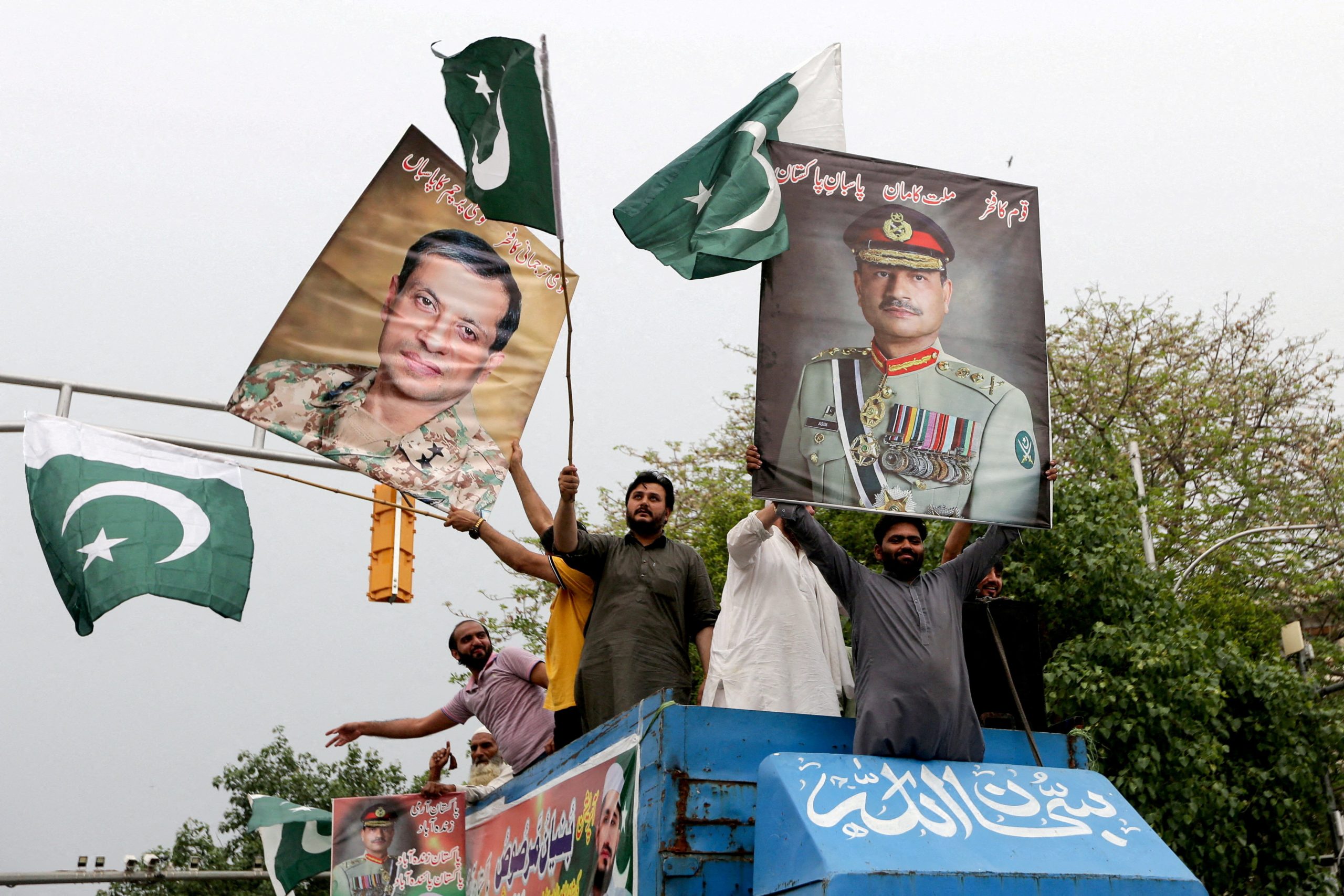

On September 17, 2025, Saudi Arabia and Pakistan signed a Strategic Mutual Defence Agreement (SDMA) in Riyadh, formalising decades of military cooperation into a binding pact in which aggression against one is considered an act against both. The pact comes in the wake of Israeli airstrikes on Doha, growing scepticism over American security guarantees within the Arab world and mounting pressure on Islamabad to adapt to changes in the South Asian trade and security.
The bonhomie between Riyadh and Islamabad complements the prospering relationship between Ankara and Islamabad. In recent years, Türkiye has emerged as a close partner of Pakistan, supporting Pakistan’s cause on various international forums and contributing to the bourgeoning relationship between the two nation-states.
Origins of a Security State
Pakistan, as a nation-state, has been a product of the two-nation theory, ardently advocated by Mohammad Ali Jinnah during the anti-colonial struggle against the British Empire in the Indian subcontinent. The British colonial rule created an administrative apparatus- the Indian Civil Service- to helm the administration of the Indian sub-continent. Contrary to the nation-states in Europe, where the administration was an organic outgrowth of centuries of struggle and societal evolution, the colonial administration in the Indian subcontinent was an external imposition. The colonial administration functioned to serve British colonial interests- exploitation of resources- and act as a surveillance system meant to keep in check the rising tide of nationalism. Consequently, the colonial administration was overdeveloped vis-à-vis the needs of the indigenous society.
Post its independence, Pakistan, along with India, inherited this overdeveloped colonial administration. In India, due to strong civilian leadership, the Military-bureaucracy duo remained under civilian control. However, Pakistan emerged as a security state, where the Military-bureaucratic oligarchy was the ultimate arbiter of power. Given the fragility of the political institutions and the migrant nature of the elites, the bureaucracy and the military were seen as instruments to establish order and stability.
Consequently, these institutions got a lion’s share from the already scarce resources of the newly independent state, stunting political and economic development. Over time, the military-bureaucratic oligarchy evolved into an “over-developed state apparatus” overshadowing elected governments. The Military in Pakistan is no more seen as a politically neutral entity rather it has evolved into a sophisticated institution, having economic and financial interests in sectors like- banking, real estate, industries; leading the scholars to term it as “Military Inc.” military’s economic interests compel its intervention into politics, relegating the role of elected representatives subservient to Military-bureaucratic oligarchy.
Capacity as a Security Provider
Pakistan’s potential as a security provider was for the first time realised during the Cold War years, when Islamabad joined the Western military alliances (CENTO AND SEATO) and remained a strong pillar of Western security architecture in South Asia. The “over-developed state apparatus” received substantial funds (strategic rents) from its western backers and became independent of its own population. Hence, the security state was now primarily serving Washington’s interests rather than its own people. Pakistan played a pivotal role in the Afghan jihad (1979-1989) in which it helped establish the mujahedin in Afghanistan, through its madrasa network, to fight the god-less Soviets.
Post the 9/11 attacks, Pakistan adopted a dual approach- it became the USA’s ally in its “war on terror” and sheltered the Taliban leadership, which was overthrown by the USA’s invasion of Afghanistan in 2001- effectively “running with the hare and hunting with the hounds”. This was done to achieve “strategic depth” in Kabul vis-à-vis India, which was partially successful when the Taliban recaptured Kabul in 2021, after a two-decade-long struggle against the USA.
Apart from being a pillar of Western security architecture, Pakistan has historically served as a security provider in the Middle East. For decades, Pakistani military officers have trained Gulf militaries and staffed advisory missions in Riyadh, Abu Dhabi, and Doha. Countries like Saudi Arabia have historically remained Pakistan’s closest defence partners in the Middle East. The Pakistan Air Force has been in contact with the Royal Saudi Air Force since the early 1960s. In 1979, in the wake of the Islamic Revolution in Iran, Pakistan had deployed troops in Saudi Arabia for security duties. Throughout the 1970s and 1980s, up to 15,000 Pakistani troops were stationed in Saudi Arabia to defend the country. In 1982, Riyadh and Islamabad signed a defence protocol that provided for cooperation in military training, defence production, and joint exercises.
Similarly, military cooperation with the United Arab Emirates (UAE) dates back to the 1970s, when the Trucial States came together after gaining independence. The Pakistan Army established an armour training school in the UAE. Pakistani personnel also held prominent positions as advisers and trainers in the UAE air force. The first chief of air staff of the UAE Air Force was Air Commodore Ayaz Ahmed Khan, followed by Ghulam Haider and Jamal A. Khan, all of whom were Pakistan Air Force Officers (PAF). The American invitation to Pakistan to join the Board of Peace should be seen in part in this context.
Contemporary Developments
Hence, Pakistan’s recent overtures in the Middle East are an extension of its historical role, complemented by its growing relations with Türkiye. The recent armed conflict between Pakistan and India following the Pahalgam terrorist attacks in early 2025 has led many scholars to argue for the revival of Islamabad’s role in the military calculus of the Middle East. However, a close analysis of the SDMA and Türkiye’s refusal to join the defence agreement between Riyadh and Islamabad itself reveals the limits of this newfound euphoria in Islamabad. Riyadh’s close partnership with New Delhi raises questions about its role as a backer of Islamabad’s misadventures vis-à-vis New Delhi.
Further, it is to be noted that Türkiye, besides China and Azerbaijan, were an open supporter of Pakistan against India in the wake of the latter’s Operation Sindoor. But this bonhomie between Ankara and Islamabad has largely been transactional. According to the Stockholm International Peace Research Institute (SIPRI), Türkiye became the second-largest arms supplier to Pakistan in 2025. However, translating this transactional partnership into a functional security mechanism faces several constraints. There is a compatibility challenge among different military systems. Pakistan uses equipment based on Chinese designs, whereas Türkiye is integrated into NATO interoperability. Intelligence sharing between countries is often restricted to topics of mutual interest, thereby allowing states to maintain their respective strategic priorities and external relations.
Challenges
Pakistan’s attempts to create a broader security framework stem from the changes in regional trade and investment trends. The emergence of the India-Middle East Economic Corridor (IMEC) demonstrates the growing alignment between the Gulf states and India, prompting Pakistan to protect its role in regional trade. Thus, the security state has once again come to the forefront and in 2022, the then Pakistan Army Chief General Qamar Javed Bajwa said, “The contemporary concept of national security… is not solely a function of armed forces anymore. National security in the age of globalisation, information and connectivity has now become an all-encompassing notion; wherein, besides various elements of national power, global and regional environments also play a profound role.”
However, Pakistan’s pivot to geo-economics faces several challenges. First, it is the very nature of the state of Pakistan. The traditional primacy given to the “over-developed state apparatus” makes security considerations the state’s top priority, essentially making geo-economics a prisoner of geo-politics.
The second most important challenge has emerged as an internal security crisis. Terrorist attacks by the Tehreek-e-Taliban Pakistan (TTP) and the Baloch insurgency have cast dark clouds on the stability and security of trade routes as well as investment prospects in Pakistan. TTP’s ideological alignment with the Afghan Taliban has greatly strained relations between Islamabad and Kabul. The allies of the Afghan Jihad have turned adversaries, with both conducting air strikes against each other. Further, the Baluchistan Liberation Army (BLA) has scaled up its attacks in the recent past, targeting military officials, establishments and transnational projects (China-Pakistan Economic Corridor). The recent attacks by the BLA in late January and early February 2026 resulted in significant casualties, including 22 security personnel and 36 civilians.
Finally, Pakistan’s reliance on the USA for economic and strategic needs greatly diminishes Islamabad’s strategic autonomy in creating an alternate security bloc. The USA, under the Trump administration, has sought to court both Islamabad and Rawalpindi to compensate for its withdrawal from Afghanistan by hosting its military leadership at the White House and inviting Islamabad to join the Board of Peace. In return, Pakistan has sought to nominate President Trump for a Nobel Peace Prize in the aftermath of its clash with India and has secured a lower tariff (50% to 19%) and a bailout from the International Monetary Fund.
What’s in for India?
Traditionally, Pakistan has played a role as a security provider for both the West and the Middle East, but the economic downturn, compounded by internal security challenges and a rising India in its neighbourhood, has greatly limited Pakistan’s hedging capabilities.
For India, consolidating its periphery and giving diplomacy a chance over chest-thumping nationalism in external relations will bear fruit. New Delhi’s mature handling of the diplomatic crisis with Male and Kathmandu offers lessons for conflict management in the discourse of foreign policy. India’s efforts to advance its economic growth and to bridge internal fault lines are its best bet against any Pakistani misadventure.