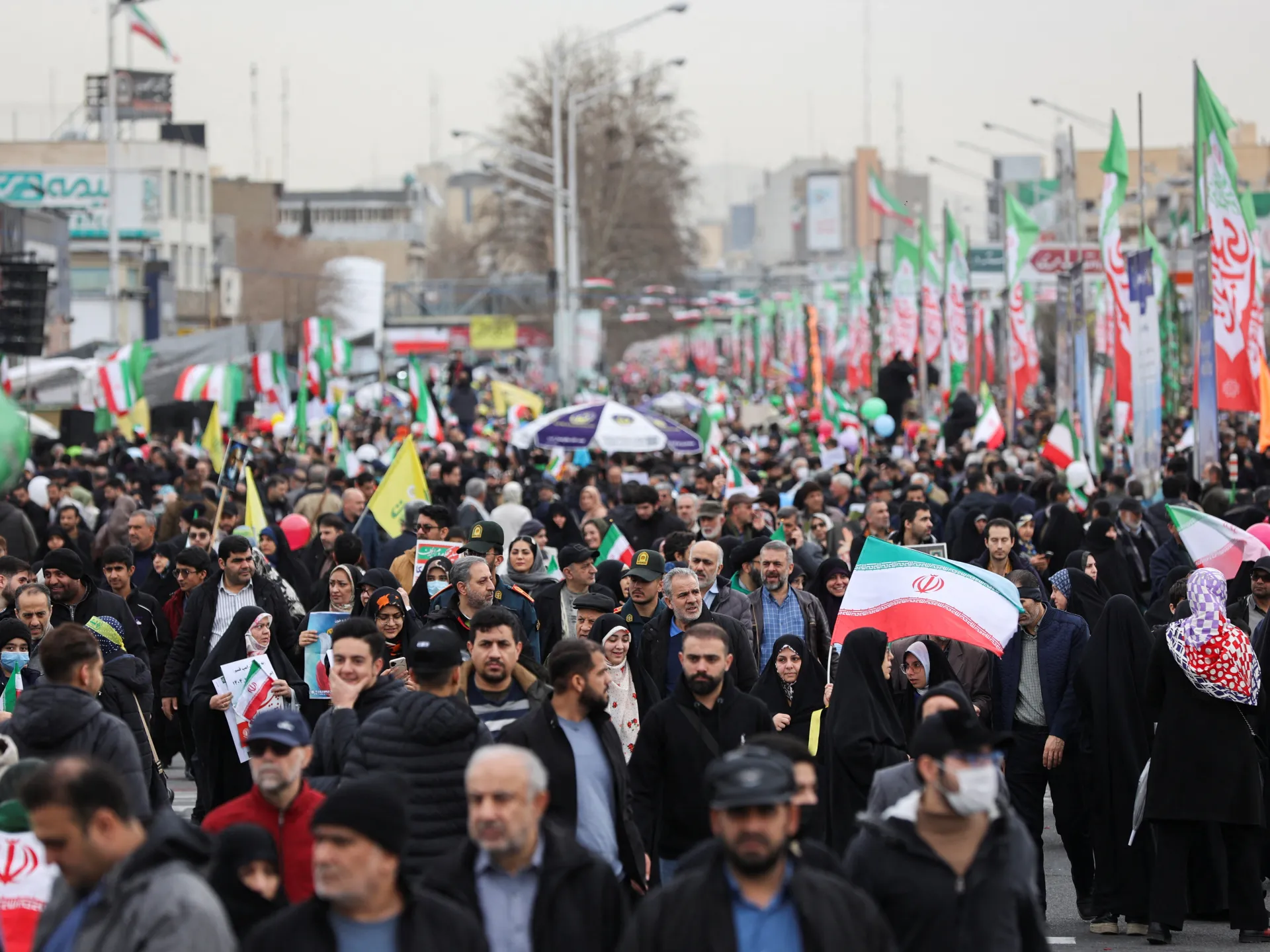

The recent wave of protests in Iran, which began on 28 December 2025, sent many shockwaves, including questioning the legitimacy of Ayatollah Khamenei’s power. The protests, initially triggered by worsening economic conditions, rising prices, unemployment, and a weakening currency, however, rapidly turned into anti-regime momentum across major cities: Tehran, Mashhad, Isfahan, and Shiraz. By early January 2026, slogans such as “death to Khamenei” shifted the protests beyond reformist demands, directly challenging clerical authority. Independent human rights organisations reported that thousands of protesters were killed, injured, and detained within weeks, while the state has responded with as usual explanations, including foreign interference, national security threats, and sedition.
Contradiction since 1979
The persistence of popular unrest in Iran stems from many unresolved contradictions of the 1979 Iranian Revolution. The official narratives retrospectively portray the revolution as an Islamic uprising with a predetermined ideological outcome in the form of Islamic ideology and the establishment of an Islamic republic. Historically, however, the revolution was heterogeneous, encompassing Marxist-socialists, secular-liberals, nationalists, constitutionalists, religious reformists, feminists, student leadership, and bazaar-based networks. What unified these groups during the revolution was opposition to authoritarian monarchy and foreign domination (US imperialist aggressions), not consensus over clerical rule. The eventual dominance of the radical Islamist faction was less an organic expression of collective will than the result of charismatic leadership of Ruhollah Khomeini, his organisational discipline, and rapid institutional consolidation under his leadership. Though the Constitution was adopted with popular support, providing a balance between theocracy and republicanism, the republican part has, however, always been marginalised by theocracy.
In the early post-revolution phase, diverse political ideological groups, including leftists, secular-nationalists and liberals, were sidelined, marginalised and eliminated by the use of force. This resulted in a monopoly by a radical Islamic group in the leadership of Ayatollah Khomeini. This has also transformed the diverse revolutionary coalition of the Iranian Revolution of 1979 into a hierarchical political order, generating early resentment that persisted even during Khomeini’s lifetime. However, the Iran-Iraq War (1980-88) played a decisive role in consolidating this new political order. War provided the regime with an external threat that justified political centralisation, militarisation, and the denial of dissent.
Although the war formally ended in 1988, the logic of emergency governance persisted for a long time and became a permanent feature of the Islamic Republic.
The Rise of the ‘Pragmatism’?
The post-war period has witnessed numerous popular uprisings, including the 1999 student protests, which addressed the lack of press freedom and the failure of Mohammad Khatami’s reformist presidency to deliver on its promises. The major momentum arose after the allegedly rigged presidential election results of 2009, known as the Green movement. The Green movement witnessed a critical rupture in the foundations of the Islamic Republic as masses challenged the credibility of electoral institutions and processes.
The uprisings of 2017-18 and 2019 once again highlighted the intimate link between political authoritarianism and the country’s economic crisis. The Mahsa Amini protests, or the “women, life, freedom” movement of 2022, marked a qualitative shift in the protest movement, foregrounding the women’s question and challenging the ruling class’s patronising attitude towards women and youth. The current protest, since late December 2025, must be understood as part of this cumulative trajectory rather than as an isolated episode.
At the core of this trajectory lies a deeper structural problem: the persistent failure of popular sovereignty in modern Iranian history. Iranian society has experienced neither genuine self-rule under the Shah’s authoritarian monarchy nor under the Islamic Republic’s clerical authoritarianism. What has remained consistent among the people is a dual rejection: of external domination (the interference of Western and hegemonic powers) and of authoritarianism at home. No regime so far reflects the ‘real will’ of the people of Iran.
Iranian popular political aspirations or the demand of democracy have never been derivative in nature; they have drawn upon indigenous precedents in the modern history of Iran such as the Tobacco Movement (1890-92), the Constitutional Revolution (1905-11), nationalisation of oil by Mohammad Mosaddegh (1951-1953) and the emancipatory promises of the 1979 Revolution itself; understood beyond its subsequent Islamist closure.
The protest movements in Iran have been consistently driven by public intellectuals, youth, women, students, workers, artists, and other progressive constituencies. These groups have repeatedly articulated demands for political participation and democratisation of the regime despite facing repression. The state, in response, has sought legitimacy through geopolitical narratives; sanctions, regional instability, and resistance to US ‘imperialism’; arguing that national security necessitates political constraint.
However, this is less persuasive to the majority of people in Iran, especially marginalised groups. The geopolitical pressures can never be a justification for the denial of civil liberties, sexual freedom and democracy.
Politics of Dissent
The regimes’ portrayal of dissent as anti-Islamic or anti-national is problematic and does not reflect the truth. As a matter of fact, Iranian protesters have not rejected Islam as a moral or cultural framework force. They have rejected its current political version or clerical authoritarianism. This distinction has been beautifully articulated by Prof. Abdolkarim Soroush, who argues that religious understanding is historically contingent and cannot be portrayed as a singular absolute truth.
Similarly, Asef Bayat’s thesis of post-Islamism captures the current changes happening in Iranian society. Post-Islamism promotes religious democracy where Islam becomes merely a guiding principle in politics (or in all other domains of life) while rejecting political Islam.
The New Political Order
Currently, the ruling class in the Islamic Republic of Iran has repeatedly demonstrated its capacity to suppress dissent, but it has been unable to resolve the underlying legitimacy crisis and deep-rooted contradictions. Anti-American rhetoric and revolutionary symbolism can delay the fall of an authoritarian regime, but they cannot indefinitely substitute for consent. Iranian modern political history suggests that when popular demands are repeatedly ignored rather than addressed, protest becomes not an anomaly but a mode of politics itself.
In this sense, the recent moment is less about immediate regime change than about people who have long sought to have their true will reflected in the political order. The persistence of protest reflects a society that continues to imagine political futures beyond both imperial subordination and authoritarian guardianship.