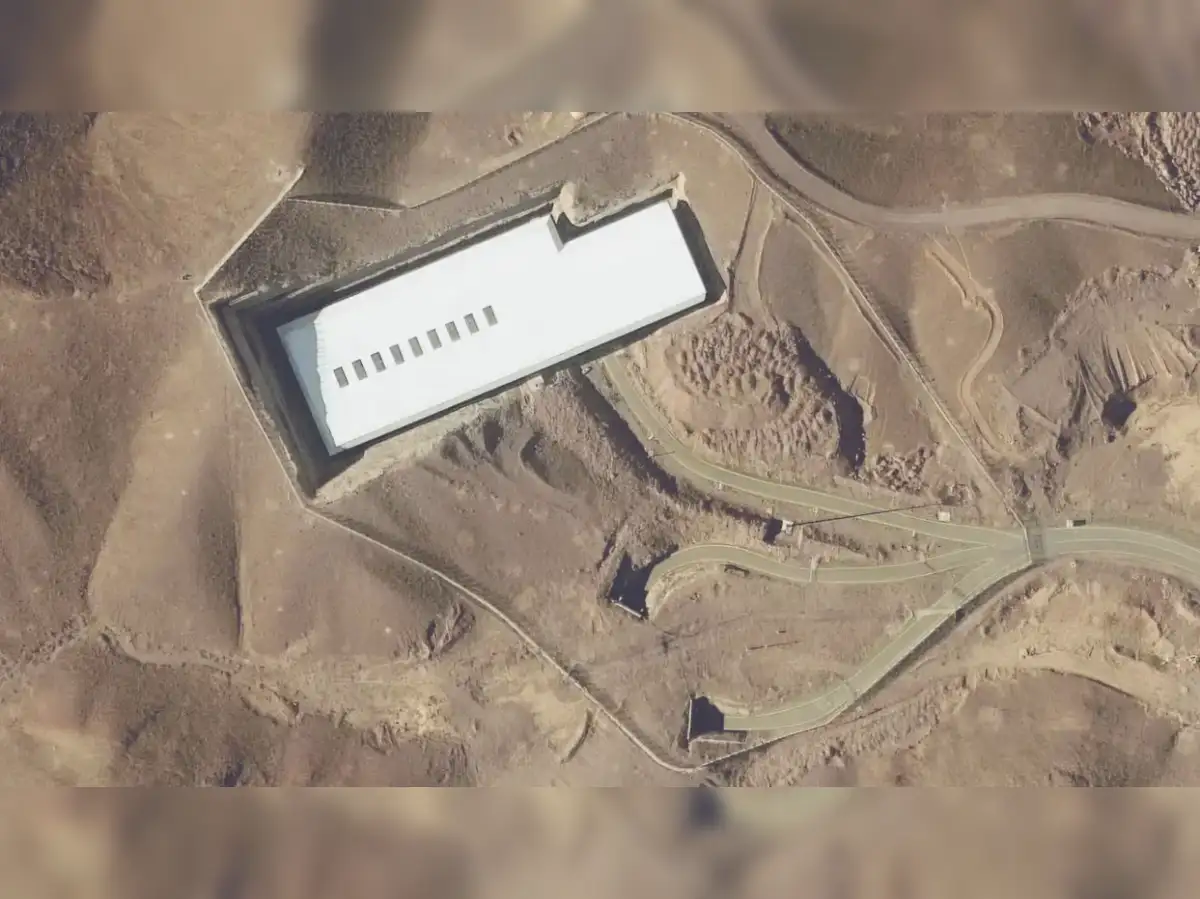
The 12-day Israel-Iran war (June 13-25) marked a major escalation in the Middle East’s geostrategic landscape. It started with Israel launching attacks on Iran’s nuclear and critical military and civil infrastructure, including targeting senior nuclear scientists and military leadership. The attacks followed Israeli Prime Minister Benjamin Netanyahu’s allegations that Tehran was “closer than ever” to acquiring a nuclear bomb; assertions which US President Donald Trump duly supported, along with an assessment shared by the International Atomic Energy Agency (IAEA) that the Islamic Republic was “diverting” nuclear fissile material.
This was not the first time that Tel Aviv, per se, Netanyahu claimed Iran was close to achieving the threshold of weaponising its nuclear program. It is something that he has repeatedly claimed, long before he became Israel’s prime minister, when he was a member of the Israeli Knesset in the early 1990s. While Iran consistently denied these allegations and insisted that its nuclear activities were solely of civilian nature, these attacks nonetheless inflicted heavy damage and resulted in the temporary halt of its nuclear program, loss of critical technological infrastructure, and left 19 senior Iranian scientists dead. Legally, the Israeli and US strikes against Iran constitute violations of international law, the Non-Proliferation Treaty (NPT) and the IAEA safeguard agreement — all of which prohibit attacks on peaceful nuclear facilities.
Following the June war, speculations have grown that Tehran might be withdrawing from the NPT Agreement and also limit its cooperation with the IAEA inspections regime, ostensibly to change the course of its civilian nuclear program to a military one. In such a context, understanding the future trajectory of the country’s nuclear policy requires a multifaceted analysis of its domestic, regional, and international dynamics, as well as the current state of its nuclear program.
Nevertheless, the Israel-Iran military confrontation can be analysed through a binary of Israeli and Iranian perspectives.
Israeli Perspective
Historically, Israel has been at odds with the majority of Middle Eastern countries in every sense of its existence, be it cultural, political, and ideological, while it maintained close ties with the Western world. The ideological and cultural differences have kept Israel and West Asian countries at arm’s length, with Israeli political leaders showing no effort for cultural exchange and keeping the Israeli Jews segregated from the rest of the native population of the region. Since it declared independence in 1948, following the end of the British mandate of Palestine, Israel’s wars with Arab states and its enduring sense of insecurity have shaped a tightly knit security architecture and a siege mentality.
The 1979 Iranian Revolution added a new layer of threat perception. The rise of the Shia Islamist regime in Tehran, coupled with Iran’s nuclear ambitions (originally a Western-backed civilian project under the ousted Mohammad Reza Pahlavi), reinforced Israel’s belief that Tehran posed an existential danger. The alleged military adventurism of the Iranian nuclear program that started against the backdrop of alleged Weapons of Mass Destruction (WMD) by Iraq was later projected as the biggest nightmare of Israel.
Although Iran denies pursuing nuclear weapons — and many Western intelligence assessments have failed to prove otherwise — Israel continues to treat the Islamic Republic’s nuclear program as an imminent threat. With Tehran’s regional posturing largely weakened after Bashar al-Assad’s removal in Syria, and the depletion of Hamas and Hezbollah military strength in the two years of Israel’s military campaigns following the October 2023 Hamas attacks, Israel’s war on Iran thus sought to degrade Tehran’s capabilities further and reassert its regional military dominance.
The Iranian Perspective
For Iran, the nuclear program serves multiple purposes at the domestic, regional, and international levels. Domestically, it enhances regime legitimacy by projecting technological progress, ensuring energy security, and supporting scientific and medical applications. Regionally, Tehran faces both ideological and sectarian adversaries with Israel on one side and the Western-aligned Sunni Arab states on the other. Acquiring such a technological capacity, if not the weapon in itself in the first instance, therefore functions as a balancing tool within a hostile environment and secures its autonomy and asserts its dominance. Internationally, Iran has endured decades of sanctions and diplomatic isolation since 1979, while the heavy US military presence across the Gulf further fuels its security anxieties, which resulted in the emergence of its proxy security architecture.
A nuclear deterrent, therefore, offers Iran a means to counter perceived Western and Israeli coercion besides cementing its position in the region and broader Muslim world. Yet, as Professor Reshmi Kazi of Jamia Millia Islamia notes, “In 2018, Iran was largely cooperative. There were no reports of its non-compliance with IAEA inspections. The real contention began when President Donald Trump unilaterally withdrew the US from the 2015 signed UNSC-supervised multilateral JCPOA deal.”
Similarly, Abdul Rahman, a West Asia analyst at People’s Dispatch, emphasises: “Iran has consistently advocated for a nuclear-free West Asia and has used nuclear energy for civilian purposes only. If Iran truly intended to build a bomb, it could have done so within a year. Moreover, the Supreme Leader’s fatwa explicitly forbids nuclear weapons. On the contrary, Israel is the only nuclear-armed state in the region and that too outside the NPT framework.”
Future of the Iranian Nuclear Program
While the Israeli and US attacks inflicted a severe blow to Iran’s nuclear facilities, including killing its senior scientists, reports suggest that Tehran has yet to repair the damaged facilities so far, even as it has voiced its intentions to do so soon. Nevertheless, considering the evolving security dynamics of the region, the Iranian nuclear program faces two possible paths: escalation and weaponisation or diplomacy and reintegration. Firstly, Tehran could choose to withdraw from the NPT, which is something it has threatened to do since the attacks. If it embarks on such a path, this could directly lead to the conversion of its civilian nuclear program into a military one. It should be noted that with the JCPPOA expiring in October 2025 (following the completion of the agreed-upon 10 years), there will be less international oversight, as the agreement governed the intense scrutiny by the IAEA’s inspections regime. This could create conditions conducive to the development of an unrestricted nuclear program. Also, after Israel, attack, the domestic factions, including orthodox, moderates, and liberals, stand united against any military aggression.
According to a CSIS report, Iran currently possesses around 400 kg of Uranium enriched to 60 per cent, just below the 90 per cent required for weapons-grade material. While Iran has the technical capacity to achieve higher enrichment, its stated intent remains civilian. Prof. Kazi explains, “Iran has the capability of enriching Uranium up to 90 per cent and also has stockpiles to develop at least nine nuclear bombs. However, having capability and intention are two different things. It is still having a civilian nuclear program and must not be called as having nuclear weapons.”
Should Iran pursue weaponisation of its civilian nuclear programme, it would risk further burdening its sanctions-ridden economy with additional sanctions on trade, banking and oil exports. This could also force other countries to join the sanctions regime at Washington’s insistence or coercion, something that would negatively impact its long-term domestic, regional, and global positioning. Although Tehran’s eastward outreach to Russia, China, and Asian partners could mitigate such pressures, the long-term costs to its economy and global standing would be considerably severe.
Alternatively, Iran could prioritise economic advancement and re-engage diplomatically with the United States and other international stakeholders. Such a change would pave the way for its reintegration into the global supply chain, which is something it has previously undertaken, resulting in the 2015 JCPOA. Renewing the dialogue through relevant bilateral or multilateral channels and reiterating its obligations under the NPT during the 2026 Review Conference may help Tehran dissipate suspicions and reaffirm its right to a peaceful nuclear power program.
But this is easier said than done, given how the US unilaterally withdrew from the 2015 Iran nuclear deal in 2018, even as Israeli regional hegemony continues to grow. Though there have been unsubstantiated allegations that the Islamic Republic has resumed its nuclear programme covertly, it continues to allow IAEA inspections and insists on compliance with permitted enrichment levels.
The Broader Context
The Middle East remains a hotbed of conflicts and rivalries driven by competing visions of local actors for regional order, their identity politics and external interventions, particularly the role of the United States. The security dilemmas of regional powers have played a crucial role in defining their relationships within the region and beyond. Since its creation in 1948, Israel’s non-native demography, racialised politics, and nuclear monopoly, despite maintaining strategic ambiguity, have shaped its uneasy co-existence with its neighbours. It is particularly true for the Islamic Republic of Iran, whose ideological opposition to Zionism remains deep rooted.
In light of this, the solution to Iran’s nuclear future cannot simply come from coercive measures like attacking its nuclear facilities, as it only strengthens the country’s conservative actors, besides fostering distrust in the region. As such, the true path to regional stability would entail respecting Iranian sovereignty, undertaking credible mediation, and renewing diplomacy. The question is, though, is the United States prepared to pursue that kind of policy?