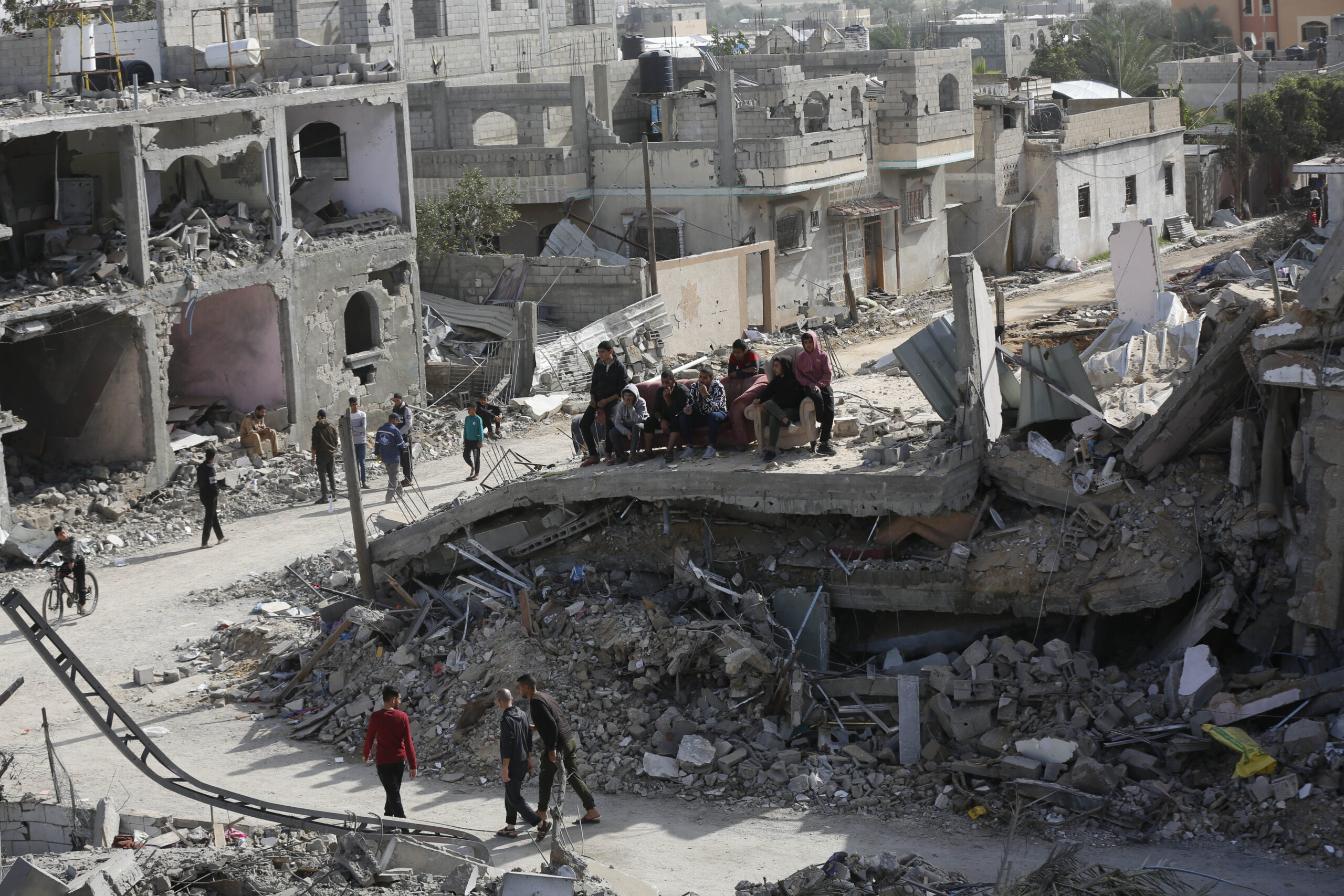

It was meant to be the beginning of calm after one of the most devastating wars Gaza has ever seen. On October 9, U.S. President Donald Trump announced that a ceasefire had been reached to end Israel’s genocidal war against Palestinians in Gaza. Four days later, on October 13, the United States, Egypt, Qatar, and Turkey signed as guarantors the Joint Statement to mark the acceptance of the ceasefire, as detailed in President Trump’s 20-point peace plan, by Hamas and Israel, in the Egyptian resort city of Sharm el-Sheikh. Yet, barely a week into the deal, Gaza again echoed with the sounds of airstrikes, demonstrating the fragility of the promises of peace.
The ceasefire implementation plan for a “Comprehensive End of Gaza War” laid out an ambitious six-phase plan and was intended to mark a turning point. It promised total cessation of “all military operations, including aerial and artillery bombardment and targeting operations,” mandated the “full entry of humanitarian aid and relief” into Gaza, and the withdrawal of Israeli Defence Forces (IDF) to the pre-designated lines. It also included a significant prisoner exchange: Hamas released all living hostages to start with, while Israel freed Palestinian prisoners and detainees.
On paper, it seems comprehensive. But, in practice, it has been anything, and it remains fragile. Since its signing, Israel has violated the agreement more than six dozen times as Palestinian and international monitoring groups have reported. Most of these violations occurred when displaced and desperate Palestinians attempted to return to what remains of their ruined homes in Gaza City, Khan Younis, and Rafah. The IDF’s retreat to agreed-upon lines under the deal was supposed to allow civilians to return. Instead, Israeli drones and snipers targeted groups of returnees, killing and wounding dozens.
What these incidents then suggest is that Benjamin Netanyahu’s right-wing government may have a proclivity to treat the ceasefire not as a binding agreement but as a tactical pause. Israel seems to be hollowing the core deal commitment of “immediate commencement of full entry of humanitarian aid” into Gaza by design. It has refused to let food, fuel, and medicine flow freely by maintaining strict control over Gaza’s border crossings.
In particular, the Rafah border crossing with Egypt serves as the key point for international humanitarian organisations, including UN aid agencies, to enter the besieged Strip. The UN has condemned Israeli restrictions with its highest court, the International Court of Justice (ICJ), ruling that Israel as an “occupying power” is obligated to facilitate the delivery of humanitarian aid to the Gaza Strip. But for over two million Palestinians held in the enclave, they will have to wait for the largesse of the U.S. and pressure from the international community, as it stands, to have critical aid reach them amidst continued Israeli restrictions.
There have been multiple instances and ceasefire violations by Israel that broke the facade of calm. On October 19, Israel commenced a new wave of airstrikes across Gaza that killed at least 45 people after Prime Minister Benjamin Netanyahu asserted that Hamas had breached the ceasefire by attacking Israeli forces at Rafah and cited the deaths of two Israeli soldiers. But soon, the official narrative began to crumble as it became apparent that the soldiers had died in an incident of their own.
American journalist Ryan Grim of DropSite, citing U.S. officials, reported that both the White House and the Pentagon knew the blast was triggered by “an Israeli settler bulldozer running over unexploded ordnance.” There were no Hamas fighters emerging from the tunnels that Netanyahu would have the world believe, but only an Israeli error. Yet the Israeli prime minister seized on the incident and used it as a casus belli to resume airstrikes with impunity.
In diplomatic circles, such an act is known as a “false flag” — a deliberate manipulation of facts to justify military action. In political terms, it was a calculated provocation. Netanyahu’s government, cornered by domestic opposition and mounting international criticism, found in this false narrative an excuse to reignite the war and reassert control. That the Americans knew beforehand saved it for the Palestinians, but not before Israel killed dozens more.
The episode reveals not only the fragility of the ceasefire but also the imbalance built into it. The agreement depends entirely on good faith, particularly from Israel, whose military and territorial control allow it to dictate the terms of implementation. Hamas, having released all living hostages as part of the first phase, now holds little leverage. Its compliance is not being met with reciprocal restraint but rather with further punishment.
These dynamics place an even greater burden on the United States, the principal guarantor of the truce. President Trump’s announcement of the ceasefire was framed as a diplomatic triumph and proof that his administration could deliver peace where others failed. But Israeli actions are now testing the limits of Trump’s leverage over Netanyahu.
Washington’s credibility hinges on whether it can hold Israel accountable for its repeated violations. Until President Trump dictated the ceasefire on Israel, the record had not been encouraging, as his administration, and before that, the Biden administration, had hardly acted to rein in Netanyahu, even when the evidence pointed to aggression rather than defence. Now, the question is, how long will President Trump be able to persuade Israel to hold onto his peace plan?
In a sense, the Sharm el-Sheikh ceasefire is a test of leadership for the United States and an opportunity to demonstrate its willingness to act credibly to save the region from further death and destruction. The longer this ceasefire remains this tenuous – punctuated as it is by escalations, humanitarian aid blockades, and political deceit – the more it will directly impact the already dented image of Washington in the region. It had already sustained a blow after Israel conducted targeted attacks in Qatar last month. Each violation erodes U.S. diplomatic capital, not just in the Middle East but globally, as American allies watch how its guarantees could hold nought when an eventuality arises. Should Washington fail to rein in its closest ally, then its claim of leadership will sound increasingly hollow.
It is a foregone conclusion that peace cannot be established based on unilateral power or selective enforcement. It requires trust, something that is at best in short supply when it comes to the Israeli government’s attitude toward the peace process.
The fragile ceasefire in Gaza will likely hold — until it doesn’t. The question now is not whether Israel or Hamas will fire the next shot, but whether the United States, per se, President Trump has the will and the courage to prevent it, particularly when it comes to Netanyahu.
Because in the end, this ceasefire is not just about Gaza. It is about whether the world’s most powerful country can still uphold its simplest commitment to the deal and peace.