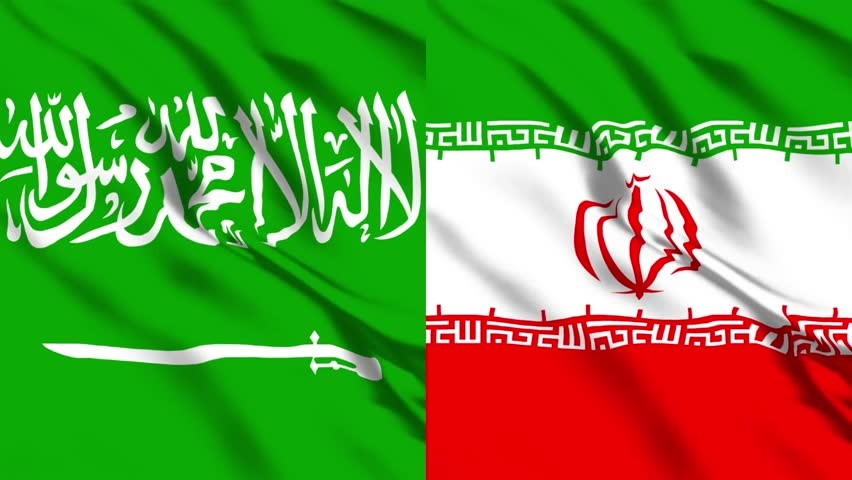
Saudi Arabia and Pakistan formalised their longstanding security cooperation through the Strategic Mutual Defence Agreement on September 17. Though the agreement is primarily being seen as a deterrent against Israel’s growing military adventurism in the region, its implications for other regional actors as well as the broader regional security architecture cannot be overlooked. It has institutionalised Riyadh-Islamabad’s longstanding bilateral security arrangements with limited scope into a comprehensive strategic alignment by virtually joining them together as it pledged “any aggression against either…an aggression against both.”
Saudi Arabia has faced multiple regional challenges, such as Iran’s ambitions, including Tehran’s regional proxies like the Yemeni Houthis, and Israel’s increasingly aggressive military adventurism. Combined with growing doubts about the United States’ reliability as a security partner, these factors gradually pushed Riyadh to broaden its strategic partnerships and pursue greater autonomy in its security policy. As such, by formalising its alliance with Pakistan, the Islamic world’s only declared nuclear power, Riyadh gains a powerful hedge against these threats. For Pakistan, the pact offers a crucial financial lifeline and reinforces its strategic relevance in the Middle East. Facing severe economic crises, Islamabad has historically relied on financial support and deferred oil payments from Saudi Arabia. The defence agreement cemented this patronage with Riyadh pledging significant investments in return for Pakistan’s security commitments.
Challenges for Iran
The Saudi-Pakistan defence pact directly challenges Iran’s strategic position and regional ambitions in several key areas. Firstly, it formalised a formidable Sunni-led bloc against Iran’s Shia alliances. For decades, Tehran and Riyadh engaged in proxy wars to broaden their spheres of influence across the Middle East. This pact elevates the rivalry from a series of indirect confrontations to a formal strategic alignment. From Tehran’s perspective, it deepens its sense of encirclement given the existing US military presence in the region, even as it views Washington’s alliance with Islamabad with greater suspicion.
Secondly, a critical and intentionally ambiguous component of this pact is its nuclear dimension, which directly impacts Iran’s strategic calculations. The agreement has been widely interpreted as an extension of Pakistan’s nuclear umbrella to Saudi Arabia. This perception is rooted in the historical context of Saudi financial support for Pakistan’s nuclear programme and is reinforced by statements from officials on both sides over the decades. The pact fundamentally alters the regional nuclear balance. While Iran’s potential weaponisation of its nuclear programme has long been a primary concern for the kingdom, this deal provides it with some kind of a deterrent, potentially negating the strategic advantage Tehran might hope to gain as and when it goes nuclear. Furthermore, there is a prospect for the modernisation of Pakistan’s conventional military with the financial support of Saudi Arabia, which can become a significant threat to Iran.
Thirdly, it reinforces the sectarian fault lines in the region. The Saudi-Iran rivalry has historically manifested through sectarian proxies, and Pakistan, with its significant Shia minority (the second-largest in the world), has been a key battleground. Iran has consistently viewed itself as the protector of Shia communities globally and has consistently flagged anti-Shia Sunni militant groups, which have been previously linked to the unofficial Saudi patronage networks. As such, it could empower Pakistan-based Sunni groups like Jaish al-Ad,l which operate in the Sistan-Balochistan province. This presents a direct security threat to Iran and complicates its already fraught relationship with Pakistan over cross-border militancy.
And finally, it places Islamabad in a challenging diplomatic position and forces it to navigate a precarious balance between its immediate neighbour, Iran, and its strategic benefactor, Saudi Arabia. While Pakistan’s leadership has many times offered to mediate between Riyadh and Tehran, its economic and military dependence on Saudi Arabia suggests it would likely side with Riyadh if forced to choose. At the same time, it must be noted that Saudi-Iranian relations remain cordial after a deal was mediated by China in 2023. Nevertheless, this pact adds a degree of complexity in the Iran-Pakistan relationship in itself, which has been characterised by cooperation and competition.
Opportunities for Iran
Deepening the Iran-India Strategic Partnership: This shared perception of a strengthened Saudi-Pakistan axis creates a powerful convergence of interests between Tehran and New Delhi. Iran can leverage this to accelerate progress on the Chabahar port and boost the International North-South Transport Corridor (INSTC).
Faced with a more organised regional threat, Iran can make a stronger case to Beijing and Moscow for enhanced military, economic, and diplomatic support. China, which has strategic interests in both Iran (Belt and Road Initiative) and Pakistan (CPEC), has previously mediated between Tehran and Riyadh. The SMDA complicates Beijing’s balancing act, and Iran can leverage this to demand greater and more explicit support.
The probability of establishing an ‘Islamic version of NATO’ is also higher. A call for a joint defence alliance, independent of external actors, has been present in the region for a long time. This defence pact can be a starting step for such an alliance. The recent attacks on Qatar and the changing priorities of the US have made the Gulf Monarchies rethink their security decisions. Iran can use this vacuum to build amicable relations with its Gulf neighbours and potentially become part of the alliance.
Conclusion
The Strategic Mutual Defence Agreement between Saudi Arabia and Pakistan marks a formalisation of a longstanding partnership and fundamentally reshapes the Middle East’s and South Asia’s geopolitical landscape. For Iran, the pact represents a significant strategic setback. It solidifies a powerful, nuclear-backed alliance on its eastern border, directly challenges its regional ambitions, alters the nuclear calculus of the Middle East, and threatens to deepen sectarian divisions. This formal commitment between Saudi Arabia and Pakistan strains their relationship with Tehran and limits the potential for bilateral cooperation with the increasing risk of regional instability. Ultimately, this agreement necessitates Iran to adopt a more nuanced regional security strategy.
The views expressed are the author’s own.
very informative and well written. The clarity with which you explained the saudi-Pakistan defence agreement is truly commendable.