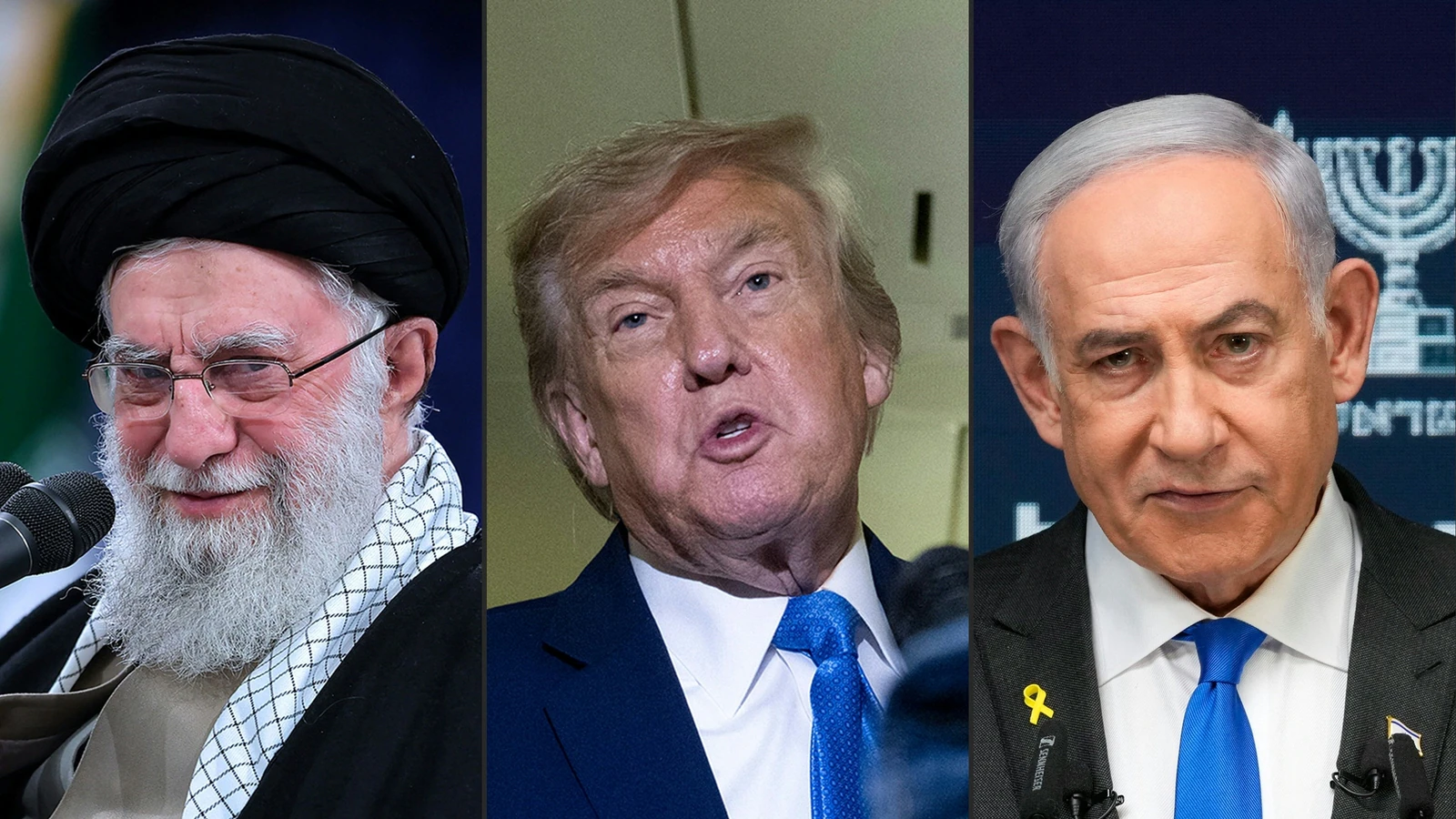
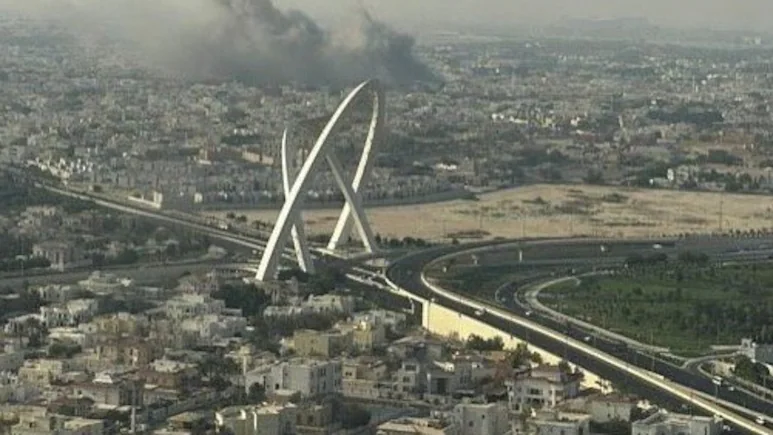

It is often said that the only predictability about the Middle East’s geopolitics is its unpredictability, and yet what has remained remarkably consistent is the structural myopia of its regional security frameworks, particularly the one followed by the Gulf Cooperation Council (GCC) members. Israel’s targeted strikes on Hamas leadership in Doha on September 9 have exposed the intrinsic flaws of this system. Such a brazen violation of Qatari sovereignty, despite being a close American ally with the largest presence of US forces, marks a critical juncture, demanding a re-examination of regional security paradigms which have been, since their inception, misaligned in scope and purpose.
The Misplaced Gulf Security Framework: An Iran-Centric Construct
The GCC security architecture has long been predicated on shielding the ruling Gulf monarchies from internal dissent and external adversaries. However, the fundamental flaw of this framework has been its disproportionate fixation on Iran as the primary existential threat. At its establishment in 1981 during the Iran-Iraq War, its rationale was justified on account of countering Iran’s Shia revolutionary fervour, which directly challenged the Islamic legitimacy of these family-based Sunni ruling dynasties. It was supplemented by the Joint Defence Agreement of 2000, which held that “any attack on any of them is an attack on all of them and any threat to one of them is a threat to all of them.”
"The Israeli strike on Qatar shattered the illusion that American alliances guarantee Arab sovereignty."
Over the years, this Iran-centric security paradigm morphed into an overarching obsession, justifying massive arms acquisitions from Western powers and military cooperation agreements, particularly with the United States. The underpinning assumption has been that Iran’s regional ambitions, along with its appeal to the Arab street sentiments due to its explicit pro-Palestinian position, including assisting groups like Hamas in Gaza, posed the most immediate threat, thereby warranting a unified deterrence posture. This myopic lens, however, overlooked a far graver and systemic threat, which is Israel’s expansionist designs and its recurrent undermining of Arab sovereignty. At the same time, it should be noted that there are distinct intra-GCC threat perceptions of each other, something that the 2017 Gulf crisis demonstrated.
The inadequacy of this Iran-focused security matrix of the GCC was exposed by the recent Israeli breach of Qatari sovereignty by targeting Doha-based leadership of the Palestinian Hamas group on September 9. While Israel failed to harm the targeted Hamas leadership, which had convened to discuss the ceasefire plan proposed by US President Donald Trump for Gaza, the attack killed five Hamas officials and a member of Qatar’s Internal Security Force.
"The Gulf’s obsession with Iran has blinded it to the more immediate threat — Israeli expansionism."
Take the case of Qatar and its security matrix. Amidst heightened fears among smaller Gulf states due to Iraq’s invasion of Iraq in 1990, Qatar’s own relations with Saudi Arabia deteriorated due to the Khafaf border dispute in September 1991. In its aftermath, Doha signed its first Defence Cooperation Agreement with the United States in 1992. It was complemented by offering its Al Udeid airbase to the American forces in 1996, who were based in Saudi Arabia’s Prince Sultan Aziz base, which eventually happened in 2002 amidst Riyadh-Washington disagreements over the use of the Saudi base for regional offensive operations in Afghanistan and Iraq. This was considered a major coup by Emir Sheikh Hamad, having initially endured Saudi-backed coup attempts from his father after taking over in 1995, who saw the American military presence as a guarantee for his regime’s security. Moreover, this was seen as a strategic bulwark against both Iranian coercion, with whom it shares the South Pars/North Dome Gas field and Saudi adventurism for often refusing to toe Riyadh’s regional consensus as was evidenced during the 2017–2021 blockade.
Nevertheless, the Israeli aggression with such impunity has revealed that this security apparatus lacks any real mechanism to counteract such aggression from America’s closest ally. While the GCC states have collectively expressed outrage and have vowed to “activate a joint defence mechanism”, but the bigger question is whether it will go beyond the rhetoric and translate into something tangible will remain to be seen.
The Real Threat: The Greater Israel Project
The Zionist political establishment has a long-term biblical vision for Eretz Israel (Land of Israel), which is encapsulated in its “Greater Israel project.” Its ideological underpinnings of redrawing borders on biblical claims are fundamentally at odds with the post-World War I Sykes-Picot framework that became the basis of establishing the modern Middle Eastern state order. And unlike Iran, whose regional ambitions are ideologically driven and often portrayed as ‘defensive’, Israel’s intentions and actions are explicitly territorial and assertively expansionist in nature, thereby directly threatening the undo the status quo of over a century.
Despite the Sykes-Picot Agreement being a colonial imposition on the region, it provided a geopolitical template upon which the post-Ottoman Arab world was eventually drawn up into contemporary nation-states. It also established a territorial consensus among the regional states, albeit ‘contested’. But that has never restrained Israel, which subsumed more than two-thirds of the British Mandate of Palestine to emerge as an independent state in 1948, from routinely contesting and disregarding this status quo. The Zionist establishment has viewed this regional consensus as a colonial hindrance to its expansionist objectives. The annexation of Palestinian territories, ongoing settlement expansions in the West Bank, and military incursions into Lebanon and Syria exemplify Israel’s systematic strategy to dismantle existing borders under the guise of national security.
"Israel’s actions aren’t defensive—they’re territorial and expansionist by design."
Israel’s strategic culture has long been predicated on the notion of preemptive aggression (1967, 1981) and maintaining regional superiority. As such, this attack in Qatar must be understood within this context. It was not an isolated act but essentially a deliberate messaging to the Arab world. Israel’s capacity to strike sovereign territories with impunity, especially in a state as diplomatically robust as Qatar, which has been a go-to regional mediator, exposes the asymmetry in regional power dynamics. Such a unilateral aggression is emblematic of a state that perceives itself above international norms and regional sovereignty, something that unwavering American and broader Western support have duly emboldened.
Israel’s Bullish Behaviour: Doha Attack as Power Projection
Israel’s assault on Qatar is not merely a cross-border operation against Hamas leadership but a strategic projection of power intended to reassert its dominance in the Middle East. The operational calculus behind targeting Qatari soil appears to demonstrate to other regional actors that no sanctuary for Hamas remains immune, and perhaps test the limits of GCC state responses under the prevailing security framework.
It is instructive how Israel expanded its cross-border military aggression across various Arab territories, be it Lebanon, Syria, Yemen and Iran, in recent years. Each act of aggression illustrates a pattern of aggressive unilateralism that seeks to present military superiority and diminish Arab state sovereignty. As such, the Doha attack easily fits in this continuum, especially considering Qatar’s ‘independent’ foreign policy orientation and financial support for various Palestinian factions, most predominantly Hamas in Gaza for nearly two decades.
"The Doha attack wasn’t just about Hamas—it was about power projection and Arab submission."
Additionally, the timing and method of the attack suggest a deliberate intent to destabilise the internal security calculus of not only Qatar but also other GCC countries. For instance, when Iran fired missiles to target the American base at Al Udeid in response to the US targeting of Iranian nuclear facilities in June, Qatar successfully repelled the attacks. However, in the case of the Israeli attack, there were hardly any defensive responses, which also opens up a serious question about Qatar’s security posture as well as the effectiveness of the US-led security umbrella, ostensibly designed to provide protection against external aggression.
More fundamentally, the GCC’s institutional inability to act against Israeli violations demonstrates severe limitations as a collective security system. While the GCC members have expressly denounced Israeli actions, with the UAE President Sheikh Muhammad Bin Zayed (MBZ) and the crown prince of Kuwait travelling to Doha within a day of the attack, as of now, it remains rhetorical. For example, the hastily convened Arab-Islamic Summit on September 15 can best be described as posturing to show unity and pressure Washington to contain Israel rather than prescribing any hard measures. This said, such posturing highlights the structural limits of the GCC states to Western strategic interests, especially those of the United States, which has, historically, protected Israel from any accountability for its actions in multilateral forums such as the United Nations Security Council (UNSC).
Revisiting the Security Framework
These recent events and incidents demonstrate that the US-led Gulf Security framework has become obsolete, as it has failed to address the local regional security concerns of the GCC countries. First and foremost is its preeminent Iran centrism, wherein it is perceived as a predominant threat. This needs revisiting as an effective security framework must be reoriented from its current adversarial posture towards Iran and instead embrace a balanced, multilateral approach that incorporates all regional stakeholders.
"The GCC security framework is a Cold War relic—misaligned, outdated, and ineffective."
Given their greater convergence of interests in changed regional dynamics, it is time for the GCC countries to move past their redundant policy of ostracising Iran to the margins. It cannot be overstated that having Iran outside the regional security architecture, coupled with its largely Western-driven sanctions, has only increased tensions and instability in the region. It should lead to the emergence of a reformed security architecture based on shared principles of sovereignty and non-interference that confronts the question of Israel’s expansionist ambitions as well as the structural imbalance that gives Tel Aviv impunity. The Gulf states will also need to reconsider their military dependence on Western states, especially the United States and build space for a local order that prioritises regional peace and security over power projection.
"Qatar's experience shows that Western military presence is no substitute for regional autonomy."
Conclusion
The Israeli airstrike on Qatar highlights the grand illusion of the current Gulf security framework, which remains fundamentally misplaced by its exclusive focus on Iran. Israel’s biblical project of expanding territorially, outright disregard for Sykes-Picot-imposed borders, and aggressive posture toward Arab states constitute a far greater regional threat than Iran’s calculated ideological pursuits. And, Israeli attack in Qatar, a 12-day war with the US against Iran in June, relentless air strikes and ground incursions in Syria and Lebanon, war in Gaza, exemplify its role as the primary regional bully, operating with tacit American acquiescence, and revealing the ineffectiveness of the GCC security paradigm.
"The region must outgrow its dependency on flawed external frameworks and build its own path to stability."
As such, a substantive and sustainable security framework must transcend external impositions and address local security imperatives. While it must incorporate Iran as a regional stakeholder, there is also a need to critically assess Israel’s expansionist designs and evolve a security arrangement that could address the current inadequacies. Therefore, as the dust settles over Qatar, the message cannot be more explicit in that the regional security system of the Arab world, more so, GCC countries, could be entrusted to flawed frameworks conceived during the Cold War. The evolving security concerns require a new paradigm, a new thinking, and a new system that not only stands up to the bullying of states like Israel but also leads to regional cooperation and peace and stability.