In his seminal non-fiction The Art of the Novel, Milan Kundera highlights Edmund Husserl’s expounding of ‘Crisis of European Humanity’, holding that it was for the first time in Human History that people apprehended the world as a “whole”. To Husserl, a distinguished philosopher and founder of the school of phenomenology, the advent of the natural sciences had put a halt to the experience and understanding of what he called die Lebenswelt or “the lived world”. Science had rendered all aspects of life categorised, and something wistful had arisen as a consequence of what he called “the forgetting of being”. For Kundera, Husserl had pointed the whole of Europe towards something prophesying and insightful: Man was now a mere subject of the forces of technology, politics, and history.
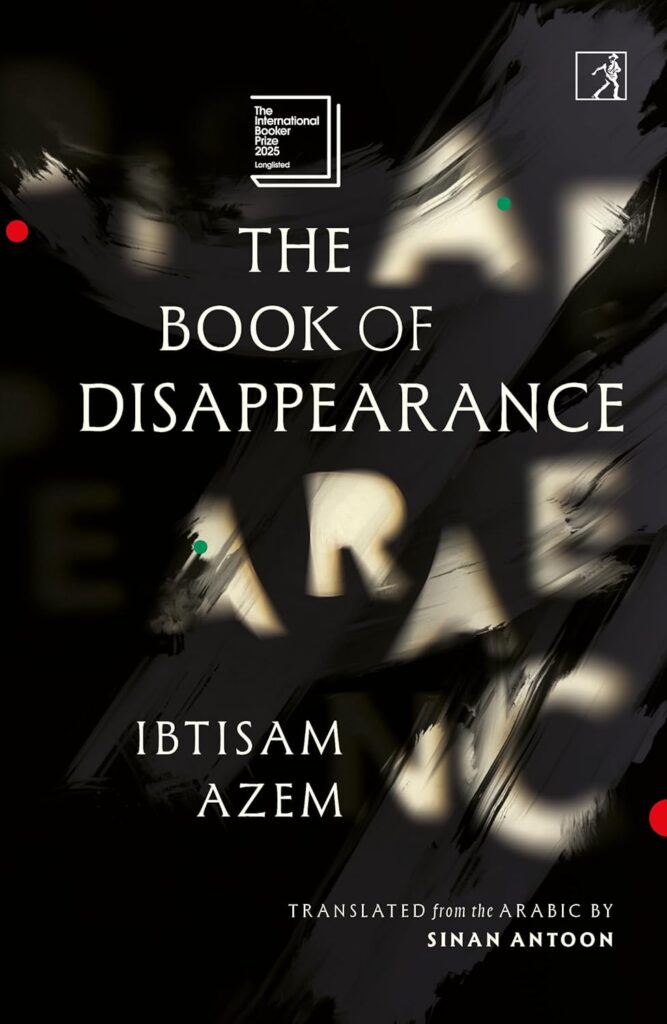
Ibtisam Azem’s novel The Book of Disappearance does for Palestinian life the same thing Husserl did for European Humanism; she apprehends the lived world of the Palestinians and refuses to categorise only one aspect of Palestinian life before and after the Nakba to encompass the beauty, tragedy, and Weltschmerz (world pain) of the Palestinian people. In her deeply sensitive and almost Kafkaesque novel, Azem gives immense propensity to the Palestinian senses and is keenly aware of quotidian sublimity that is integral to the people of every city, especially her city: the smell of orange peels, the stimulating walks through the boroughs, and the sight of the radiant water which was, for the people of her beloved Jaffa (as Tel Aviv was called), a part of their being.
In the novel, this deep sensorial relationship of Palestine, especially Jaffa, to its autochthonous residents is shown through Alaa’s grandmother, who is deeply perceptive and attached to her city and tells Alaa that “a city dies if it does not recognise its own people” and seems almost to berate the city for not recognising her or her people. Through the grandmother, Azem explores the relationship of a person to their cities in such a way that it seems she implies a deep ontological bond between a person and the city they are born, begotten, and brought up in, insofar as their mood and memory are deeply affected by unnatural changes engendered.
The reader is swiftly made aware of unnatural changes in Jaffa. These changes were not merely alterations of the physical geography, impairment of familiar architecture, or sudden shifts in the nomenclature of city streets. Alaa’s grandmother had averred to him: “The cypresses on street sides lost their meaning after that year” (1948), the essential soul of every Palestinian who had lived came loose. Through Alaa, his grandmother becomes the direct interlocutor of the vicissitudes of the people of Palestine, whose voice apprehends the reader and speaks directly, as if alone and in confession by a bench near her beloved sea, about the thorns that prick her heart every waking moment.
By the end of the novel, one wonders if Alaa’s grandmother’s words were simply her pangs of destitution, or if she was a medium for the soul of a country that no longer seems to recognise itself. Her words intone in the reader’s mind: How can a city recognise its people? If so, how does it become incapable of that recognition? Why does Jaffa feel like two cities? Is the new Jaffa rising with a new name as the old one vanishes? No longer seeming as if they are cries of a forlorn woman, as the novel progresses, her words feel like insinuations or a prognosis for the tragedy that eventually comes. One is shattered by her early words, especially after the Palestinians disappear causelessly: “As if the darkness had swallowed them, and the sea took them hostage.”
Husserl’s analysis of the Crisis of European Humanity gives us two words that help us understand the causality-less disappearance of the Palestinians in Ibtisam Azem’s novel. But both words demand reinterpretation as they enter the sphere of Azem’s novel; this necessity arises from the essentially different circumstances in which they need to exist—one being in Europe, where die Lebenswelt or the ‘lived world’ had sunken as the scientific disciplines took precedence, whereas in the context of Azem’s novel this lived world in Palestine and its people fall into dissonance due to external factors.
Azem repeatedly shows us this feeling of incoherence in the lived world of Palestinians through Alaa, who already feels like a ghost, his grandmother, who no longer seems at ease in her own city, and various other natives who can no longer feel harmony in their place of birth as a consequence of the breakdown of sensorial relationship between the city and its people. The small social losses become a metonymy for larger ones that are too profound for simple language. This collapse of the lived world gives rise to the “forgetting of being”. Palestinians are no longer Palestinians; the new generations detest speaking Arabic, do not want to give birth to children—not because they choose to, but because they no longer want their children to be subjected to the pain of perpetual loss.
Azem’s work in some way mirrors “The World of Yesterday”, the memoir of Jewish novelist Stefan Zweig, who had to flee from Europe due to the incessant rise of anti-Semitism in 1930s Germany. Zweig remembers his beloved Vienna as a place of security and serenity, which was lost with the rise of anti-Semitism, and with it the Europe of his childhood. At the end, Zweig commits suicide with his wife after he finishes his memoirs, demonstrating how intense the consequences of “forgetting of the being” can be. Zweig’s end action doesn’t provoke anger but simply pity for him, a person whose land was taken from him, his world erased, his memories forever tarnished by the Third Reich. Azem’s novel creeps up on our hearts slowly, and one is left inconsolable and confused as to why all the Palestinians vanish. It invokes the same sense of loss in our hearts as the words “The world of yesterday” does.
The book bleeds not due to any apparent allusions to a history of violence or oppression, but through the absence of it. There is a silent understanding in the reader of what happened, which makes the tender words of Alaa and his grandmother full of blood. And about why the Palestinians disappeared? It doesn’t matter. What matters is that without them, there is no one left to love Jaffa, and it is forever bereft of its lovers.