
Dr Syed Mohammad Raghib
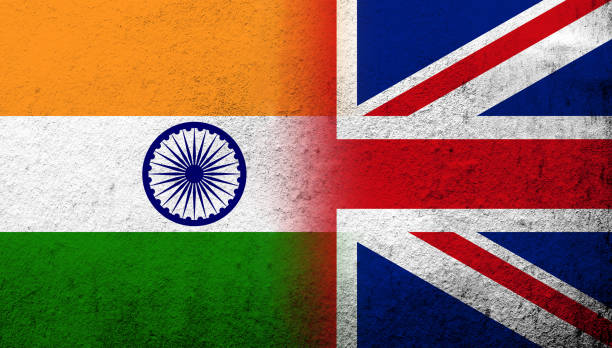
Indian Prime Minister Narendra Modi’s three-day visit to the United Kingdom from July 23–25, 2025, marks a significant turnaround in India-UK relations, highlighted by the formal signing of the long-anticipated Comprehensive Economic and Trade Agreement (CETA), or the Free Trade Agreement (FTA). Signed at Chequers in the presence of UK Prime Minister Sir Keir Starmer and respective trade ministers Piyush Goyal and Jonathan Reynolds, the agreement underscores the growing convergence between the world’s fifth and sixth largest economies and reflects a shared commitment to deepening economic integration, technological collaboration, and strategic cooperation.
The CETA, described by Starmer as the UK’s most significant trade pact since Brexit and by Modi as a blueprint for shared prosperity, aims to double bilateral trade from approximately $56 billion in 2024 to over $100 billion by 2030. It liberalises tariffs across critical sectors, with nearly 99% of Indian exports to the UK, including textiles, gems and jewellery, processed food, auto components, and engineering goods, being granted immediate duty-free access. In return, the UK secured tariff reductions on 90% of its export lines, with average tariffs on British goods to India dropping from 15% to 3%. Notably, the deal includes phased tariff reductions on Scotch whisky and gin (from 150% to 40% over ten years) and automotive imports (from over 100% to 10% under a quota regime).
The projected economic dividends are significant. UK government estimates suggest an annual bilateral trade increase of £25.5 billion (approx. $34 billion) by 2040, along with a GDP growth of £4.8 billion (0.13%). Additionally, facilitated by approximately £6 billion in new investment and export gains, the CETA is expected to support over 2,200 UK jobs, primarily in sophisticated manufacturing, technology, and aerospace, and £2.2 billion in annual wage increases. For India, FY25 trade with the UK already reached $23.1 billion, and the FTA is positioned to fuel labour-intensive sectors such as textiles and processed foods. Textiles and apparel exports could rise by 30–45% by 2030, generating up to $800 million in additional revenues and boosting employment in key production hubs such as Tiruppur, Surat, and Ludhiana, where women comprise 65% of the workforce.
Beyond trade in goods, the CETA spans digital trade, intellectual property rights (IPR), government procurement, labour mobility, SME promotion, and climate cooperation. A notable provision is the Double Contribution Convention (DCC), which exempts Indian professionals temporarily posted in the UK from paying UK national insurance contributions for up to three years, facilitating IT and services sector mobility. The agreement also opens access to India’s public procurement market, estimated at £38 billion annually through tenders below ₹2 billion, enhancing British competitiveness in infrastructure, healthcare, and defence.
However, challenges remain abound. The Bilateral Investment Treaty (BIT), under separate negotiation, is stalled over post-termination protections and tax dispute resolution. India’s apprehensions regarding the UK’s Carbon Border Adjustment Mechanism (CBAM), estimated to add $775 million in annual export costs, continue to persist, especially for carbon-intensive sectors such as steel, aluminium, and fertilisers. Chapters on financial and legal services, environmental and labour standards, and digital taxation were deferred and may require future rounds of negotiation. Ratification is pending: India awaits cabinet approval and regulatory alignment, while the UK Parliament, under a Labour majority, is expected to endorse the pact within months. The agreement is scheduled to take effect by mid-2026, with tariff concessions phased in through 2035.
Critically, MSME exporters will need to navigate compliance with the UK’s stringent product, sustainability (such as OEKO-TEX and BCI), and origin-of-content standards. While sectors like chemicals could see exports quadruple to $1 billion by 2030, competition from liberalised British imports in electronics and machinery may pressure domestic producers.
Beyond economics, the visit featured high-level engagement between the Confederation of Indian Industry (CII) and UK business leaders, and cultural outreach to the 1.9 million-strong Indian diaspora. Agreements valued at £6 billion were announced in AI, aerospace, dairy, and climate technologies. Modi’s meetings with King Charles and the inauguration of the Mahatma Gandhi Centre for Peace and Sustainability in London also reinforced cultural and strategic ties. Discussions on defence manufacturing, counterterrorism, and geopolitical coordination further expanded the scope of bilateral cooperation.
In conclusion, the India-UK FTA marks a strategic milestone in post-Brexit UK foreign economic policy and India’s pursuit of diversified trade partnerships. It serves India’s export-led growth strategy while reinforcing New Delhi’s alignment with like-minded democratic economies. As the agreement moves toward implementation, critical gaps in investment protection, carbon taxation, and regulatory compliance must be addressed. Nonetheless, the FTA reflects a maturing bilateral relationship and strengthens the foundation of the India-UK Comprehensive Strategic Partnership. It also sets a precedent for India’s future FTAs, emphasising balanced reciprocity, regulatory diplomacy, and inclusive growth.
Dr Syed Mohammad Raghib is a Research Officer at IIPA, New Delhi. He has a PhD in International Studies from Jawaharlal Nehru University, New Delhi, India.