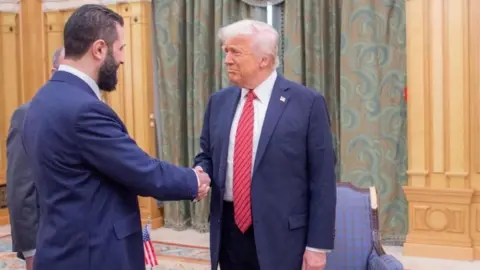
International relations are rife with paradoxes. Few cases illustrate the contrasting behaviour of major powers, particularly Western actors, more starkly than Syria and Afghanistan, where global and regional actors, along with multilateral institutions, have embraced one while abandoning the other at their convenience. Today, Syria’s new leader, Ahmed Al-Sharra, formerly Abu Muhammad Al Julani, the leader of the Hay’at Tahrir al-Sham (HTS), is on a diplomatic blitzkrieg, shaking hands with Western leaders such as French President Emmanuel Macron and engaging in dialogue with US President Donald Trump. Meanwhile, the Afghan Taliban regime remains largely ostracised with no international recognition since it seized control of the country in August 2021, bringing two decades of American adventurism in the country to an unceremonious end.
Strategic goals, humanitarian needs, domestic politics, and shifting threat assessments have long shaped Western decision-making towards the third world, especially that of the United States and its NATO allies. The shift from a robust presence in Afghanistan to its abandonment, alongside Syria’s journey from decades of ostracisation to renewed engagements, exemplifies the fluidity of their foreign policy priorities in the twenty-first century. Understanding why the Western world “ditched” Afghanistan while racing to embrace Syria requires examining contemporary geopolitical calculations, security concerns, public sentiments, and economic realities. This article examines these dynamics to highlight the duality of the Western approach to these two countries.
In case of Afghanistan, which has been clichédly defined as the “graveyard of empires”, it retained centrality in the American policymaking alongside Iraq within its broader War on Terror campaign following the terrorist attacks of September 11, 2001, in the United States, an event whose ramifications continue to unfold. As a first response to the 9/11 attacks, the US invaded Afghanistan in October 2001, dislodging the Taliban government in what it stated was to deny terrorist groups like Al-Qaeda a safe haven in the country. At its peak in 2010-11, the US deployed more than 100,000 soldiers in that country. Its war efforts were bolstered by soldiers from nearly 50 allied countries, both NATO and non-NATO, who numbered over 40,000 soldiers under the International Security Assistance Force (ISAF).
But, prolonged insurgency, corruption, and unfulfilled state-building objectives caused the mission to gradually lose domestic support despite significant military and financial investment, with the US, as some estimates put it, spending over $2.3 trillion during the two decades. With growing calls for disengaging from Afghanistan, as the 2021 AP-NORC poll showed, wherein 65% of Americans favoured ending the war, President Joe Biden capitalised on this sentiment to declare an unconditional US forces withdrawal from Afghanistan. This declaration hastened the return of the Afghan Taliban, which took over major provinces with minimal resistance from the government forces before marching on Kabul on August 15, 2021, without firing a bullet, even as the US withdrew the last of its forces by August 30, 2021.
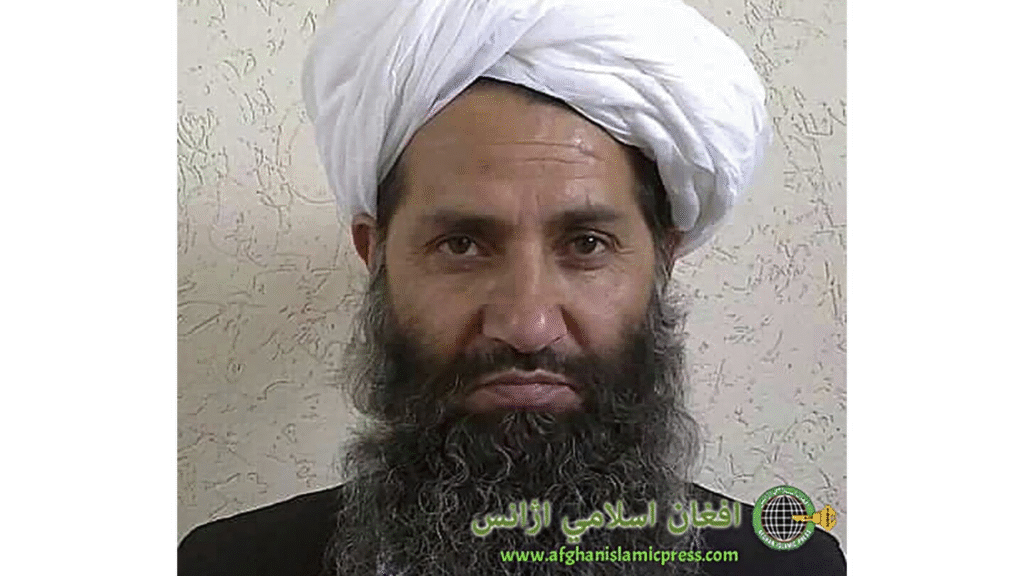
But more importantly for Afghanistan, despite two decades of US-led international efforts to sustain and strengthen Republican rule, the country’s democratic institutions, both political and economic, never took strong root. It remained heavily reliant on external assistance, with a World Bank report highlighting that foreign donors financed 75% of Afghanistan’s public spending. As such, the collapse of political institutions and the Afghan National Army’s inability to counter the Taliban reinforced perceptions that continued investment was futile. Geopolitically, Afghanistan lost its centrality in US strategic calculus with Washington shifting its focus as Russia asserted itself in Eastern Europe while China gradually emerged as the main adversary.
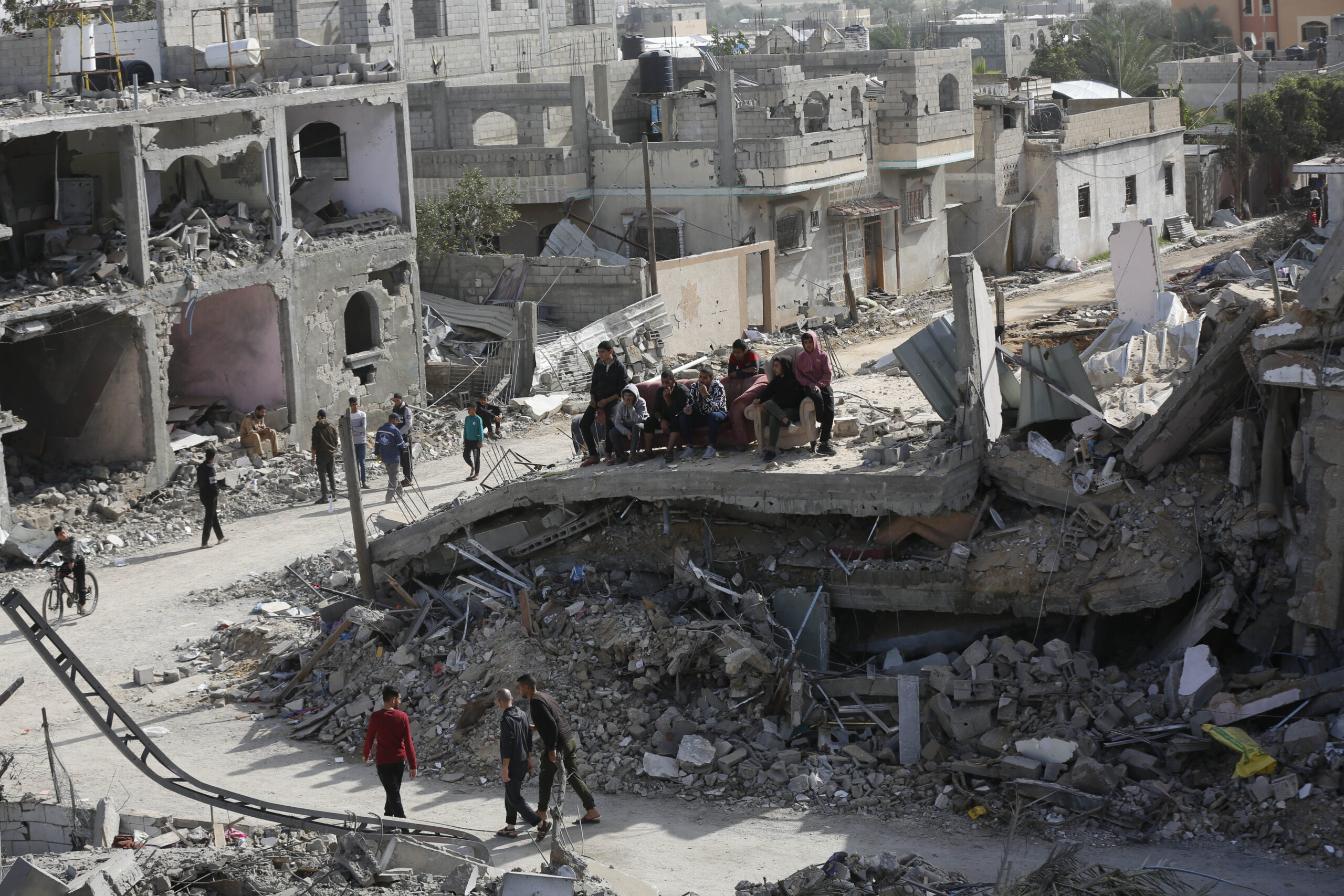
On the other hand, Syria, which endured a decade-long civil war following the 2011 Arab uprising and the rise of Islamic State extremism before its long-time ruler Bashar al-Assad was forced out of the country in 2024, has witnessed its gradual gravitating within the broader Western focus. It may be noted that though there was no direct military engagement against the Assad-led Syria during the civil war, the US and its allies supported various actors logistically and financially over these years. The exit of Bashar al-Assad in 2024 was seen as a major strategic advantage by most Western powers and their Arab allies.
The western embrace of Syria appears to stem from multiple factors, with its geopolitical location emerging as one of the primary ones. Located at the intersection of Asia, Europe, and the Middle East, it borders Israel, Lebanon, Turkey, Iraq, and Jordan, thereby holding a strategic position in the Middle East as it positions itself at the intersection of US interests in energy routes, Israeli security, and counterterrorism. The Syrian paradox is that, despite its protracted instability, the country’s geography ensured its geopolitical relevance, drawing global powers into proxy conflicts while rendering stability elusive. Unlike Afghanistan, where the US held a monopoly during the two decades of its presence in the country, Syria became a battleground for regional and global powers alike, with Russia and Iran on one side against the US and its allies. For Washington, Syria remained a critical front to check Iranian expansion and Russian involvement, and hence the western support for the Syrian Democratic Forces (SDF) and opposition forces was aimed at preventing full consolidation by the Assad-Iran-Russia axis.
Nevertheless, post-Assad events have shown that Western efforts to normalise Ahmed al-Sharra’s Syria relate to the broader regional geopolitical matrix, in which Israel’s security remains paramount for Western actors. In this scenario, a tamed Damascus that poses no challenge to the Jewish state is preferable to Syria’s previous role as part of Iran’s axis of resistance and land conduit for its allies like Hezbollah in Lebanon and Hamas in Palestine. This makes the tight embrace of Syria a strategic necessity.
As such, the Western shift from Afghanistan to Syria is not a straightforward abandonment versus embrace but rather a reflection of changing geopolitical realities. The withdrawal from Afghanistan was generally seen to be long overdue due to the failure to establish a viable state, the depletion of resources, and the declining strategic rewards. However, persistent dangers, geopolitical concerns, and the relative strength of local allies have sustained Western intervention in Syria, albeit with a different and less expensive footprint. This change demonstrates how Western foreign policy continues to respond to overt crises and strategic goals. For now, Syria’s entanglements ensure it stays firmly within the Western geopolitical equation, even as humanitarian concerns or regional instability may one day bring Afghanistan back into international focus.
The views expressed are the author’s own.